






 Portuguese
  Spanish


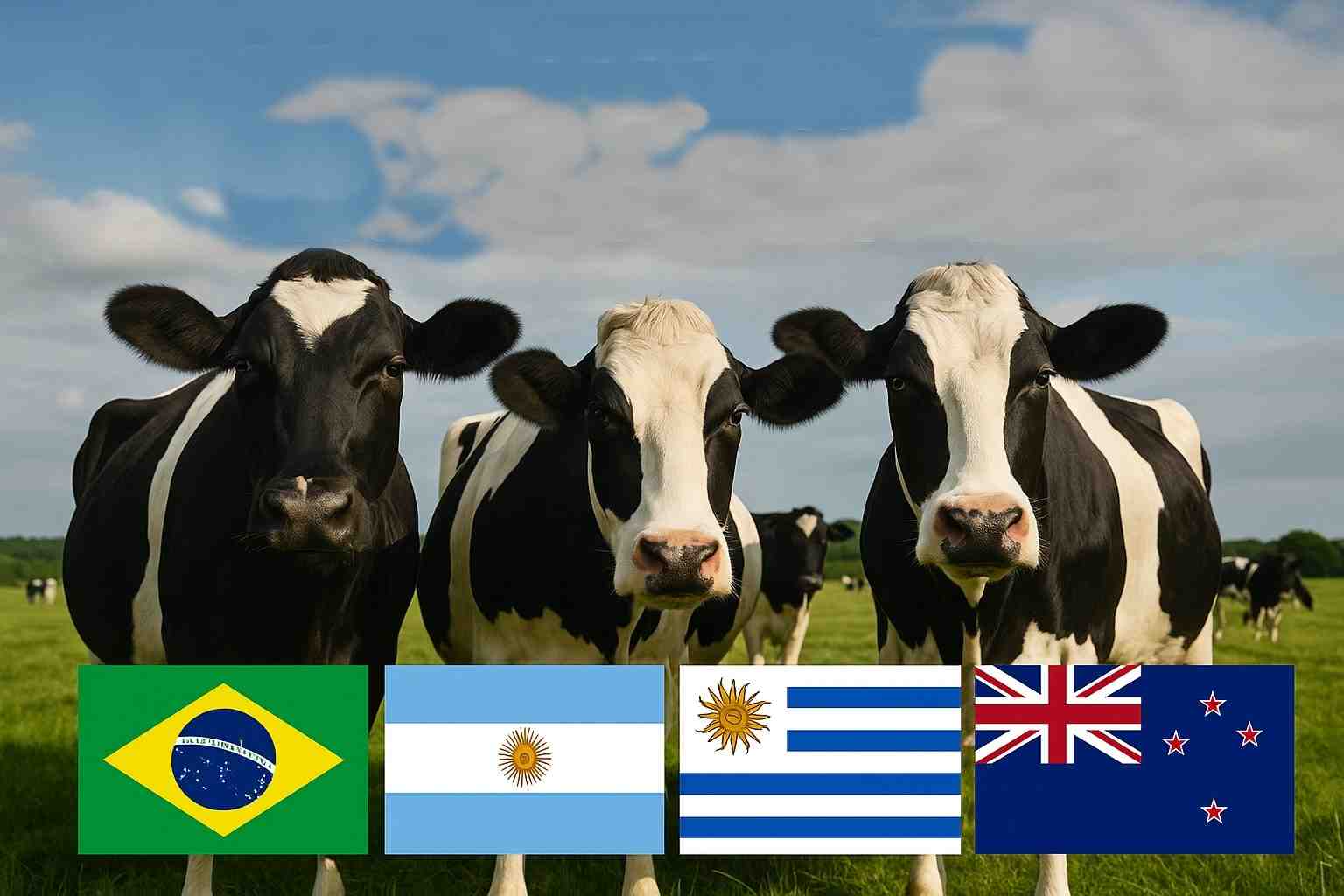

In Some Nations, The Number of Cattle Exceeds That of Inhabitants, Revealing the Strength of Livestock Farming and Its Economic Importance.
Human population is not always the majority in a territory. In some countries, the number of cattle exceeds the number of people, revealing striking characteristics of their economy, culture, and agricultural production.
The main examples of this curiosity are concentrated in South America and Oceania.
The Number of Cattle is Striking
Four countries have more cattle than inhabitants: Brazil, Argentina, Uruguay, and New Zealand.
-
7,500-Year-Old Salt Production Traces in Bosnia Uncover Rare Prehistoric Technology and Shed Light on Food History

-
Man Discovers 2,000-Year-Old Roman Cistern with Drone in Brazil

-
Abandoned Mansion in Brazil Unveils 4 BMWs, Home Theater, Indoor Pool, and Numerous Apple Computers
-
One of Brazil’s Most Beautiful Beaches Faces Severe Pollution as River Contamination Exceeds Safe Limits by 50 Times, Fines Could Exceed $10,000


The phenomenon reflects not only the strength of the agricultural sector in these countries but also how the land is utilized and how cattle ranching has solidified as one of the pillars of their economies.
Brazil Still Leads in Absolute Number
According to data from IBGE, in 2023, Brazil reached the mark of about 238.6 million cattle, against a population of approximately 212 million people.
This represents about 1.12 cows per inhabitant, enough to ensure the country’s presence on this list.
The Brazilian livestock sector, in turn, is geared towards both beef and dairy production. Moreover, it is present in various biomes across the country, including the Cerrado, the Amazon, and the Caatinga.
Uruguay is The Champion in Proportion
Although Brazil has the largest herd, it is Uruguay that leads in proportion. With about 12 million cattle and only 3.5 million inhabitants, the country records approximately 3.4 cattle per person. This ratio is the highest among the countries on the list and demonstrates the centrality of livestock farming in the Uruguayan economy.
Uruguayan cattle are internationally recognized for their high-quality meat and for the complete traceability of the herd. The country exports to demanding markets such as the European Union, China, and the United States.
Argentina Is Also on The List
Argentina has about 52.4 million cattle for an estimated population of 46 million. This represents an average of 1.13 cows per inhabitant. Like its neighbors, the country has a strong tradition of cattle ranching, especially in the Pampas region.
Argentinian beef is one of the most appreciated in the world and is part of the national identity. The Argentine barbecue is a symbol of togetherness and cultural pride.
New Zealand Completes The Group
Outside of South America, a good example is New Zealand, which also stands out in this scenario. The country has between 10 and 11 million cattle, while its population is around 5 million inhabitants. This results in an average of about 2 cows per person.
The economy of New Zealand, besides other sectors, is heavily reliant on agriculture, with special emphasis on dairy production. Currently, the country exports these products to dozens of markets, with the main destinations including China, Australia, and several Southeast Asian countries.
A Curiosity That Reveals a Lot
Although it may seem just a curiosity, the fact that there are more cattle than people in some countries reveals much about their productive structure, land use, and economic priorities.
In all these cases, livestock farming is a protagonist — whether as an export driver, cultural symbol, or basis for food security.
And, it seems, this scenario is likely to continue for quite some time.


