






 Portuguese
  Spanish


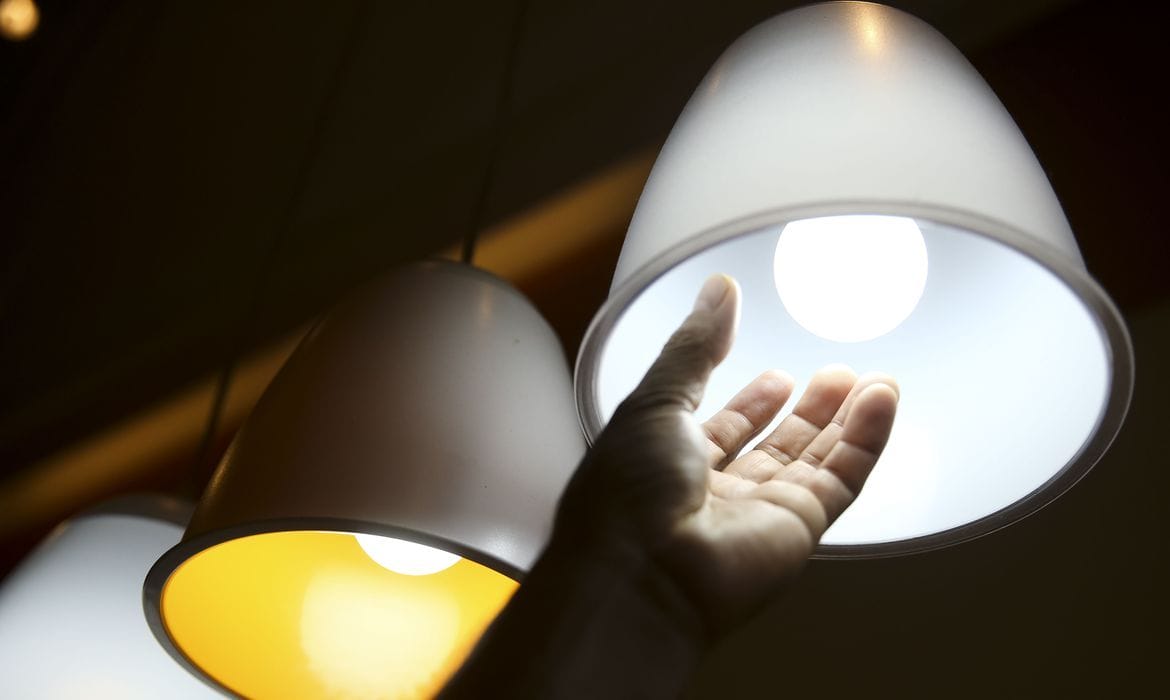

Approval of Bill Proposes Increase of R$ 39 Billion/Year in Energy Tariffs, Impacting Contracts and Plants.
The jabutis are land reptiles, known for their round and sturdy shell. They are found in various habitats, from tropical forests to savannas and grasslands.
The jabutis are protected by environmental laws in several countries due to hunting and illegal trade. In Brazil, they are considered wild animals and hunting them is prohibited, but unfortunately, many are captured and sold illegally.
Bill on Offshore Wind Farms Receives Parliamentary Amendments
The bill, in its core, aimed to regulate offshore wind farms. However, measures with different objectives were included by the deputies just before the vote in the House.
-
Green Hydrogen Projects in Northeastern Brazil Stalled for 18 Months Awaiting Government Decree, Delaying Billions in Investments

-
Brazil Concludes Largest Energy Auction in History, Secures 18.97 GW and Mobilizes $12.8 Billion to Ensure Supply Until 2031
-
How Norway Produces More Energy Than It Consumes with Nearly 1,800 Hydropower Plants and Over 1,100 Reservoirs

-
Axia Energia Invests $280 Million in Q1, Increases Investments by 36%, and Turns Loss into $740 Million Profit


Approval of the bill
- Extension of coal thermal contracts: R$ 5 billion
- End of price caps for gas thermals in the North, Northeast, and Midwest regions: R$ 16 billion
- Subsidy for the use of transmission lines by renewable sources: R$ 6 billion
- Contracting of wind energy in the South of the country: R$ 500 million
- Contracting of green hydrogen thermals: R$ 3 billion.
- Contracting of small hydropower plants (PCHs): R$ 8.6 billion
The Electric Energy Director of Abrace, Victor Hugo iOcca, predicts that the impact on tariffs will begin in up to four years.
‘We estimate that the final impact is around R$ 39 billion. This increase should start in three or four years and will last until 2050. So, we are talking about a tariff impact for at least another two decades’, he said.
In addition to a higher bill, experts point out that the ‘jabutis’—a term used to describe parliamentary amendments without a direct connection to the main text—are against Brazilian energy policy, being considered an interference. According to Professor Nivalde de Castro from the Institute of Economics of the Federal University of Rio de Janeiro (UFRJ), Brazil has the capacity to formulate and produce an energy policy ‘that few countries have’.
Impact of the Parliamentary Amendments
The professor cites various entities and institutions that lead the energy sector, such as the Ministry of Mines and Energy, the National Electric Energy Agency (Aneel), and the National Electric System Operator (ONS).
Another point that catches experts’ attention is regarding the oversupply of energy in Brazil, which may worsen.
The National Front of Energy Consumers also criticized the amendments added to the project. For Luiz Eduardo Barata, the president of the front, in a scenario of increasing oversupply, there may be disinterest from energy producers, which distorts the market.
For Victor Hugo iOcca, Brazil has the capacity to accommodate all sources, but it is necessary to focus on development to generate a uniform consumption increase in all regions of the country.
‘Any mandatory energy contracting unfortunately worsens the current scenario. We live with reservoir levels well above average and we have an oversupply of energy because we are heavily investing in distributed generation and renewable centralized generation. So today Brazil is already living an oversupply that could be used, for example, for the reindustrialization of the country’.
Approval of the Project by the Chamber
However, a provision was added that extends until 2050 contracts in effect with coal-fired thermoelectric plants — one of the most polluting energy sources in the world. These contracts would be terminated in 2028, but can now be extended for an additional 27 years.
For experts, the amendments go against the decarbonization agenda of the electrical matrix.
‘The country has already lost the opportunity to decarbonize its matrix by 2025, while continuing to use this technology. Just as the requirement was set that Brazil must contract thermals at the base. That is, they need to generate every day throughout the entire year and use natural gas, burning another fossil fuel to generate at the base of our electrical matrix’, says iOcca.
Approval in the Senate
Although the project was approved by the Chamber last Tuesday (28), the text must now undergo analysis in the Senate.
Impact on Energy Prices
The potential increase in energy prices raises a red flag among experts, as the cost of energy in Brazilian households already represents 23.1%, according to a study conducted by Abrace. The figure refers to the final price of goods that make up the basic basket.
When analyzing isolated items, the association points out that the daily bread is one of the items most affected by the increase in energy bills – as soon as it comes out of the oven, 27.2% of the final price of bread is the energy and gas used throughout the production process.
Final Approval and Impact on the Brazilian Pocket
The impact is even greater among meats and milk, with 33.3% of the shelf price being energy, according to the study. The ‘jabutis’ included in the project have raised concerns among experts, as they will directly impact the energy bills of Brazilians.
Source: CNN Brazil


