Portuguese
  Spanish


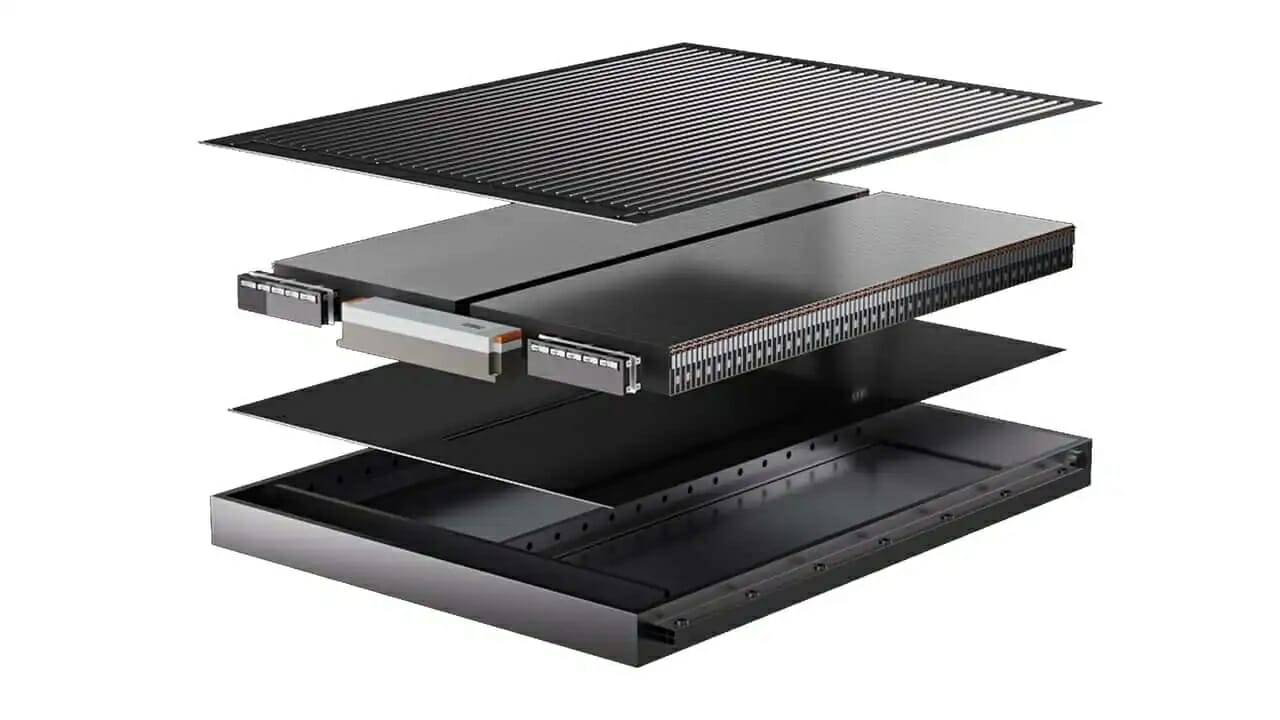

Market-Leading Startup in China Is Developing a Groundbreaking Battery That Promises Not to Lose Range Even in Cold Climates. The Expectation Is to Deliver 1,000 km for Electric Cars.
The Greater Bay Technology, from China and a subsidiary of the state-owned Guangzhou Automobile Group (GAC), claims to have developed the solution to what is undoubtedly one of the biggest challenges facing electric car batteries: range loss in colder environments. In this way, the startup has developed a new battery that promises to provide 1,000 km of range in about 8 minutes.
New Battery from China Will Be Installed in the GAC Aion V LX Plus


The company’s battery, named Phoenix, is composed of superconducting materials and thermal management, making it possible for the battery to heat from -4 degrees Fahrenheit to 77F, or from -22º C to 25º C, in just 5 minutes.
According to the co-founder and president of Greater Bay Technology, Huang Xiangdong, the component operates normally and charges in less than six minutes in all climates. The startup has joined the global effort to reduce charging times for electric cars, improve driving range, and make batteries safer, a movement led by companies in China such as BYD, CATL, Gotion High Tech, and several others.
-
1983 Chevrolet Runs Over 100,000 km Without Gasoline, Powered by Wood Chips, Reaches 125 km/h in Airport Test

-
Workshop Converts Giant Tractor Tire Tricycle into a Three-Wheel Drive Hybrid with 36,000-Watt Electric Motor Capable of Climbing Hills

-
Chery Offers Lifetime Battery Warranty and Car Replacement for Major Failures Under New Chinese Regulations
-
Sales of Brazil’s Cheapest Electric Car Halted Before First Deliveries: E-Motors Suspends Emova Easy Due to Import Tax Increase and Rising Freight Costs




The Greater Bay Technology surpassed a valuation of US$ 1 billion just two years after its founding. The company achieved initial success with its first-generation battery cell, which, according to data, charges in the same time it takes a gasoline car to refill at a gas station.
Its battery can provide a range of 200 km in just 5 minutes of charging and can go from 0 to 80% state of charge (SoC) in just 8 minutes. The expectation is that the new electric vehicle battery will initially be installed in the GAC Aion V LX Plus.
Electric Cars Lose Up to 35% of Range in Freezing Temperatures
The company’s executive also mentioned that the startup is negotiating with other automakers that are interested in acquiring its new battery, which can provide a range of up to 1,000 km. A study that analyzed 7,000 cars showed that some electric cars can lose up to 35% of their range in freezing temperatures.
However, the loss of range may vary according to different models. Automakers like Tesla utilize heat pumps and features such as battery preconditioning to mitigate the impact of cold weather on the component and range.
The market is curious to see if this new technology performs as expected and which other automakers would adopt it. It’s important to remember that China’s CLTC test cycle is more optimistic than the EPA’s, where test results seem to be comparatively closer to real-world driving range, although Phoenix’s battery capability for all weather conditions and heat management are features certainly worth analyzing.
New Battery That Charges in 5 Minutes
The StoreDot sent its first units of its component about a year ago, which promises to reduce the charging time for electric cars to just 5 minutes, and recently the company announced a new date to begin mass production of the component.
According to the Israeli startup, the batteries for electric cars are called 100in5 and will be produced across three diverse continents, namely North America, Asia, and Europe, and will be ready to supply the electric vehicle market globally starting in 2024.