Portuguese
  Spanish


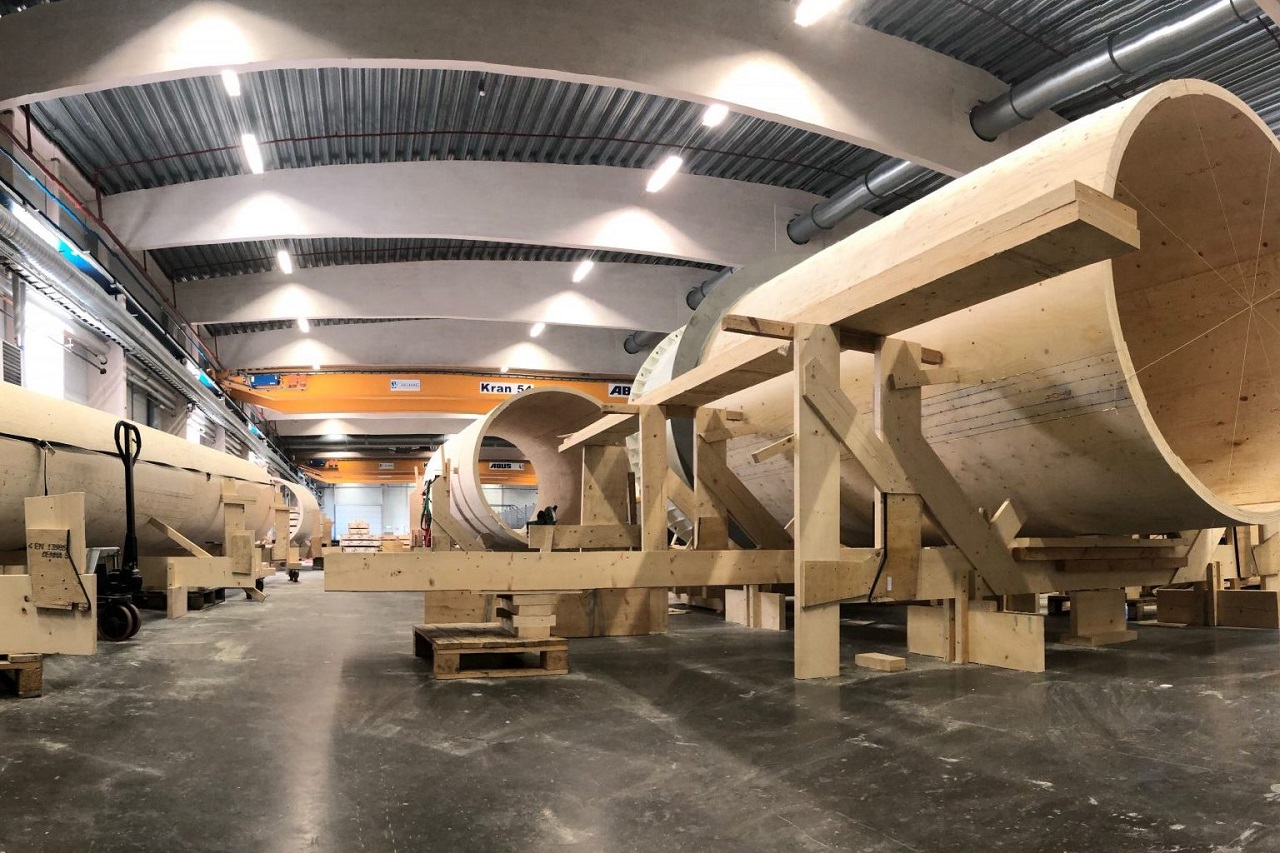

A Prototype Of A 100-Meter Wooden Wind Turbine Tower Is Being Manufactured In The Land Of Wood Innovation, Sweden, To Reduce The Substantial Carbon Footprint Of Manufacturing A Steel Wind Turbine.
One of the many complaints often heard about wind turbines from fossil fuel enthusiasts is that turbines have a high carbon footprint. In fact, life cycle analyses give wind turbines an average carbon footprint of 11 grams per kilowatt-hour — 30% of which comes from the steel tower (natural gas is 450 grams per kilowatt-hour just from combustion).
Stora Enso Begins Project To Build Wooden Wind Turbine Towers That Are Stronger Than Steel
Now, Stora Enso, one of the largest and oldest timber companies in the world, is working with Swedish tower construction company Modvion to build wind turbine towers using laminated wood (LVL).
Otto Lundman, CEO of Modvion, stated in a release: “To tackle the climate crisis, we need more renewable energy, as well as more use of sustainable wooden construction. Together with Stora Enso, we can facilitate both.”
-
Fired during apartheid and with a little borrowed money, an electrician started with a borrowed truck and transformed electrical services into a group connected to energy, real estate, and infrastructure in South Africa.

-
Wood has ceased to be just a construction material in Yale research and has become insulation for electrical transformers that face intense heat, aging, and increasing pressure from the renewable energy-powered grid.
-
More than 1,000 residents of a remote island in Kiribati now have clean water and electricity with solar systems operated by the community itself.
-
Ceará brings together 7 giants and R$ 66 billion to transform Pecém into the largest green hydrogen hub in Brazil, with final decisions expected by the end of 2026.



Wood can reduce CO₂ emissions in the creation of a wind tower by 90%, while also storing the carbon dioxide absorbed by trees during their growth. The wood selected for transformation into LVL comes from mature trees that have already absorbed the maximum reasonably achievable amount of CO₂ they can.
Laminated Wood Is Stronger Than Steel
The wood used for advanced constructions, such as wind turbine towers, can be reused in new wood-based products, providing more long-term climate benefits by continuing to trap carbon within its fibers.
Modivon is a Swedish company that builds towers and claims that the material has three major advantages compared to steel for constructing wind towers.
“Laminated wood has three major advantages over steel: wood has a higher specific strength, allowing for a lighter construction. Steel wind towers require extra reinforcement to support their own weight — which wooden towers do not. And, finally, modular steel wind towers require a large number of screws that need regular inspections, while our modular wooden towers are joined with glue.”
Even Using Wood, Wind Towers Will Look The Same As A Steel Turbine
The wind towers would look like a steel turbine, not a giant tree trunk, due to a waterproof paint layer applied.
At the moment, carbon capture, which occurs when trees are transformed into LVL, is more important than reducing emissions, as any reduction in emissions today will not be felt in the global carbon cycle for much longer than current predictions on warming or temperature changes. It is only by actively removing existing emissions from the cycle that humanity can change Earth’s climate.
Modvion cites a report from the International Energy Agency, which predicts that the wind turbine market could reach 30,000 per year to achieve net-zero by 2050.
With one prototype completed and the second tower on the way, they will have to scale up a bit to get a piece of that action, but it remains another great demonstration of how engineered wood can replace steel and reduce carbon emissions.