Portuguese
  Spanish


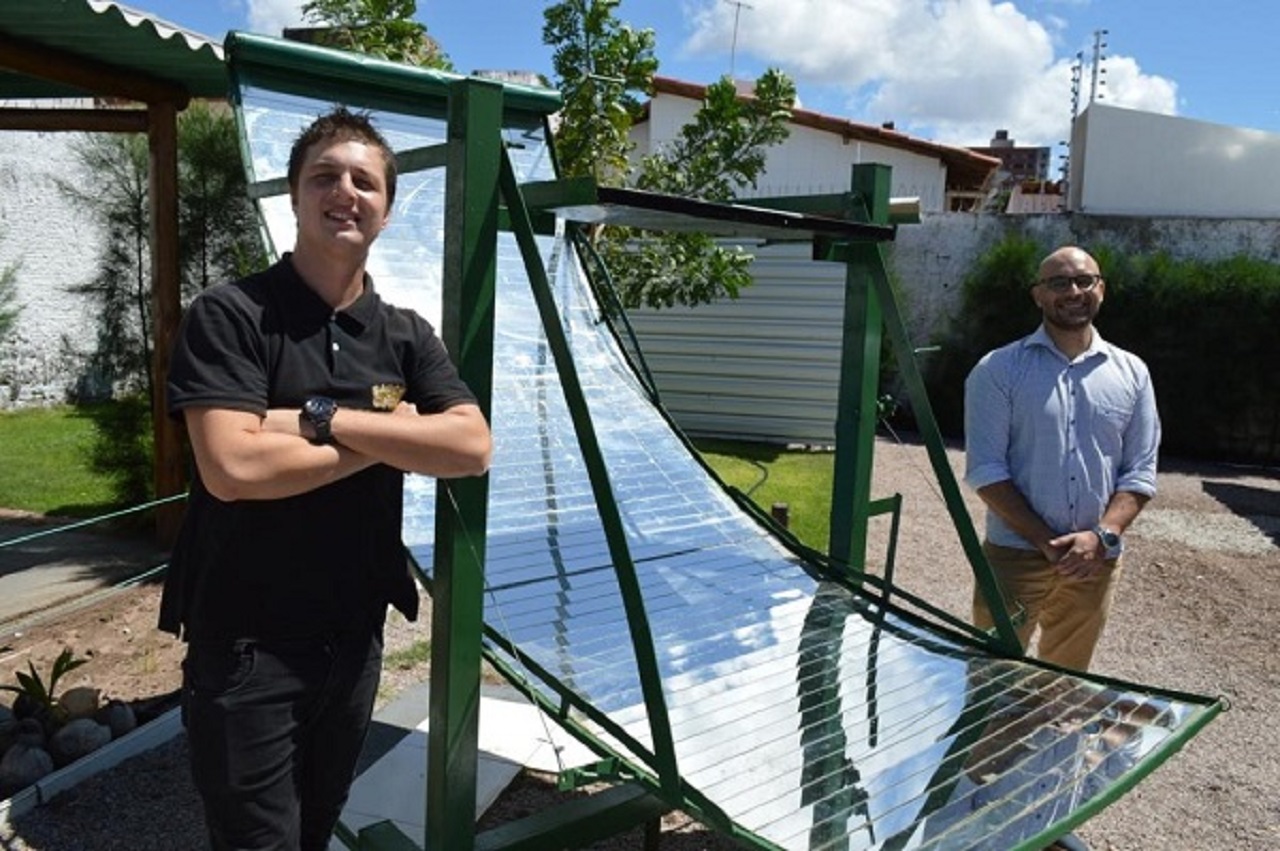

Entrepreneurs from RN Developed a Solar-Powered Electric Boiler, Reducing Bottlenecks and Generating Sustainability in Small Factories in the Country.
Innovation is something that is always linked to new technologies and investments, which is often restricted to large corporations. To prove the opposite, a small company from RN showed that, with the right support, it is possible to translate, in practice, what innovation is. Aiming to streamline and expand its production, the owner of Sabor de Coco, a small coconut processing factory, created a solar-powered electric boiler tailored to generate benefits to the product more quickly and sustainably.
RN Company Technology Reduces Bottlenecks in the Production Line
The electric boiler was developed in dimensions compatible with a small industry, an appliance that, until now, was nonexistent in the market. The main advantage is that the technology created by the RN company is powered by solar energy.
The innovators were mechanical engineer Delano Medeiros, entrepreneur Bruno Talarico Silva, and production engineer João Cardim, who together developed the entire project for the electric boiler.
-
Fired during apartheid and with a little borrowed money, an electrician started with a borrowed truck and transformed electrical services into a group connected to energy, real estate, and infrastructure in South Africa.

-
Wood has ceased to be just a construction material in Yale research and has become insulation for electrical transformers that face intense heat, aging, and increasing pressure from the renewable energy-powered grid.
-
More than 1,000 residents of a remote island in Kiribati now have clean water and electricity with solar systems operated by the community itself.
-
Ceará brings together 7 giants and R$ 66 billion to transform Pecém into the largest green hydrogen hub in Brazil, with final decisions expected by the end of 2026.



The invention aims to mitigate one of the bottlenecks in the production line by automating the extraction of the dried coconut kernel, which occurs through heating or cooking to separate the edible part from the shell.
The electric boiler was created to optimize the processing of coconut, which was the most time-consuming and highest-risk safety process in production, given that the existing machinery for this stage is usually large, making it impossible to operate in a small factory.
With the increase in demand and the project for the new solar-powered electric boiler, Bruno decided, two years ago, to open a new division of the company in RN, Macnova Industrial Automation, which functions as the technological arm of the first business.
Macnova Receives Investments of R$ 240.6 Thousand
The proposal for the new division was made possible by being selected in the Centelha program, which invests in the innovation sector with resources from the Funding Authority for Studies and Projects (Finep) and Sebrae in RN since 2019.
In total, Macnova’s projects received support of R$ 240.6 thousand to install the operations of the new company and, consequently, develop the solar-powered electric boiler. The Macnova project meets the requirements for financing from both programs, Centelha and Tecnova, where the criteria for approving projects submitted in the Public Call include an innovative idea that can solve problems in areas such as productivity and sustainability, for example. And the electric boiler from the entrepreneurs in RN meets these criteria.
Electric Boiler Features 8 Solar Panels
With the resources from the grants, the precise photovoltaic solar energy panels necessary for the operation of the technology were installed, and investments were made in the production area. The solar energy from the eight solar panels is linked to the boiler compensation; however, the RN company already plans to invest in 10 more solar panels, enough to compensate for energy for the entire industry. There is also a solar oven on the premises for the dehydration of the fruit, which completes the process of dehydrated coconut.
According to production engineer João Cardim, recalling that the thermosolar technology indirectly uses thermal energy in the oven, normally, the process for a product like this is done in an electric oven, and both the solar oven and the greenhouse reduce the dependence on the electric oven. In addition, it is very sustainable as it does not generate carbon into the atmosphere and eliminates the need for gas, which makes the production cost even higher.