





 Portuguese
  English
  Spanish
  4 min of reading


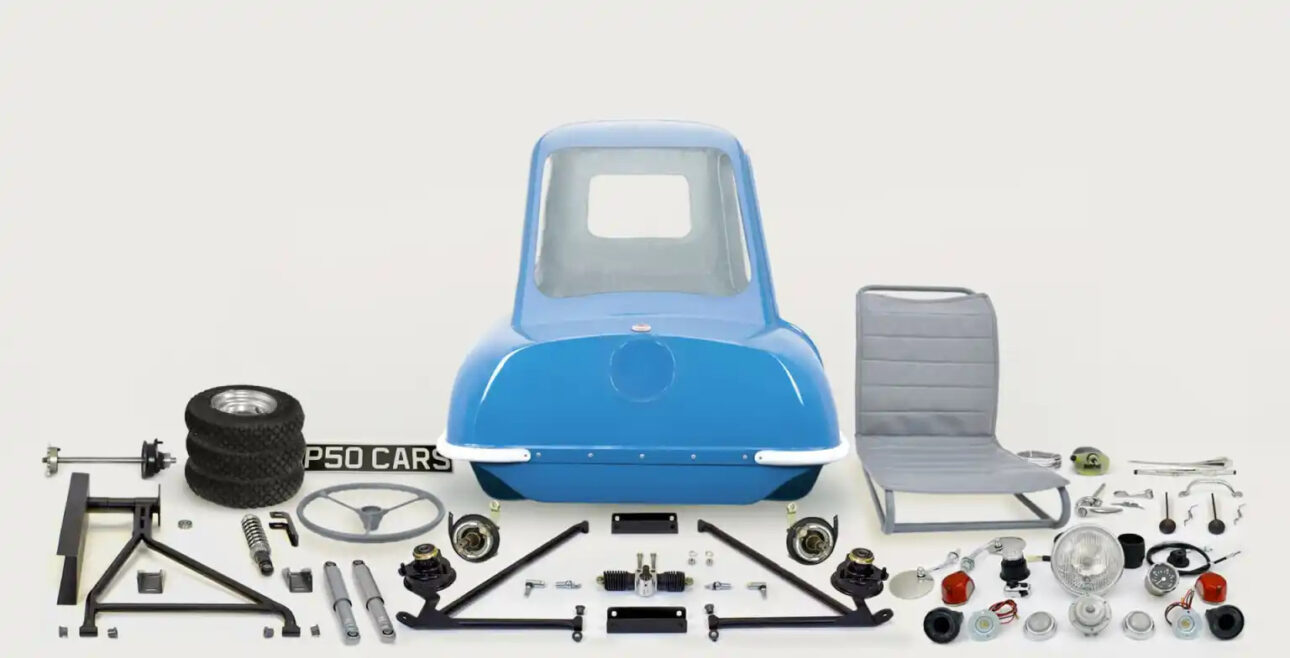
The Kit Comes Complete, With All Necessary Components to Build the World’s Smallest Electric Car, Including Wheels, Body, Seat, Steering Wheel, Powertrain, and Practically Everything Else
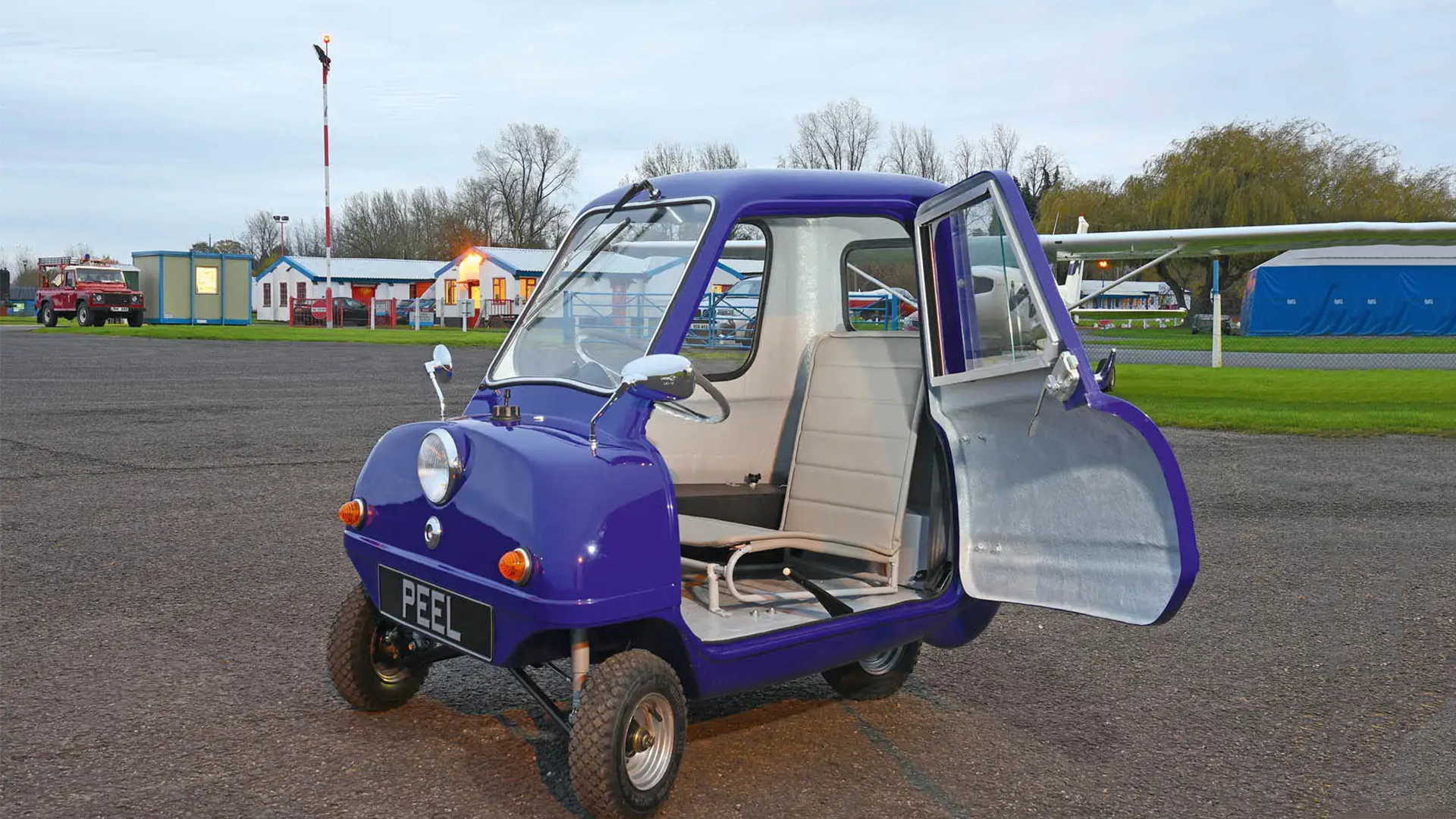
The Peel P50, manufactured in the early 1960s, holds the record for the smallest production car in the world. And now, thanks to a new kit, creative individuals can build their own replica at home. And to be eco-friendly, this time, the smallest car in the world is electric.
To get an idea of how small this tiny three-wheeled car is, consider the fact that it can fit inside a passenger elevator. That will give you an idea of its overall size. Initially, the product marketing stated it had room for “one adult and a shopping bag”.
The vehicle that inspired the creation of the world’s smallest electric car is much more compact than a Vespa scooter. It was never equipped with reverse gear, but initially came with a handle at the back so it could be carried like hand luggage and taken anywhere you needed to go.
-
Honda launches Elevate cheaper than Honda HR-V, Toyota Corolla Cross, Hyundai Creta, Jeep Compass, and Volkswagen Taos in Brazil, with a 1.5 i-VTEC engine of 121 hp, manual or CVT transmission, and Honda Sensing; SUV shows a simpler, more rational, and accessible global Honda in India.

-
Used Honda Fit that many Brazilians overlook offers a trunk space of up to 1,045 liters with Magic Seat, a 1.5 i-VTEC engine with 116 hp, fuel consumption of 14.1 km/l on the highway, and seat technology that no popular SUV offers for the same price.
-
New Honda City 2027 emerges without camouflage, reveals controversial interior before debut and indicates changes that could retire the hatch in Brazil

-
Man pays $140,000 for Tesla Model S, tries to sell it just two years later and is shocked to discover the car is now worth less than a third.



Although production may have ceased in 1965, it is fortunate that a group of motivated entrepreneurs managed to bring the brand back from the dead. And now, it can be said that the Peel P50 has returned, at least in the form of a replica.
P50 Cars, the new company that developed the replica, has made it possible to purchase with much less difficulty than one of the 50 original production cars.
The manufacturer claims that the electric model is equipped with a 4 kW motor, which propels the cart to a speed of 45 kilometers per hour. Those interested in obtaining even more power can choose to add their own 4,000 W electric motor instead of the one that comes in the kit. There is also a gasoline-powered model in addition to the electric one.
The Cost of the DIY Kit for the World’s Smallest Electric Car Starts at an Equivalent of Approximately R$ 65,000
According to the manufacturer, the kit is complete, with all necessary components to build the world’s smallest electric car, including wheels, body, seat, steering wheel, powertrain, and practically everything else. It takes about fifty hours of work to assemble, but the British kit producer also offers fully built versions for those who don’t have the time or skills to assemble it themselves.
The reproduction of the P50 may be small, but it has all the essential components you would expect, such as suspension, headlights, horn, brakes, and mirrors. There is only one door on the left side of the car, just like the previous model.
Both the Peel P50 and the larger two-seater produced by the company, known as the Trident, are suitable candidates for delivery in kit form, according to the manufacturer. The world’s smallest electric car falls into the same category as mopeds and motorcycles and can be legally driven in most places.
According to the manufacturers, when it comes to DIY kits, the P50, the world’s smallest electric car, and the Trident are ideal choices, especially for someone new to the racing hobby but who is a car enthusiast.
Due to being mechanically simple, as well as very light and compact, they constitute an excellent entry point into the world of automotive building. The kits include all the essential parts one needs to get their “smallest car in the world” on the road.
You just need a little patience, some tools, and a bit of storage space in your garage. The entire construction process should take about fifty hours from start to finish. The process of registering your kit after it is assembled is also much less complicated than for most kit cars, as in many countries, they are classified as mopeds or light motorcycles.
The Cost of the DIY Kit for the World’s Smallest Electric Car Starts at an Equivalent of Approximately R$ 65,000. Meanwhile, the price of a complete model is approximately US$ 16,970, which is equivalent to almost R$ 90,000.


Be the first to react!