Portuguese
  Spanish


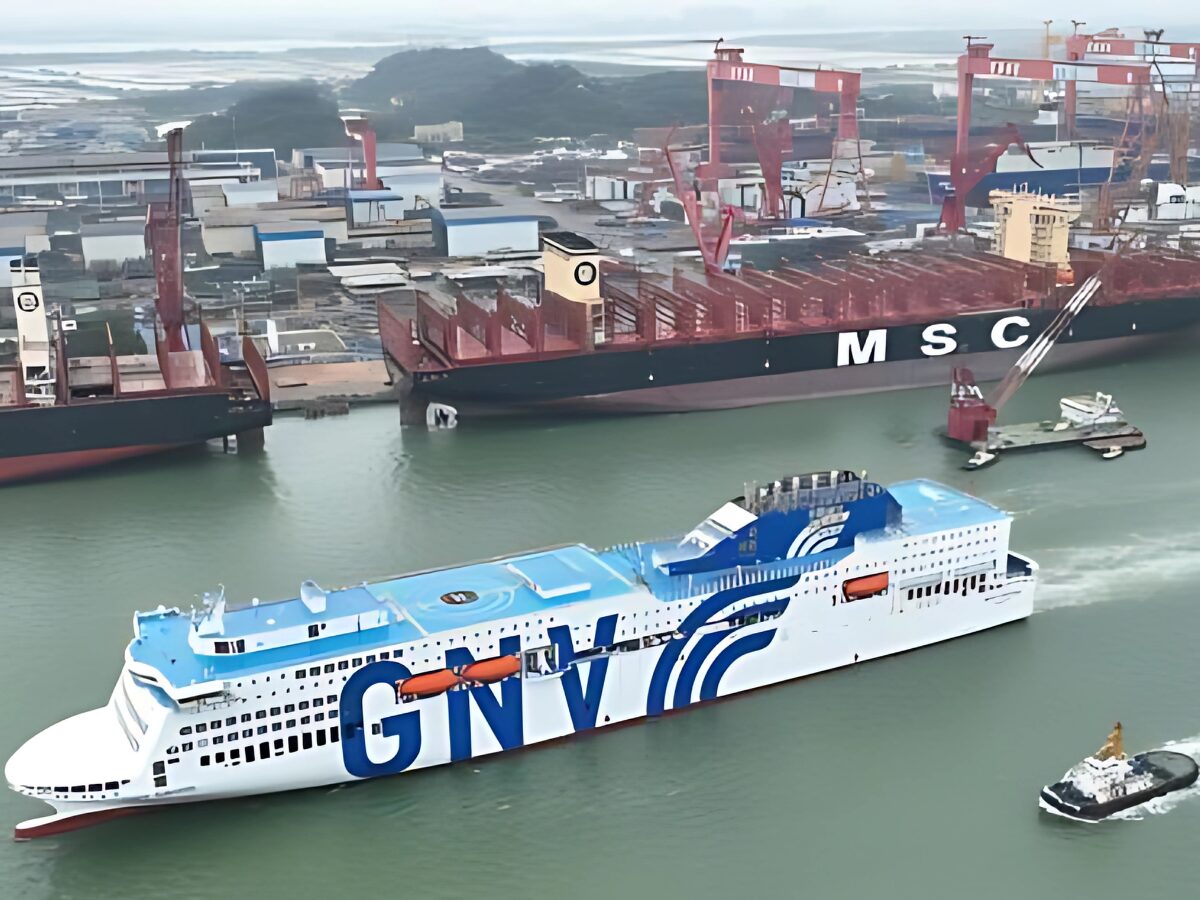

The Delivery of New Vessels Not Only Strengthens the Partnership Between MSC and the Chinese Shipbuilding Industry, but Also Highlights China’s Protagonism in the Development of Sustainable Maritime Technologies.
Two new milestones in the ecological transition of the maritime sector were celebrated last Wednesday (16), with the delivery of sustainable vessels to Mediterranean Shipping Company (MSC). Built by the subsidiary Guangzhou Shipyard International Corporation (GSI), part of the China State Shipbuilding Corporation Limited (CSSC) group, the units represent the most advanced technology and environmental efficiency in global maritime transport.
Giant Container Ship Combines Capacity and Low Environmental Impact
One of the delivered vessels is a biodiesel container ship, designed to operate with liquefied natural gas (LNG), one of the least polluting fuels currently available.
With a capacity of 16,000 TEUs (twenty-foot equivalent units), the cargo ship is considered one of the most efficient in the world in its category.
-
This Massive 12-Meter, 21-Ton Underwater Drone Can Operate Autonomously for Up to Five Days

-
Global Shipping Faces Shortage of Certified Maritime Officers, Salaries in the U.S. Can Exceed $100,000 Annually

-
The FLIP: A 108-Meter Ocean Laboratory That Stood Vertically for 60 Years, Dismantled in 2023
-
North Korean Fiasco: Launch of the Largest Warship Ends in Sinking



The ship is owned by CMB Financial Leasing Co., Ltd and will be operated on a charter by MSC. It is the sixth in a series with similar technology delivered by the Chinese shipbuilder to the European company.
The innovation is not only in the scale of transport but also in the adoption of systems that significantly reduce the emission of CO₂, nitrogen oxides, and sulfur — a relevant step in the fight against climate change.
Luxury RoPax Ferry Raises Standards of Comfort and Environmental Responsibility
In addition to the container ship, GSI delivered a luxury RoPax ferry to Grandi Navi Veloci, MSC’s passenger ferry division.
With a length of 218 meters and 12 decks, the ship can carry up to 1,785 passengers and 600 vehicles, while focusing on sustainability and energy efficiency.
The vessel adheres to the “Green Plus” standard of the Italian Naval Register, recognized internationally for requiring high levels of environmental compatibility.
Onboard, travelers find amenities such as a pizzeria, buffet restaurant, panoramic lounge, duty-free shop, and a dedicated area for children’s recreation — combining comfort, leisure, and environmental awareness.
Sustainable Vessels Strengthen China’s Role in the Global Shipbuilding Industry
With these two deliveries, CSSC demonstrates its leadership in the production of environmentally friendly vessels, consolidating China’s position as a powerhouse in innovation and sustainability in the shipbuilding sector.
Meanwhile, MSC reaffirms its commitment to modernizing its fleet, investing in cleaner and more efficient ships to meet global demands for low-impact maritime transport.
The new vessels symbolize the future of navigation, where technology, resource conservation, and environmental responsibility sail side by side — driving a new era for the oceans and global trade.