Portuguese
  Spanish


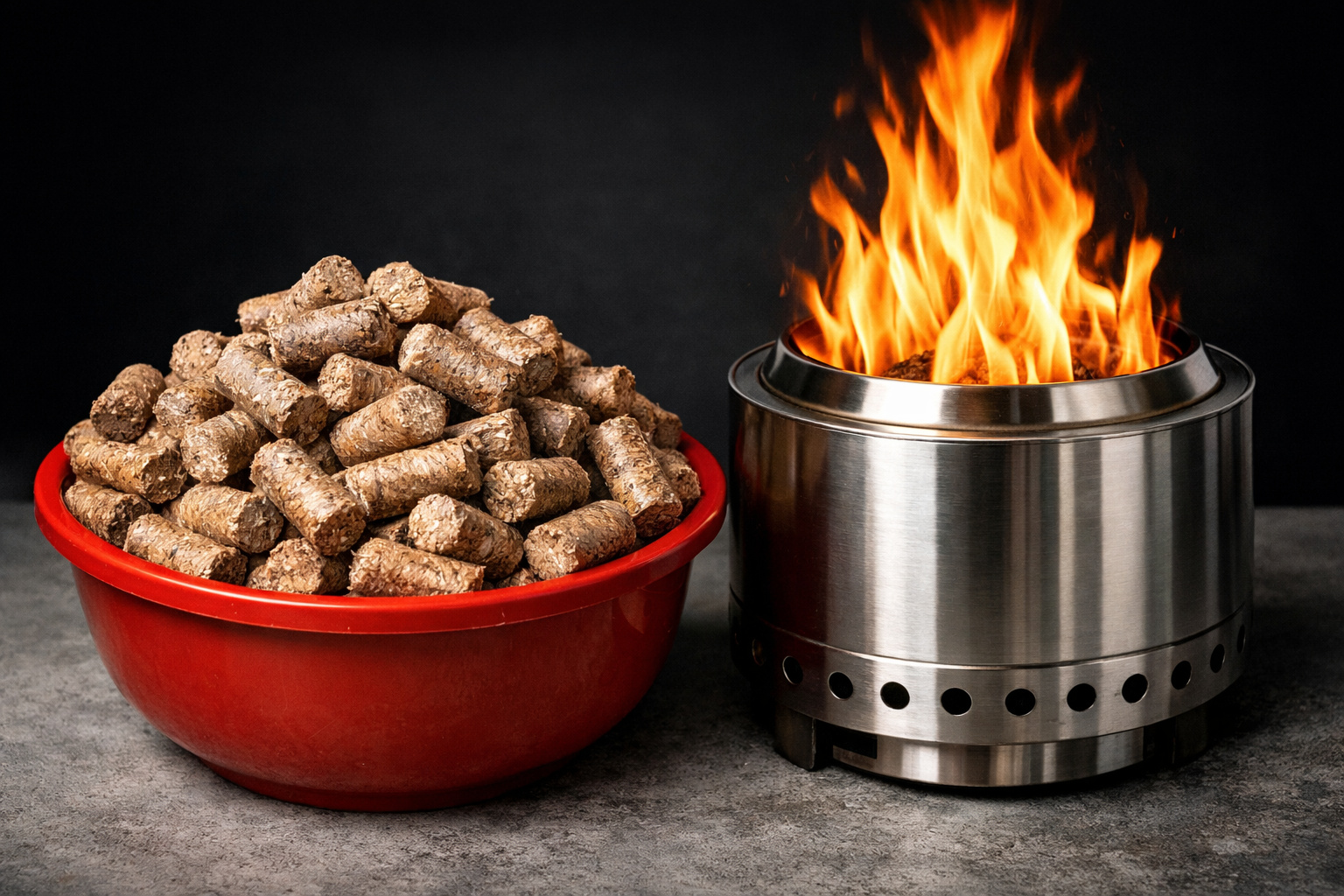


How Common Waste Can Turn Into An Accessible Continuous Thermal Energy Source
The search for alternative energy, low cost, and waste reuse has led millions of people to explore simple yet highly efficient solutions. Among them, a homemade method has been gaining attention for transforming cardboard, sawdust, and shredded paper into wood pellets, capable of generating constant, clean, and practically free heat.
The information was shared by a content creator specialized in energy reuse, according to a video published on his channel, where he demonstrates step by step how waste that would normally be discarded can be converted into high thermal efficiency solid fuel. According to the author, the process can be reproduced anywhere in the world with basic materials and simple tools.
Moreover, the proposal gains relevance in a global scenario marked by rising energy costs, instability in electricity supply, and the urgent need for sustainable solutions. Therefore, understanding how this technique works can represent real savings and energy independence.
-
A metal detector led a prospector to a rock that resisted a saw, acid, drill, and sledgehammer; years later, scientists cut the block with diamond and discovered a 17 kg meteorite from the beginning of the Solar System.

-
Just one message on WhatsApp: Belém launches “Plante Aqui” and plants a tree for free at your doorstep within 15 days, with a goal of 5,000 seedlings by the end of 2026 in the capital of Pará.

-
The most ‘stingy’ millionaire in Canada? Bill Holland saved money to retire at 32, led the management company that now manages $140 billion, and still takes public transportation, in the same club as Warren Buffett and Elon Musk.
-
At 79 years old, the businessman who led Burger King’s arrival in Brazil announces an investment of R$ 380 million to create a “Gaucho Tuscany” on 370 hectares, with private vineyards, olive groves, a luxury hotel, and its own wine and olive oil production, along with about 200 properties.



The Step-by-step Process to Produce Wood Pellets from Cardboard and Sawdust

The method uses sawdust, recycled cardboard, shredded paper, and water, strategically combined to create compact and highly combustible pellets. Initially, the sawdust is mixed with the pre-moistened cardboard and shredded paper, which act as binding agents, significantly increasing the adhesion of the material.
To ensure a homogeneous mixture, the author uses a paint mixer attached to a cordless drill, a common and easily accessible tool. This process ensures that the sawdust properly absorbs the fibers from the cardboard and paper, forming a consistent and moldable mass.
In the next step, the compression of the pellets is performed with the help of a manual pressing device, improvised with a glue gun adapted to compact the material. This compaction is essential because the denser the pellet, the greater its energy efficiency and burn time. Then, the pellets are left to dry for a period of one to two days, ensuring the removal of residual moisture.
After complete drying, the sawdust pellets are stored in boxes, ready for use in wood stoves, fireplaces, portable stoves, and even in a smokeless fire pit, such as the Solo Stove model, cited in the video as a practical application example.
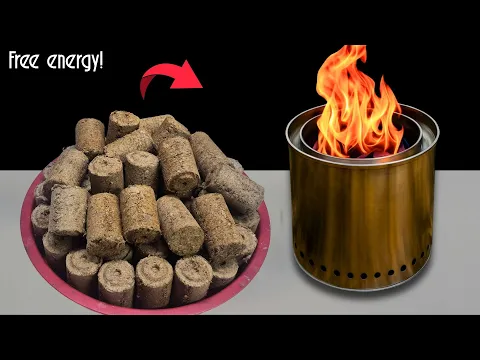

Why This Method Sparks Global Interest and Can Impact Billions of People
The most impressive aspect of this technique is its universal accessibility. According to the content creator, anyone, regardless of the country, can replicate the method using locally available waste. Therefore, he encourages viewers to comment on which country they are watching from, reinforcing the global nature of the initiative.
Additionally, the pellets produced have a low smoke level, good thermal efficiency, and maximum use of waste that would otherwise be discarded. This reduces environmental impact, decreases energy costs, and promotes the circular economy.
Sustainability experts highlight that decentralized solutions like this can play an important role in regions with limited access to energy, especially in rural communities or areas affected by energy crises. Thus, transforming cardboard and sawdust into solid fuel is no longer just a curiosity but becomes a real alternative for renewable thermal energy.
At the end of the video, the author invites the audience to subscribe to the channel to follow new content, reiterating that this type of knowledge, although simple, is still unknown to billions of people around the world.