






 Portuguese
  Spanish



Obstacles to the Expansion of Nuclear Energy
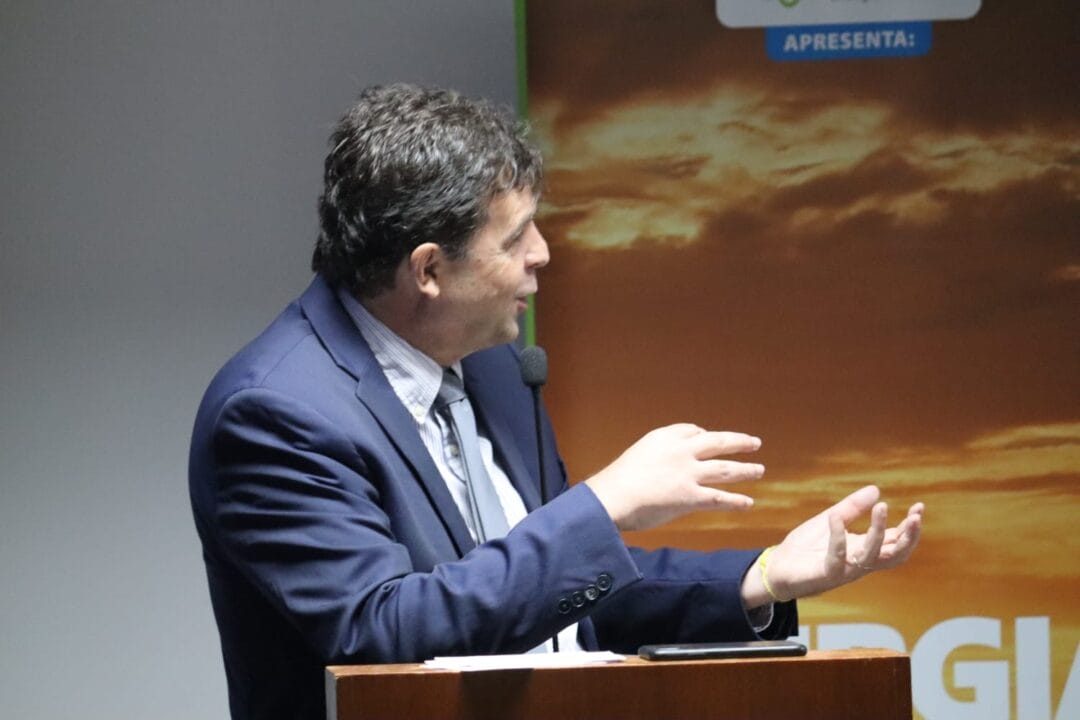
Experts gathered at the XIV International Seminar on Nuclear Energy, held at the Society of Engineers and Architects of the State of Rio de Janeiro, addressed the main challenges for the expansion of nuclear energy in Brazil. The conclusion is clear: for nuclear energy to “take off” in the country, long-term planning and assertive political decisions are essential. The meeting, which began on November 21, discussed how to make nuclear projects faster and more economical.
The Need for Planning and Political Decision
Luis Fernando Prioli, president of ENBPar, highlighted the importance of planning that transcends governments and establishes itself as state policy. Eduardo Grivot de Grand Court, president of Eletronuclear, emphasized the negative repercussions of interruptions in the construction of nuclear plants, pointing to the unnecessary increase in costs and potential risks of energy scarcity in the future. Both agree that nuclear energy is crucial for achieving carbon emission reduction targets, being more advantageous compared to other more expensive sources.
Construction Costs and Timelines: A Global Challenge
John Forman, director of J. Forman Consulting and moderator of the panel “Construction Costs and Timelines,” noted that delays and interruptions are a global problem, leading to increased costs and tariffs. Gustavo Cerqueira, from the Energy Research Company (EPE), pointed out that delays in construction are not a Brazilian peculiarity, with construction timelines varying from eight to over 40 years. He also listed additional benefits of nuclear energy, including knowledge production, technological mastery, carbon reduction, and positive socioeconomic impacts.
-
Nvidia Secures Billion-Dollar Deal to Supply Up to 170,000 AI Accelerators to a 360 MW Data Center in Indonesia, Aiming to Transform Batam into an Advanced Computing Hub

-
NuScale proposes revised plan for six VOYGR SMR reactors in Poland after ending U.S. project

-
Holtec and EDF Submit Joint Proposal to Install Four SMR-300 Reactors in England with Combined Capacity of 1.3 GW
-
Brazil’s Angra 3 Nuclear Plant Reaches 66% Completion; Government Faces 2026 Deadline to Decide on $24 Billion Project’s Future


Communication and Public Acceptance of SMRs
Paulo Senra, from the Electric Sector Studies Group (GESEL/UFRJ), discussed the challenges in safety, waste management, and public acceptance of Small Modular Reactors (SMRs). He emphasized the need to improve communication with the public to overcome ignorance about nuclear energy, citing the example of an influencer who faced criticism for advocating for nuclear energy.
Conclusion: Path to Nuclear Growth
The International Seminar on Nuclear Energy continues its program, discussing and formulating strategies to overcome challenges and boost the nuclear industry in Brazil. More information about the event can be found at www.sienbrasil.com.br. Nuclear energy, with the right adjustments in planning, political decision, and communication, can play a significant role in Brazil’s energy future.
Source: Nelza Oliveira – Primeira Linha Comunicações.


