






 Portuguese
  Spanish
  7 min of reading
  0 comments


The case also shows that, in the energy sector, an idea can fail in one context and gain strength in another. The difference lies in the economic moment, execution, financial control, and the country’s real needs.
Do you think Eneva’s recovery proves that Eike Batista‘s thesis was correct but poorly executed, or does the current success belong only to the new controllers and the new moment in the electricity sector? Comment on your opinion.
-
Brazilian Joins Homeownership Consortium, Faces Decade of Dual Payments Totaling $141,000, Surpassing Traditional Mortgage

-
Land Rover to Halt Production in July, Putting 371 Jobs at Risk, as Chinese Automaker Negotiates to Convert Factory to 100,000 Vehicles Annually by 2027

-
Mexican Pest Threatens U.S. Cattle Herds at Historic Lows, Potentially Boosting Brazilian Beef Exports as Burger Prices Soar

-
Brazilian Freight Bill Progresses in Congress with $5,000 Minimum Wage, 70% Advance Payment, and Fines Up to $1 Million, as Agriculture and Industry Warn of Rising Costs and Legal Uncertainty


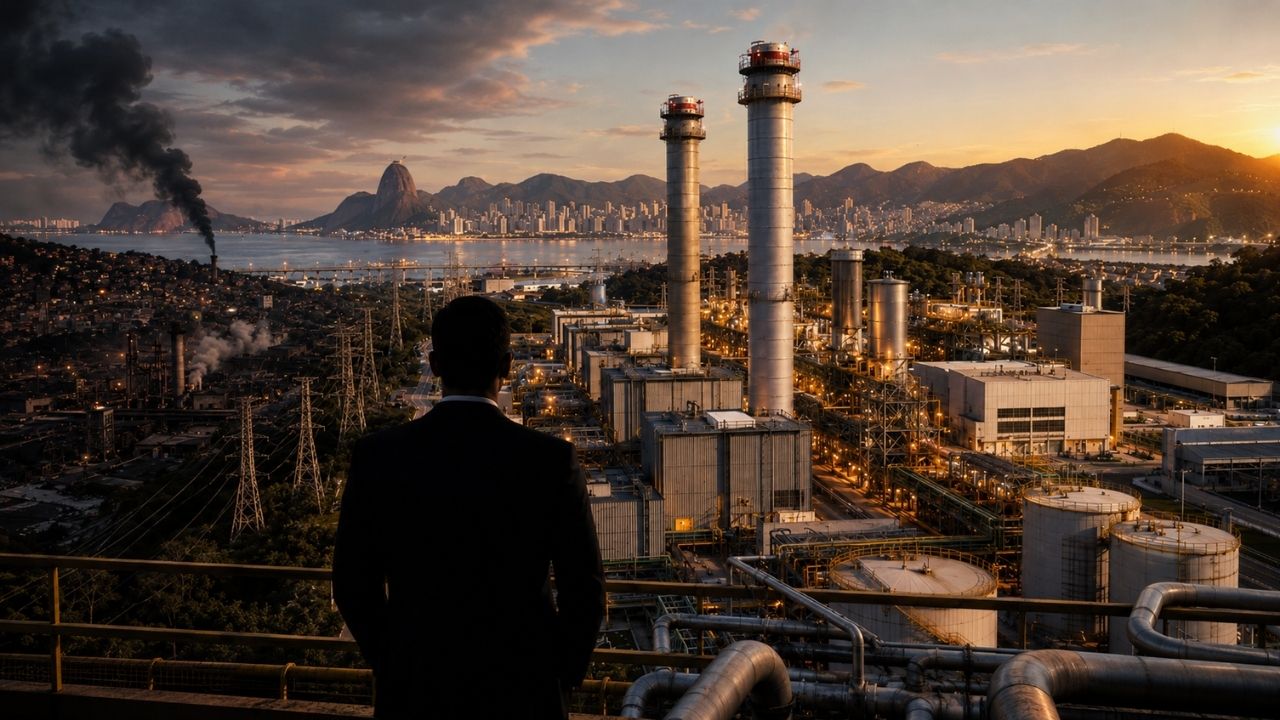
The company linked to Eike Batista’s origin emerged from the old MPX, faced judicial reorganization in 2014, received new control, integrated natural gas and thermal generation, contracted 5.06 GW in the 2026 Capacity Reserve Auction, and came to symbolize the return of thermal power plants in the Brazilian national electricity sector.
The trajectory of the company created in Eike Batista’s business environment became one of the most curious cases in the Brazilian electricity sector: it was born as MPX, was hit by the EBX crisis, entered judicial reorganization, and years later, appeared at the center of a billion-dollar capacity auction. In 2026, Eneva contracted 5.06 GW in the LRCAP, and its portfolio exceeded 10 GW.
The contrast is striking because the same thesis that seemed risky at the height of the crisis ended up becoming valuable at another moment for the country. The idea of combining natural gas and thermal power generation, previously associated with the collapsed empire, gained strength precisely when Brazil began to discuss energy security again.
The company was born in the wake of the blackout and the bet on thermal energy
Eneva’s origin traces back to the 2001 blackout, when the lack of rain exposed Brazil’s dependence on hydroelectric plants and opened space for thermal generation projects. In this scenario, the then MPX was created as a bet on plants capable of generating energy without directly depending on reservoirs.
The strategy made sense for a country that needed to diversify its matrix. Thermal generation does not replace the importance of renewables, but it functions as a kind of support when the system needs firm energy. It was in this space that the old company linked to Eike Batista tried to grow.
The most ambitious step came with the combination of electricity generation and proprietary natural gas production. The logic was simple in concept but complex in execution: extract gas near the plants and use this fuel to produce electricity without depending on long gas pipelines.
This integration, later consolidated with gas assets in the Parnaíba Basin, ended up becoming a central part of Eneva’s history. The model brought the company closer to a more complete operation, with fuel production and energy generation under the same structure.
The EBX crisis almost swallowed the company along the way
The problem is that the energy thesis advanced within a group that would face one of the country’s biggest corporate crises. EBX, Eike Batista‘s conglomerate, lost credibility when grandiose promises in areas such as oil, mining, and infrastructure did not materialize at the expected speed.
The crisis contaminated the perception of the group’s assets. The old MPX changed its name to Eneva in 2013, in a move that sought to distance the company from the wear and tear associated with the “X” of Eike Batista‘s companies.
In 2014, already rebranded, the company entered judicial reorganization. The debt reported at the time was around R$ 2.4 billion, according to information published about the process. It was a critical point: an energy company with relevant assets, but trapped by the financial and reputational burden of the old group.
The judicial reorganization reorganized control and changed the company’s direction. BTG Pactual gained relevance in the process, while Eike Batista‘s participation was reduced. Eneva became less dependent on the founder’s figure and more on the financial, operational, and strategic execution of the new controllers.
The turnaround came with natural gas, thermal plants, and more disciplined control


The restructuring allowed the company to resume the thesis that had been designed years earlier. Eneva consolidated the integration between natural gas and thermal generation, a model that uses the extracted fuel to supply its own plants.
This format is important because it reduces dependence on external infrastructure in regions where gas pipelines are scarce. Instead of just buying fuel and generating energy, the company began to operate in more than one stage of the chain.
The new control also brought a change of pace. The company ceased to be seen merely as a remnant of Eike Batista‘s crisis and began to be observed as a generator with strategic assets, especially in a country that needs to balance renewable expansion and supply security.
Even so, the trajectory does not erase the sector’s risks. Thermal power plants depend on contracts, regulation, fuel costs, and energy policy decisions. What changed was the context: the reliability of the electrical system regained greater weight in the national debate.
2026 Auction put Eneva back at the center of the electricity sector
The recent big leap came in the 2026 Capacity Reserve Auction. Eneva reported the contracting of 5.06 GW, a result that raised its portfolio to over 10 GW and strengthened its position among the country’s main thermoelectric operators.
This type of auction does not just buy energy generated at the moment. It remunerates power availability, meaning it pays for plants to be ready to operate when the system needs them. In practice, it is a contract aimed at electrical security, especially during peak hours or periods of lower renewable supply.
The 2026 auction contracted approximately 18.97 GW of power and involved an estimated investment of R$ 64.5 billion, according to a survey published about the tender. Within this scenario, Eneva emerged as one of the big winners.
The company also began to be seen with different weight by the market. In 2026, its shares accumulated strong appreciation over 12 months, leading its market value to R$ 52 billion, according to a specialized publication.
What seemed like a crisis legacy turned into a strategic asset
The irony of the story lies precisely in the starting point. The thesis associated with Eike Batista was almost buried by the EBX crisis, but it survived outside the entrepreneur’s control and gained value when the electricity sector once again needed firm power.
This does not transform the trajectory into a straight line of success. There was judicial recovery, change of control, creditor pressure, name change, and years of reconstruction. What exists today is a company that underwent a profound restructuring and found a more favorable market for its original thesis.
The expansion of solar and wind energy increases the participation of renewable sources, but also requires reinforcement in intermittency management. When the sun sets or the wind does not meet demand, the system needs sources capable of responding quickly.
It is at this point that thermal power plants return to the debate. They are targets of environmental criticism for using fossil fuels, but continue to be defended as a security reserve to prevent supply imbalances.
Brazil returns to discussing energy security after expanding renewables
Eneva’s case shows how the Brazilian electricity sector has become more complex. The country has a relatively clean matrix, a strong hydroelectric presence, and accelerated advancement of renewable sources, but still needs to guarantee available energy at critical moments.
The Capacity Reserve Auction reflects this concern. Instead of just contracting cheap energy, the government seeks availability to support the system when variable supply does not match consumption. It’s a shift in focus: it’s not enough to generate a lot, it’s necessary to generate at the right time.
In this environment, the old bet linked to Eike Batista gained new meaning. What once seemed like an overly ambitious project within an indebted conglomerate turned into an integrated operation capable of competing for relevant contracts for the country.
The question that remains is whether this return of thermal power plants will be seen as a security solution or as a step backward in the energy transition. The answer depends on the balance between reliability, cost to the consumer, and environmental goals.
Eneva became a symbol of recovery, but also of a broader debate
The story of Eneva brings together three strong themes: the fall of Eike Batista‘s empire, the restructuring of a company that was almost swallowed by the crisis, and the return of thermal power plants to the center of Brazilian energy policy.
The progress in the 2026 auction reinforces the company’s new phase. The company that was born from a bold bet, went through judicial recovery, and changed hands now appears as a relevant piece in the security of the electrical system.
The case also shows that, in the energy sector, an idea can fail in one context and gain strength in another. The difference lies in the economic moment, execution, financial control, and the country’s real needs.
Do you think Eneva’s recovery proves that Eike Batista‘s thesis was correct but poorly executed, or does the current success belong only to the new controllers and the new moment in the electricity sector? Comment on your opinion.





Be the first to react!