






 Portuguese
  Spanish
  5 min of reading
  0 comments


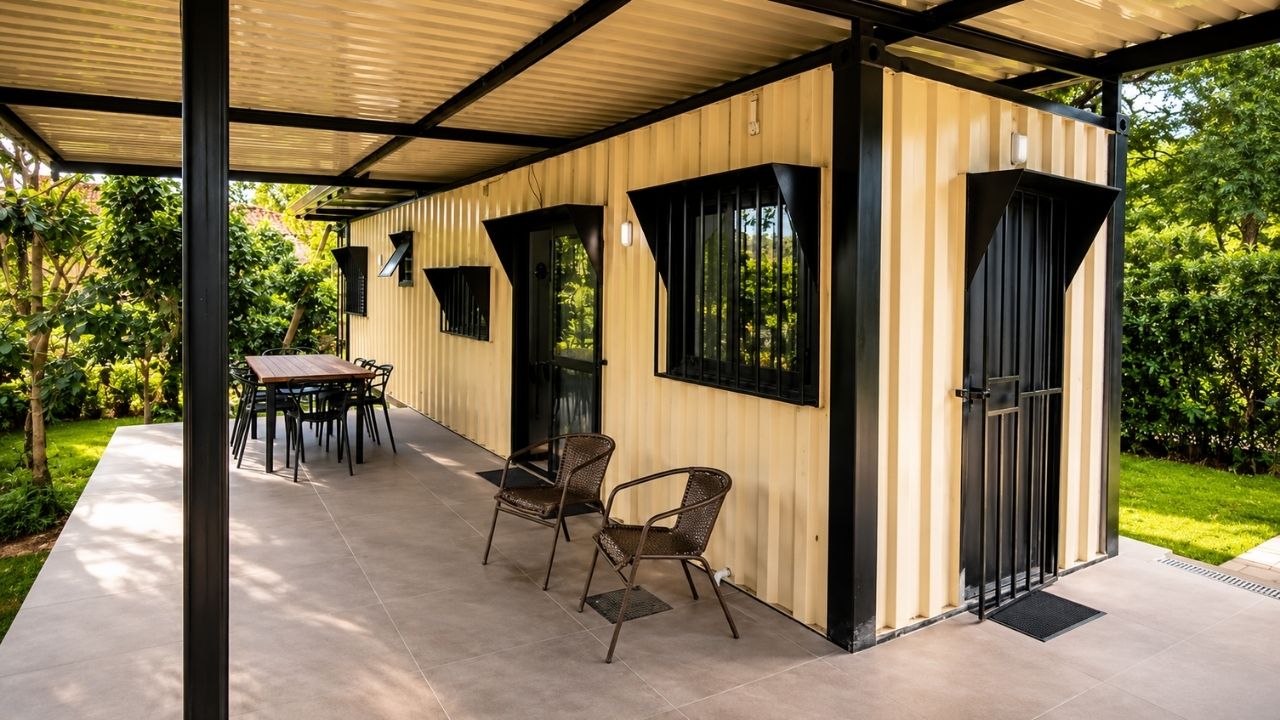
With 33 m², the container house combines compact living, a spacious balcony, custom-made furniture, and an external support area with a bathroom and laundry, revealing a lean layout that uses integration, storage, and coverage to enhance the feeling of comfort without relying on a larger footprint on the already fully furnished family plot.
The 33 m² container house might seem small to those who only see the facade, but the interior reveals an organization designed to make the most of every available meter. The project brings together an integrated living room, a functional kitchen, a bathroom, a bedroom, a spacious balcony, and a separate support area.
According to the Azul Container channel, the result shows how compact living can work when space is carefully planned. Instead of betting on an excess of rooms, the proposal concentrates on the essentials and distributes functions practically, without losing comfort for a couple’s routine.
From the outside, the house looks simple, but the interior changes the perception of space

Viewed from the outside, the container house follows the logic of a compact construction, with a rectangular structure and reduced land occupation. However, the internal experience changes this first impression, mainly because the environments were integrated and received furniture designed for the actual size of the dwelling.
-
Brazil’s WEG to Open New Factory in China by 2027, Expanding Production of Large Rotating Electric Machines and Low to Medium Voltage Motors in Rugao

-
Chinese Shipyard Secures $1 Billion in Orders for Low-Carbon Container Ships Amid Global Fleet Renewal Efforts
-
Brazilian Planned Community Provides Housing for Over 420 Formerly Homeless, Aims to Reach 1,900 Residents
-
Minneapolis Warehouse Transformed into Village of 100 Tiny Homes, Helping 851 Homeless People and Securing Permanent Housing for 343


The entrance leads directly to the social area, where the living room and kitchen share the same space. This choice avoids long corridors and allows the space to be used continuously. In small houses, integration is often decisive in creating a sense of spaciousness without increasing the footprint.
In addition to the main structure, the project gained an external roof and a spacious front balcony. This detail changes the relationship of the container house with the plot, because part of the social interaction moves from the interior to the outdoor area, making better use of the backyard.
Integrated living room and kitchen concentrate the house’s routine

Right at the entrance, the container house features an integrated living room and kitchen area. The kitchen received a countertop, overhead cabinets, base cabinets, and space for a stove, as well as a sink positioned near the window, which improves light entry and ventilation.
Organization is one of the central points of the project. Part of the furniture was custom-made, and part follows a modular logic, assembled to fit the needs of the environment. The kitchen is compact but was designed to concentrate the main functions without blocking circulation.
In the same area, the living room received a retractable sofa, a television positioned in front, and a dining table with stools. The composition makes it clear that the environment was designed for daily use, but also for hosting family or children on weekend visits.
Bedroom shows how the right furniture helps save space

The container house dormitory reinforces the importance of storage solutions in small areas. The bed with storage, nightstands, and wardrobe help store clothes, objects, and bedding items without relying on extra rooms.
The presence of a louvered window with a mosquito screen also contributes to comfort. With ventilation, natural light, and insect protection, the room gains more suitable conditions for continuous use. In a compact dwelling, comfort does not depend solely on size, but on well-positioned choices.
The room also received air conditioning, a feature that increases thermal comfort. Even with the external covering helping to protect the structure, the equipment functions as a complement for warmer days and reinforces the idea of a small house, but prepared for permanent living.
Veranda expands the living area and enhances the land

One of the elements that most changes the perception of the container house is the covered veranda. It creates a living area outside the main core of the dwelling, with space for a table, circulation, and outdoor socializing.
This veranda also helps connect the house to the backyard. Instead of limiting daily life to the internal 33 m², the project uses the outdoor area as a natural extension of the dwelling. This solution is important because it expands the practical use of the property without relying on a larger internal construction.
The roof over the house and the veranda also affects comfort. In addition to protecting the facade and entrance, it reduces direct exposure to sun and rain, making access more pleasant and creating a transition between the interior and exterior.
Separate support area combines bathroom, laundry, and storage

Another differential of the project is the presence of a support container separate from the main house. This structure combines a bathroom, laundry room, and space to store household items, helping to free up the internal area of the dwelling.
The support bathroom can serve visitors and outdoor use, especially when the veranda and backyard are being used. The separate laundry room prevents machines, cleaning products, and larger objects from occupying space inside the container house.
This division makes the dwelling more functional. By removing the laundry room from the main interior, the project improves circulation and allows the 33 m² area to be dedicated to rest, food preparation, and socializing.
Project shows advantages and limits of a compact dwelling


The container house draws attention because it shows a viable path for those seeking a smaller dwelling but unwilling to give up organization. The project demonstrates that living room, kitchen, dormitory, and bathroom can function within a reduced area, provided the layout is well-planned.
At the same time, the proposal also highlights limits. A compact house requires choices, letting go of excess furniture, and attention to storage. Every object needs to have a clear function, because space utilization depends directly on routine organization.
Therefore, the result should not be seen as an automatic solution for every family. The model better suits profiles that embrace a more streamlined life, with integrated environments and external support for laundry, visitors, and less frequently used items.
Container house transforms reduced size into a living strategy
The strength of this project lies in the combination of compact size and internal planning. The 33 m² do not try to imitate a large house, but concentrate the essentials in a smaller structure, with external support to complete daily needs.
The container house also shows how the balcony and the plot can be as important as the internal layout. When the outdoor area is well used, it expands the feeling of home and creates new spaces for living, resting, and circulation.
In the end, the project leaves an important question for those considering living in smaller spaces: is comfort in the size of the house or in the way each environment is planned? Would you live in a 33 m² container house with external support, a balcony, and custom-made furniture? Leave your opinion in the comments.





Be the first to react!