





 Portuguese
  English
  Spanish
  3 min of reading
  5 comments


Bárbara Paiva, Environmental Engineer and Student of the Materials Engineering Program (Redemat) at UFOP, Designed a Bottle That Uses Solar Radiation to Filter, Sterilize, and Cool Water
Bárbara Paiva invented a bottle that filters, sterilizes, and cools water using solar energy. Approximately 35 million people lack access to clean drinking water in Brazil, exposing them to diarrheal diseases. According to the World Health Organization (WHO), these diseases are among the top ten causes of death in low-income countries. Aware of this alarming situation, an engineer from the Federal University of Ouro Preto (UFOP) developed an innovative solution.
Project Development
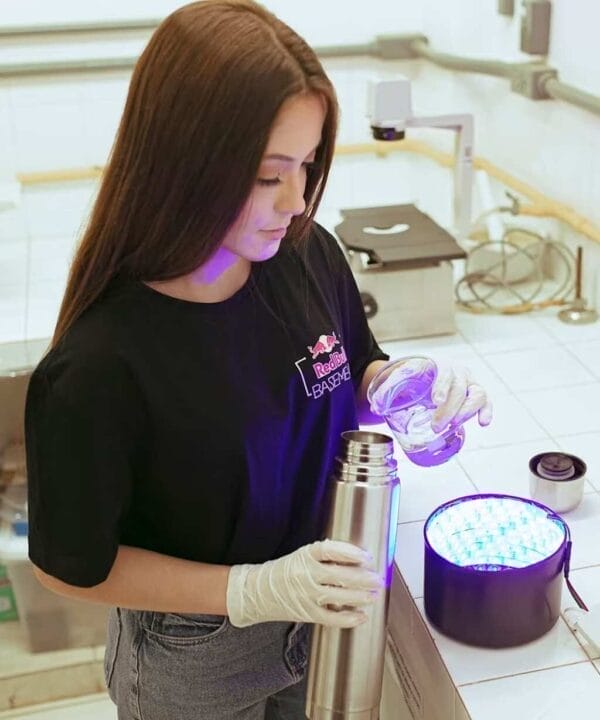
Bárbara Paiva, environmental engineer and student of the Materials Engineering Program (Redemat) at UFOP, designed a bottle that uses solar radiation to filter, sterilize, and cool water. Her project, called “Aqualux”, represented Brazil in the final of the Red Bull Basement University, where it received an award. energy
Origin of the Idea
Bárbara’s idea emerged five months ago in the Entrepreneurship and Innovation course, where she researched the sterilization of parasites using radiation. “The project can be applied in areas without access to clean drinking water, such as underdeveloped regions, and can also be useful for athletes and campers,” Bárbara explained.
-
Scientists uncover surprising secrets of a mysterious man buried in Finland 400 years ago

-
Former xAI engineer says he tried to warn about security flaws in Grok, ended up fired, and has now put Elon Musk’s company in a legal dispute that could reveal explosive behind-the-scenes details of artificial intelligence.

-
Finnish startup transforms recycled wood and agricultural waste into a renewable supercapacitor, promises up to 80% lower cost and targets more stable power grids without relying heavily on lithium, nickel, and cobalt.
-
Argus robot with 20 eyes and 20 legs surprises by walking on sand, concrete, and vegetation without relying on front or back.


Impact
The Aqualux project stands out for its ability to sterilize water without the need for electricity. “I developed this project to democratize access to clean drinking water in a simplified manner, using sunlight,” stated the engineer.
How Solar Sterilization Works
The Aqualux bottle utilizes two systems: first, a membrane filter removes large particles. Then, blue radiation kills microorganisms such as Escherichia coli, ensuring safe water for human consumption.

Production and Commercialization
Bárbara plans to start producing the bottles later this year, focusing on people without access to clean drinking water. Although she currently only has a prototype, she hopes that the production cost will not be high. The solar charger is the most expensive component, necessary for communities without access to electricity.
Recognitions
Bárbara Paiva’s project led her to be included in the “Forbes Under 30” list, which recognizes successful young people in various fields. Bárbara developed her project at the Laboratory of Polymers and Electronic Properties of Materials (Lappem) under the supervision of Prof. Rodrigo Bianchi. This project enhanced UFOP’s reputation both in Brazil and internationally.
Bárbara Paiva’s Aqualux project represents an innovative and accessible solution for providing drinking water in regions without access to this vital resource. Her participation in the Red Bull Basement University 2021 and her recognition on the “Forbes Under 30” list demonstrate the impact and potential of her work in environmental engineering and sustainability.





Parabéns Bárbara!!!!
Gostaria de ter uma garrafa dessa.
O Brasil tem pessoas de nível exponencial na área da tecnologia, mas deixa esses talentos irem para outros países por falta de incentivo.
Espero que você consiga ficar por aqui e ajudar nosso povo.
É de pessoas assim que o Brasil precisa. Inteligente, inovadora e dinâmica, q pensa no bem comum. Parabéns, Bárbara, Deus ilumine sua mente eternamente. Abç
Essa merece um Nobel pois beneficiará pessoas carentes em locais sem tratamento de água. É um projeto para benefício de muitas pessoas em todo o mundo que não tem acesso a água potável.