






 Portuguese
  Spanish
  2 min of reading
  1 comment





Pre-Salt Specialist, the Professional Details the Technical Challenges, Security, and Innovations of Offshore Operations, Recognizing Confinement as Part of the Routine.
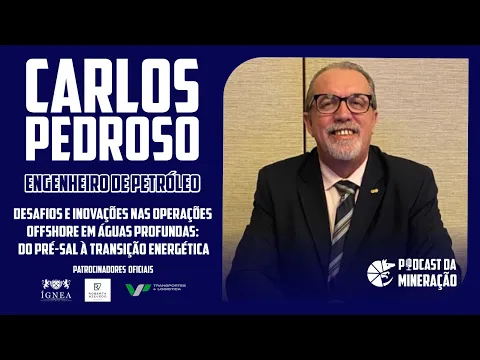
In the oil industry, long-term careers in offshore work are milestones that reflect technical expertise and dedication to the sector. Chemical engineer Carlos Alberto Pedroso, with 35 years of experience, 25 of which in offshore operations, illustrates the excellence required in pre-salt and the adaptation to a confinement lifestyle.
His career, focused on challenges such as operational safety and new technologies, demonstrates that staying in the oil industry for over three decades is a result of a deep passion for the profession and technical mastery, in an environment that demands strict routines and total focus. Analyzing a career with such length requires understanding the mechanisms that keep these specialists active for so long.
The Restrictions of Retirement in the Sector

A common question arises about the necessity to work 35 years when the special activity historically allowed retirement with 25. The answer lies in the 2019 Pension Reform, which changed the landscape for workers in the oil industry exposed to harmful agents.
-
Oil production grows in Rio, but reserve replacement raises a warning sign

-
Petrobras is expected to complete the drilling of the Morpho well in the Foz do Amazonas in August 2026, the first well in the Equatorial Margin, an oil frontier that the ANP estimates at more than 30 billion barrels and could redraw the map of Brazil.

-
Oil returns to the center of concerns with tension between the US and Iran

-
IEA reduces forecast for global oil demand in 2026 after impacts of the Middle East crisis



For professionals who were already active, the reform abolished the single criterion of service time, instituting a transition rule of 86 points (a sum of age and contribution time). In practice, this forces many workers to extend their careers beyond the original 25 years to reach the necessary points, making 35-year trajectories increasingly common due to legal necessity.
The Psychological Impact of Boarding
Besides legal issues, decades of dedication to this routine demand a high degree of adaptation. Sociological studies define the platform as a “total institution”, a closed environment with strict rules and fixed schedules where the professional spends half the year in a 14×14 rotation.
Although the professional demonstrates passion for the job, he acknowledges that this immersion generates challenges, such as missing important dates and needing to see the onboard team as a “second family.” The “difficulty of disconnection” from this constant alert routine is an inherent cost to the sector, requiring effort to readjust to life on land.
Do you believe that the current retirement transition rules are fair to those who spend decades working offshore? Leave your opinion in the comments.







A reforma da previdência de 2019 foi um crime cometido contra os trabalhadores em geral. Mas, os mais prejudicados foram os trabalhadores do regime especial!