Portuguese
  Spanish


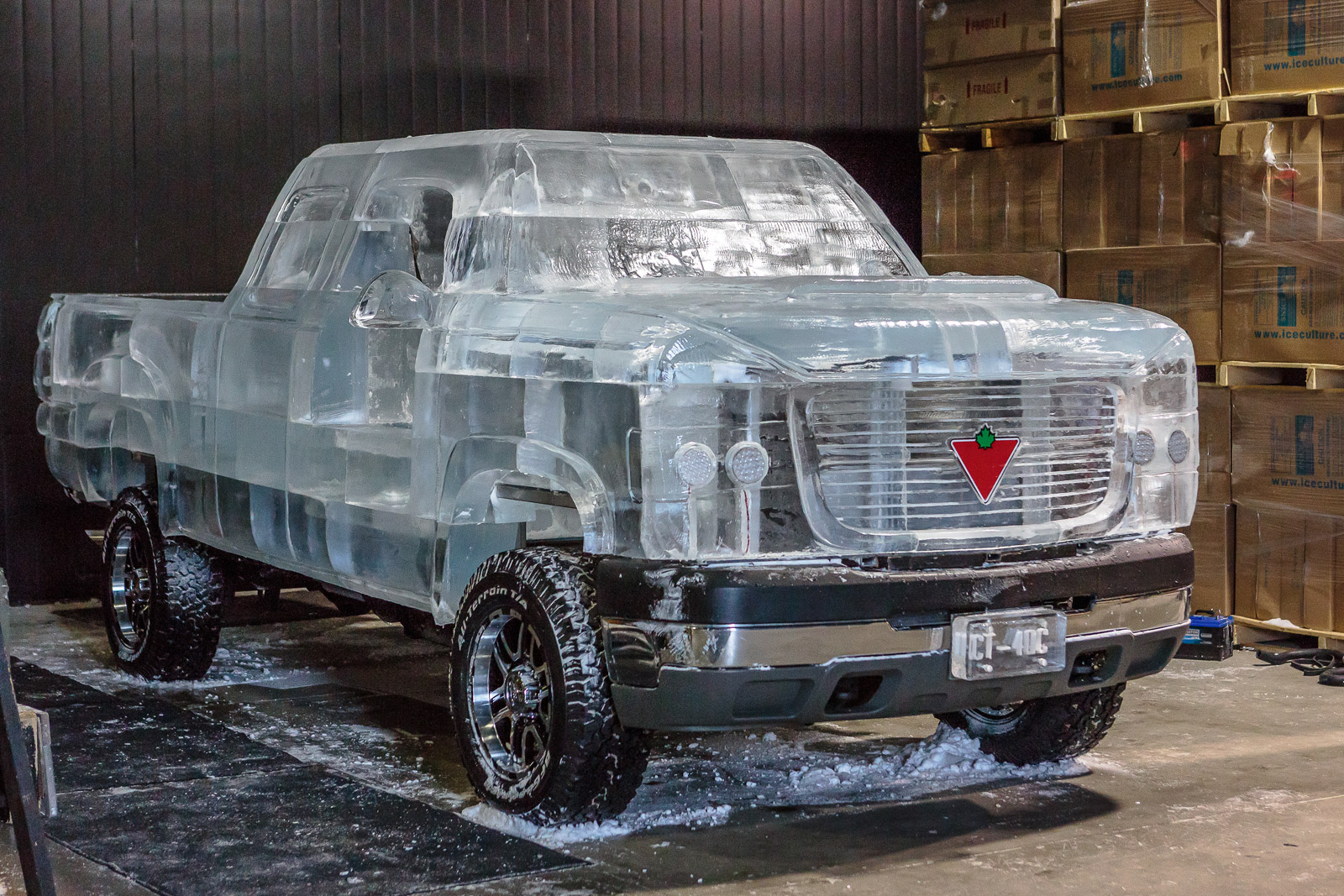

In 2014, Canadian Engineers Created the Ice Truck, the First Functional Car Made of Ice. Based on a Chevrolet Silverado, the Vehicle Weighed Almost 5 Tons and Traveled 1.6 Km Before Starting to Melt.
Canada is known for turning the impossible into reality when it comes to engineering under extreme conditions. But in January 2014, an accomplishment caught the attention of the entire world: a group of engineers and sculptors from the company Iceculture, in partnership with Canadian Tire Corporation, unveiled the Ice Truck, the first functional vehicle made almost entirely of ice.
Mounted on the chassis of a 2005 Chevrolet Silverado 2500 HD, the Ice Truck weighed almost 5 tons, with 4,990 kg made from solid blocks of crystalline ice. The vehicle was not just a sculpture — it actually moved, with a fully operational engine, steering, and lighting. The truck traveled 1.6 km at a speed of 20 km/h in Ontario, Canada, before starting to melt, marking its place in history as one of the most unusual and spectacular creations ever made.
An Extreme Test of Engineering and Resilience
The Ice Truck project was conceived by Canadian Tire as an advertising campaign to demonstrate the durability of its MotoMaster Eliminator Ultra batteries, designed to withstand temperatures as low as –40 °C. The proposal was bold: to build a real truck, using ice instead of a metal body, and prove that it could start and run in the extreme Canadian cold.
-
Thinking of Installing LED Headlights? Why Replacing Halogen Bulbs is Still Banned, the Glare Risks Authorities Worry About, and How a New Proposal Could Allow Certified, Safe Installations

-
2027 Toyota Corolla Cross Unveiled: New Design, Enhanced Fuel Efficiency, Reduced Maintenance Costs, Advanced Technology, Connected Services, and Up to 10-Year Warranty

-
Fiat Cronos Precision 2018: Affordable Sedan with Spacious Trunk and Reliable Maintenance
-
Volkswagen to Cut Production by 1 Million Cars by 2030, Reducing Jobs and Platforms, Focusing on More Profitable Models





The challenge involved engineers, sculptors, and automotive technicians. During the test, conducted in the town of Hensall, Ontario, the truck started without any issues, driving smoothly over the frozen asphalt — an impressive demonstration of creative engineering. Images of the achievement went viral within hours, turning the Ice Truck into a global phenomenon.
How the Ice Truck Was Built
Building the Ice Truck took three months of planning and two intense weeks of assembly. The engineers kept the chassis, powertrain, and original wheels of the Chevrolet Silverado, but everything that was aesthetic — cabin, doors, hood, bed, seats, and dashboard — was sculpted from 130 kg ice blocks.


In total, more than 11,000 pounds of ice were molded and sculpted by hand by specialists from Iceculture, a Canadian company recognized worldwide for its ice sculptures. No glue or additional metal structure was used: the blocks were secured by fitting and the natural adhesion of the ice in a controlled environment.
The cabin featured entirely transparent seats and dashboard, and even the headlights and taillights were molded from translucent ice. The assembly was kept in a refrigerated chamber until the time of the test to prevent the structure from yielding before the demonstration.
A Spectacle That Lasted Briefly but Made History
When the Ice Truck engine was turned on for the first time, the ambient temperature was –18 °C, ideal for preserving the integrity of the body. The truck traveled its exhibition route without incidents, proving that it was possible to combine art and mechanical engineering in a single project.
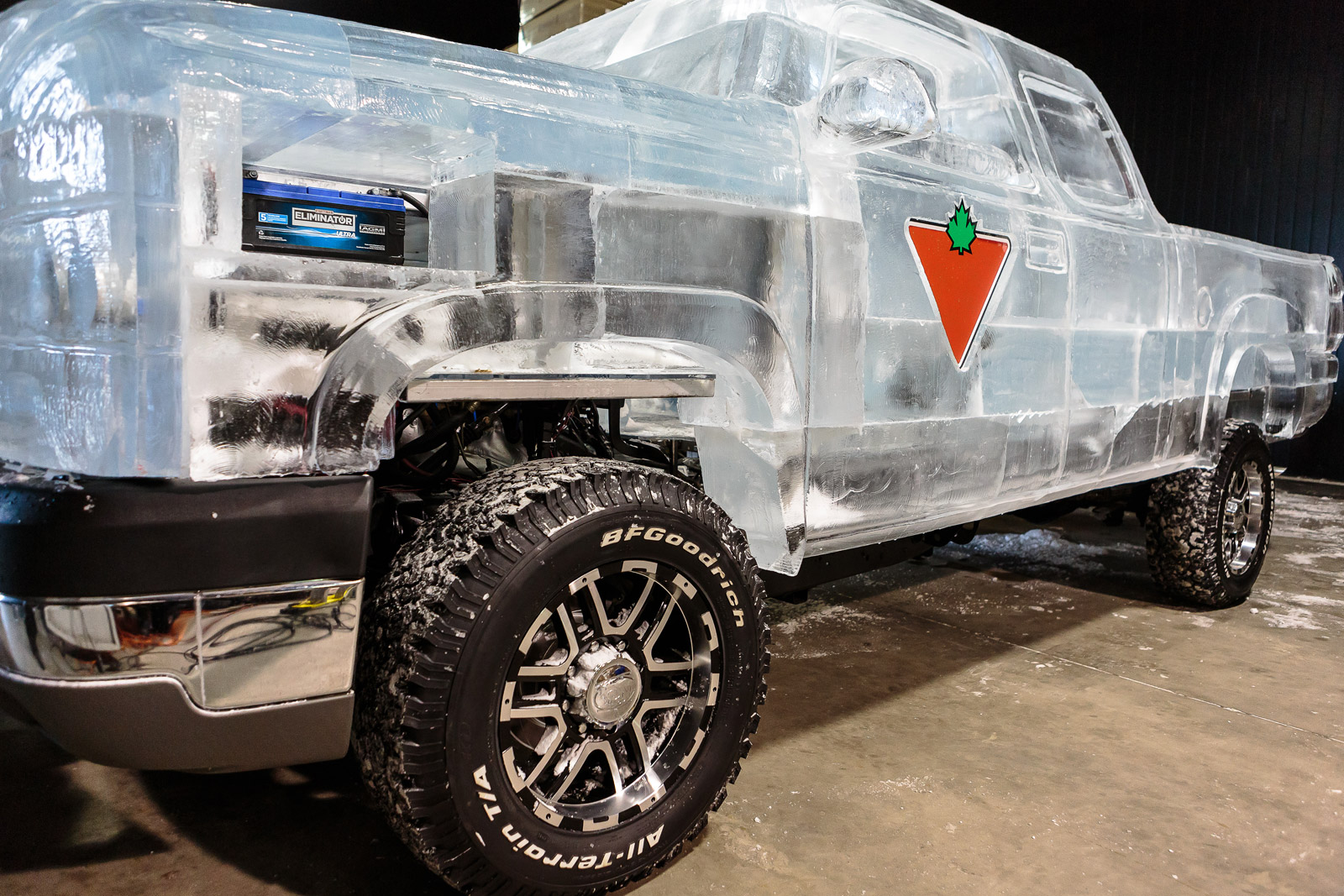
After the test, the truck was left on public display until it gradually started to melt. The translucent body and the shine of the ice under the lights made the process as mesmerizing as the experiment itself. Within a few days, the vehicle disappeared — but the feat remained recorded as a landmark of creativity and innovation.
A Lesson in Resourcefulness and Imagination
More than just an advertising stunt, the Ice Truck was a lesson about the power of human ingenuity. It showed that even a fragile and fleeting material like ice can be transformed into something functional and surprising when technology and art work side by side.
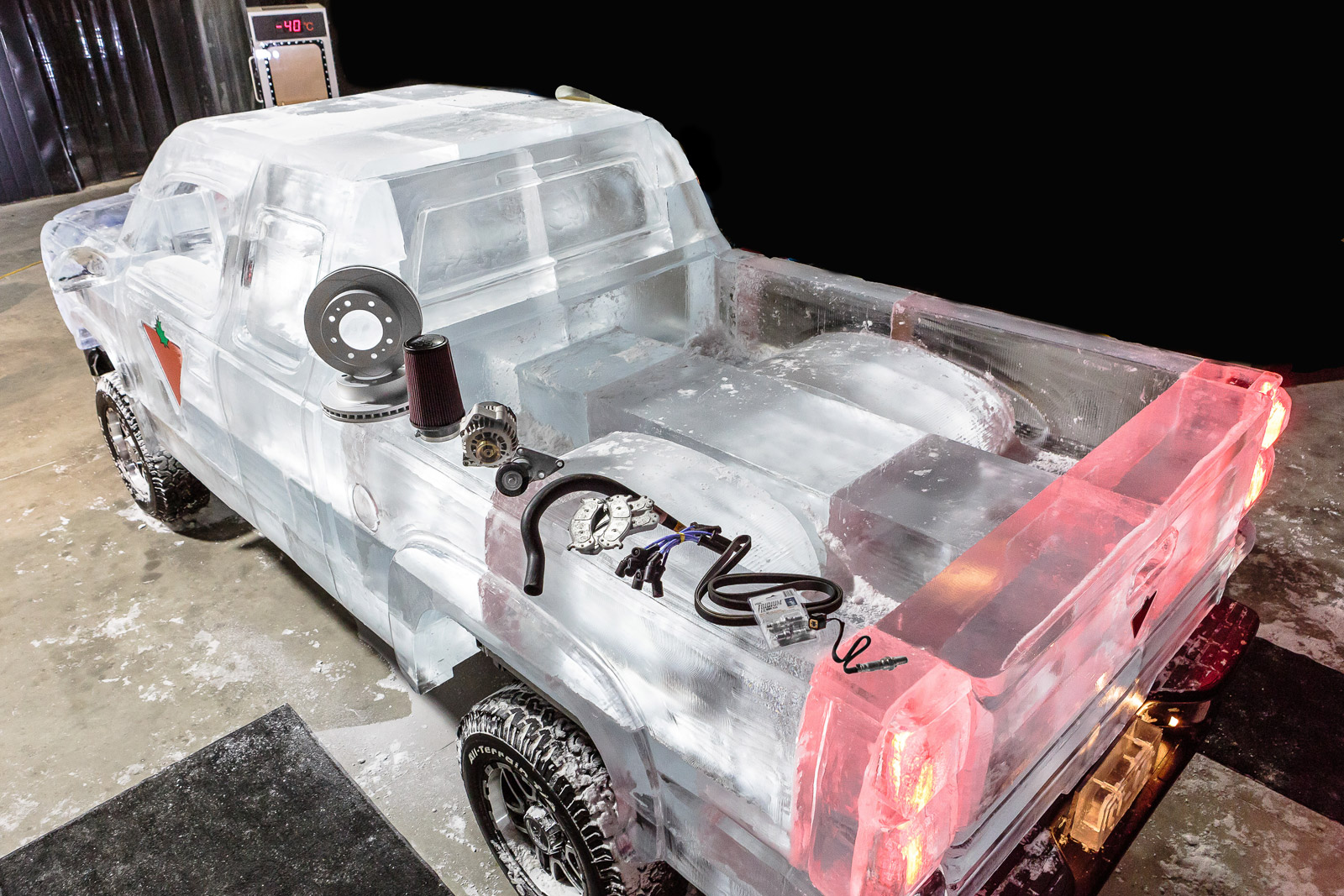
The project required complex calculations to prevent the excessive weight of the blocks from breaking the chassis or the suspension system. To achieve this, the team used different densities of ice and invisible structural reinforcements while maintaining the visual fidelity of the sculpture.
The result was one of the most extraordinary experiments ever conducted in modern automotive history — a vehicle that was born from the cold, lived for moments, and entered history as the car that literally melted after fulfilling its mission.