Portuguese
  Spanish


China Expands Yuan Loans for Infrastructure in Africa, Reduces Dollar Space, and Transforms the Continent into a Laboratory for Global Dedollarization.
While the world discusses the future of the “petrodollar”, the strength of Western sanctions, and even the impact of cryptocurrencies, a silent movement has been happening in Africa that deserves extra attention. China, the largest global creditor of developing countries, has been increasing the use of its own currency, the yuan, as a form of financing for infrastructure projects on the African continent. Railways, ports, power plants, and highways are being built not with American dollars, but with loans in Chinese currency, in a process that exposes the gradual weakening of the dollar in strategic regions and could redefine international financial balance.
The Advance of the Yuan in Chinese Loans to Africa
According to reports from the China Africa Research Initiative (CARI), Johns Hopkins University, China has already lent over US$ 150 billion to African countries since 2000.
Until a few years ago, the overwhelming majority of these contracts were made in dollars. But this reality is changing.
-
European Parliament Approves Digital Euro, Aiming to Challenge Visa and Mastercard’s Dominance and Transform Payments Across Europe by 2029

-
Israel finds Hezbollah militarized tunnel over 200 meters long under village, with 4 missile launch shafts, 12 chambers, anti-tank missiles, drones, and weapons depots at a depth of 25 meters.

-
Ukraine launches largest drone attack on Moscow since 2022, Russia claims to have intercepted nearly 200 aircraft near the capital, Kapotnya refinery targeted again, and offensive reignites alert about war reaching the Russian energy heart just a few kilometers from the Kremlin.

-
Truck drivers, freight, and fines from 2022 take center stage in politics: Chamber approves MP with amnesty, mandatory tracking by CIOT, million-dollar penalties, and new minimum wage for those who spend more than 24 hours on the road.




Chinese banks and the China Development Bank have increasingly been offering lines of credit directly in yuan, with interest rates linked to Beijing.
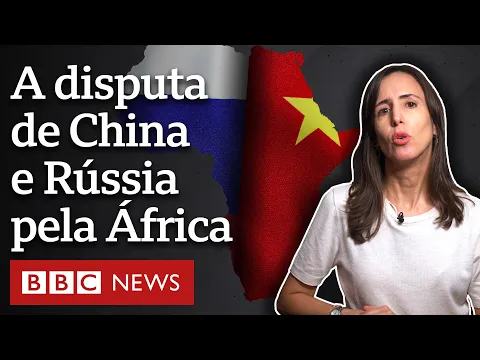

Major projects, such as the Djibouti-Ethiopia Railway, the Caculo Cabaça Hydroelectric Plant in Angola, and port expansions in Kenya and Tanzania, have begun to rely on loans in Chinese currency.
The same is true in countries like Nigeria, Zambia, and Ghana, where indebted governments find in the yuan an alternative to Western credit, which is often conditioned on adjustments imposed by institutions like the IMF and the World Bank.
The “Belt and Road” as a Driver of the Strategy
This advancement is not isolated. It is part of the Belt and Road (New Silk Road) initiative launched in 2013 by the Chinese government, which seeks to integrate Asia, Africa, and Latin America through infrastructure projects and logistical corridors.
Officially, the strategy is presented as cooperation for development. In practice, it creates financial dependency and strengthens the position of the yuan as an international settlement currency.
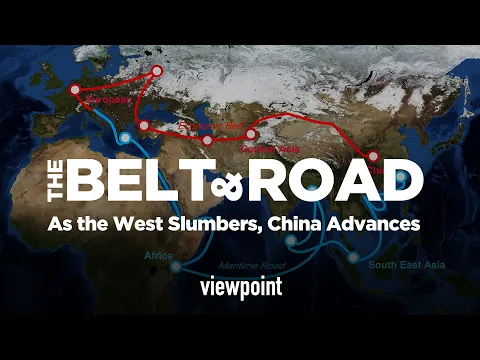
Beijing has encouraged banks and companies to conduct transactions in its currency, reducing foreign exchange conversion costs and, above all, decreasing the risk of sanctions and financial blockages. For African countries, access to the yuan opens doors at a time of rising indebtedness and low dollar liquidity.
For China, it means consolidating geopolitical influence in a strategic region rich in oil, gas, and minerals essential to the global energy transition, such as lithium and cobalt.
The Silent Weakening of the Dollar
The impact of this process goes beyond Africa. The dollar, which has always been the standard currency of international trade, loses ground when billion-dollar contracts are no longer made in its denomination. Although the global volume in yuan represents only about 5% of international transactions, the trend is clear: in strategic sectors and in countries with a strong Chinese presence, Beijing’s currency is beginning to fill the space previously reserved for the dollar.
A symbolic example was the recent negotiation between China and Nigeria, in which part of the financing was settled in yuan. Another case was the decision by the Central Bank of Angola to include the yuan in its official reserves, alongside the dollar and the euro. These changes may seem small, but accumulated over the years they signal a monetary reconfiguration on a global scale.
Africa as a Testing Ground for Dedollarization
Analysts see Africa as a true dedollarization laboratory. Unlike Europe and the United States, where the dollar remains dominant, and Asia, where there is resistance from strong economies like Japan and India, the African continent offers a conducive environment for the penetration of the yuan. Governments with an urgent need for financing, little negotiating power with traditional institutions, and an increasingly close relationship with China make the region ideal for testing the power of its currency.
If loans in yuan become the standard, it will be a decisive step toward the internationalization of the Chinese currency. In addition, it creates a network of countries that become more dependent on Beijing than on Washington to keep their economies afloat, shifting the axis of financial influence.
Reactions from the U.S. and the West
The United States and Western institutions are closely monitoring this expansion with concern. The reduction of the dollar’s presence weakens its ability to impose sanctions and control global financial flows. Moreover, indebtedness in yuan could create a “circle of dependency” in which African countries become trapped by Beijing, with the risk of relinquishing strategic assets if they cannot meet their payment obligations.
An example was the case of Zambia, which collapsed financially and had to renegotiate debts with Chinese creditors. The situation raised alarms at the IMF, which accused Beijing of practicing what is called “debt trap diplomacy.” China, in turn, denies the accusation and claims that its goal is to strengthen South-South cooperation ties.
The BRICS as a Global Showcase
The expansion of the yuan in Africa also aligns with the BRICS agenda. By showing that its currency can finance large projects beyond its borders, Beijing strengthens the narrative that the bloc can build alternatives to the Western-dominated financial system. African countries like Egypt, Ethiopia, and South Africa are already part of BRICS, creating a favorable environment for the adoption of the yuan in projects financed by the New Development Bank (NDB).
The strategy is clear: consolidate the yuan as a financing and trade currency among developing countries, reducing the centrality of the dollar and bringing emerging economies closer around China.
A Multipolar Future in the Financial System
The process is still in the consolidation phase and faces challenges. The yuan does not have the same global liquidity as the dollar, and the lack of transparency in China’s currency policies generates distrust. Nevertheless, the movement is already irreversible: contracts and infrastructure projects are being signed, and the dollar is being left out.
If this trend spreads to Latin America and the Middle East, the impact could be even greater. Ultimately, the world is heading toward a multipolar financial system, where the dollar will remain relevant but will no longer be absolute. In this scenario, Africa will have been the first successful testing ground for the internationalization of the yuan.