Portuguese
  Spanish


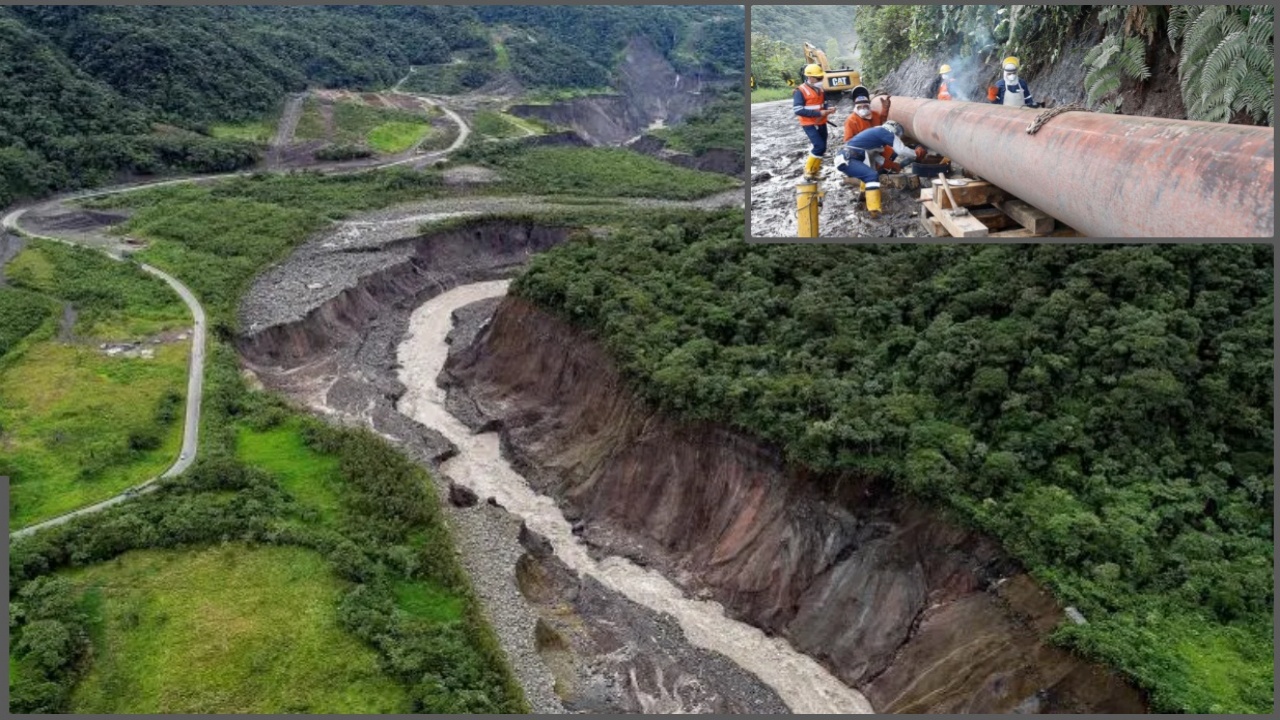

Petroamazonas Has Sufficient Stocks of Gasoline, Diesel, Aviation Fuel, Fuel Oil for Electricity Generation, and LPG for Domestic Use at All Its Terminals.
Ecuador, which produces about 490,000 barrels of crude oil per day, declared for the third time a “force majeure” in its oil sector due to the erosion of the Coca River, located in the Amazon region, which currently compromises the infrastructure dedicated to oil transportation in the country. The danger is that the pipelines may break again.
See Also
- Rio de Janeiro Records an Increase Above 7% and the Price of Gasoline Reaches Nearly R$ 8, Achieving the Second Highest Average in the Southeast Region
- Four Mustang Shelby GT500s, the Most Powerful Car in the World, Were Stolen Last Sunday (12/12) from the FORD Factory in a Hollywood-Style Heist
- Seadrill Secures a US$264 Million Contract from Petrobras for Another Platform that Will Operate in the Búzios Field
- CBO Group – Brazilian Offshore Company Acquires New RSV, a Deepwater Vessel, Expanding Its Fleet to 41 Ships
- Petrobras Extends the Service Contract for the Ship Siem Helix 2 for One Year
The decision is made after the advancement of erosion led to the interruption of crude oil transportation through the Trans-Ecuadorian Pipeline System (SOTE) and the Heavy Crude Pipeline (OCP), as well as derivatives in the Shushufindi-Quito pipeline,” a statement from the Ministry of Energy and Non-Renewable Resources released on Monday said.
“Force majeure” is a clause established in oil contracts that allows certain commitments made by the country to be suspended “when there is an irresistible, unpredictable, or unavoidable circumstance that causes obstruction or delay, total or partial, in fulfilling obligations between the parties,” as is the case with the natural phenomenon of erosion that puts oil infrastructure at risk.
-
Brazil’s ANP Opens 86 New Oil Blocks in the Equatorial Margin, Expanding the Amazon River Mouth Frontier

-
OPEC+ Boosts Oil Supply by 188,000 Barrels per Day in July 2026, Leading to Price Drop from $112 to $89 per Barrel in Under Two Months

-
TotalEnergies Signs 20-Year Deal to Purchase 2 Million Tons of LNG from Alaska, Boosting Project Viability
-
Turkey Deploys Çağrı Bey Drilling Ship to Explore New Oil Frontier Off Somalia’s Coast



Ecuador Develops Action and Contingency Plans to Minimize the Impact of the Situation Across the Oil Chain
Following this declaration, authorities reported that action and contingency plans are being implemented to minimize the impact of the situation across the hydrocarbons chain: exploration, production, refining and industrialization, transportation and storage, and both domestic and international marketing of oil and its derivatives.
Among these actions is the construction of variants that allow for the resumption of crude oil pumping, and once Petroamazonas and the OCP have the technical conditions to restart operations, they must notify the ministry and the Agency for Regulation and Control of Energy and Non-Renewable Natural Resources (Arcernnr).
The statement also indicates that efforts will be coordinated to maintain the supply of fuel at the national level and that Petroamazonas has sufficient stocks of gasoline, diesel, aviation fuel, fuel oil for electricity generation, and LPG for domestic use at all its terminals.
According to official information, the OCP and Petroamazonas allow for the transportation of crude oil from the Amazon province of Sucumbíos (northeast) to Esmeraldas (northwest). Between January and October 2021, the SOTE transported 319,442 barrels of crude oil daily, while the OCP transported 163,221 barrels of oil per day.