Portuguese
  Spanish


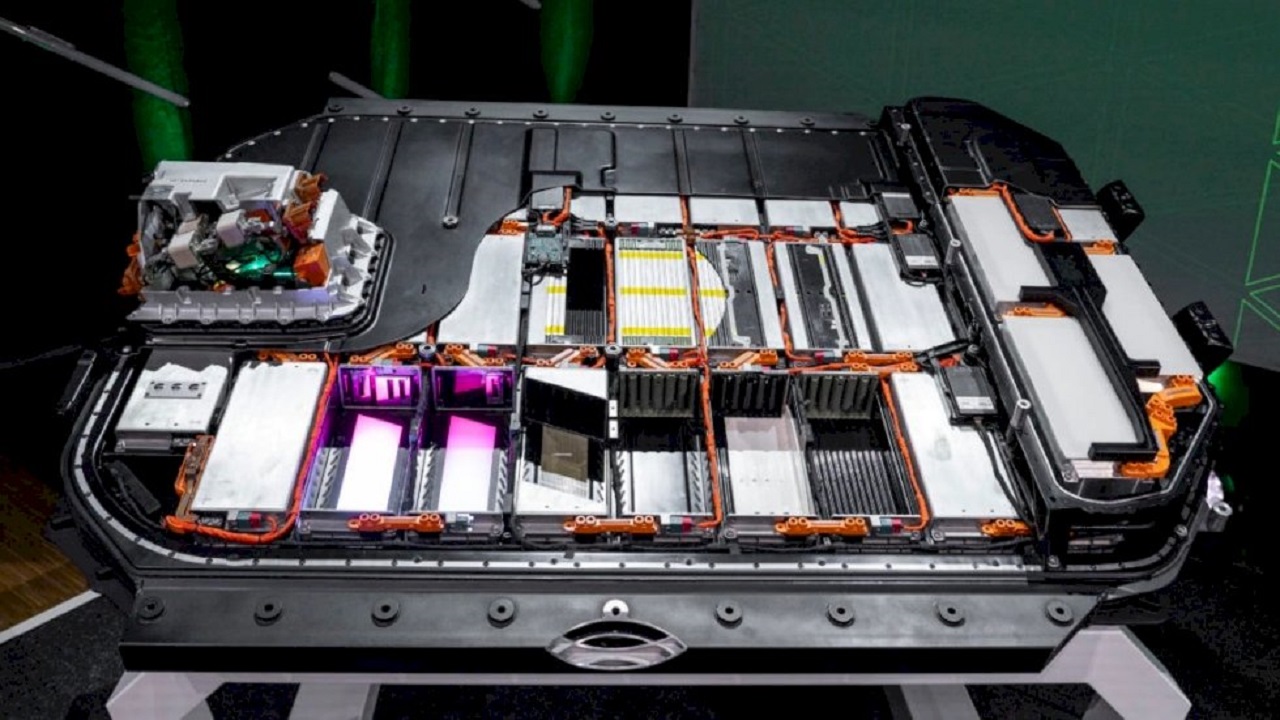

Chinese Scientists Develop New Battery for Electric Cars That Can Charge 80% in About 11 Minutes. The Batteries Still Have No Expected Market Arrival, but They Promise to Solve the Range Problem in the Electric Vehicle Market
Just like the high price and lack of infrastructure, the time needed to charge batteries is one of the major difficulties preventing the popularity of electric cars, but this may be about to change. Several companies and institutions have initiatives to reduce charging time, but researchers from China are leading the way by developing a new technology. According to a thesis prepared by the team of scientists at the University of Science and Technology of China (in Hefei), the new battery takes about five to six minutes to charge 60%. Therefore, to reach 80%, it would take 11 minutes. Currently, the fastest charges can take 20 or 30 minutes to achieve 80% capacity.
New Battery for Electric Cars Could Revolutionize Market
To achieve this, the group of scientists, led by Professor Yao Hongbin, rearranged the lithium-ion particles in the battery, distributing them more evenly. The configuration of the particles, which are ordered by size and with reduced gaps, did not impact the energy storage.
According to the professor, the porosity is greater at the top and lower at the bottom, serving to keep the average porosity at a normal value. Regarding the results, laboratory tests showed progress, considering that, through optimization, the new electric car battery system eliminates the time needed for rearrangement inside the battery. It is important to emphasize that the new technology developed by the scientists uses graphite and copper nanowires to expand the battery’s capacity.
-
1983 Chevrolet Runs Over 100,000 km Without Gasoline, Powered by Wood Chips, Reaches 125 km/h in Airport Test

-
Workshop Converts Giant Tractor Tire Tricycle into a Three-Wheel Drive Hybrid with 36,000-Watt Electric Motor Capable of Climbing Hills

-
Chery Offers Lifetime Battery Warranty and Car Replacement for Major Failures Under New Chinese Regulations
-
Sales of Brazil’s Cheapest Electric Car Halted Before First Deliveries: E-Motors Suspends Emova Easy Due to Import Tax Increase and Rising Freight Costs




New Electric Car Battery Technology Still Needs Economic Viability
For now, batteries for electric cars predominantly use lithium ions in their composition. Various binding agents are required for the anode to solidify.
This is the electrode through which positive electric charge enters the device, but this action causes these particles to be distributed randomly within the structure, increasing charging time.
As expected, any advancement in new technologies involves a higher price. Therefore, the scientists speculate that the costs for incorporating the new materials into the battery structure will increase with the new process.
Mercedes-Benz Develops New Tesla-Level Battery for Electric Cars
Mercedes-Benz recently announced a technology that could bring it up to Tesla’s level. The German automaker has partnered with ProLogium Technology to develop smaller solid-state batteries.
The goal now is to launch the technology by 2025. The automaker’s announcement has generated curiosity in the automotive industry, and according to Tesla co-founder Martin Eberhard, the new battery from the German company is one of the best ever produced, and he also stated that Mercedes-Benz has a trump card to compete with Tesla, led by Elon Musk.
The estimate is that the German automaker will invest US$ 300 million in the production of these new batteries. This initiative is part of the brand’s strategy to sell a range of electric cars by the beginning of the next decade, which is much earlier than the date set by Europe. The new solid-state battery from the brand, in addition to using materials that allow for doubling the range, has a significant advantage in terms of safety.