






 Portuguese
  Spanish


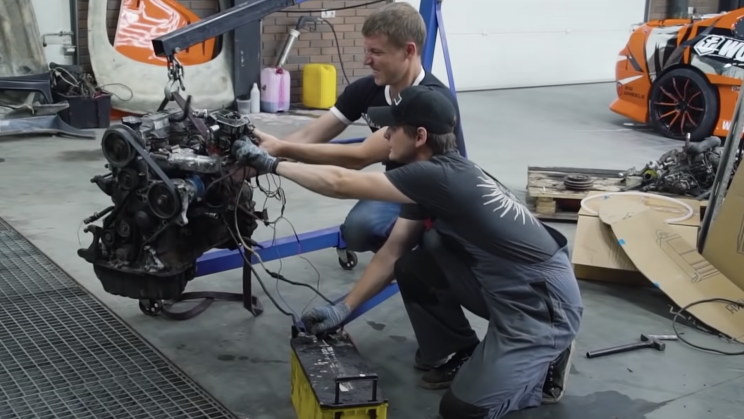

Russian YouTube Channel, Made Up of Engineers, Tries to Convert a Diesel Engine into a Gasoline Engine
Engineers from a Russian YouTube channel called Garage 54 are working hard to try to convert a diesel engine into a gasoline engine. The results of the experiment showed some surprising outcomes, highlights the website Motor1.
What Changed in the Conversion?
Gasoline and diesel engines share the commonality of functioning through internal combustion; however, if you fuel it with the wrong fuel, it can cause devastating damage to the engine.
This illustrates the scale of the challenge the Russian channel faced in attempting the conversion. The challenge was to use a Toyota 2CT turbodiesel engine, taken from a van, to try to make it run on gasoline.
-
A Brazilian city decided to purchase a piece of the Atlantic Forest with more than 153,000 square meters, and owners of preserved areas will be able to submit proposals to transform the forest into a conservation unit.

-
Brazilian siblings aged 11 and 7 read 240 books in just one year and caught attention on social media: while many children spend hours on screens, they turned their family’s routine into an example of reading, discipline, and curiosity.
-
The legendary oak that, according to the story, hid Robin Hood from the Sheriff of Nottingham, died at the impressive age of 1,200 years in England, and the first chilling sign of its end was that no leaves sprouted on the tree this spring.

-
While the world looks at forests, the UN warns that the Earth is also threatened by the silent degradation of natural grasslands and savannas, ecosystems that cover half of the planet, support billions of people, and can exacerbate water, food, and climate crises.


The engineering team began by completely disassembling the engine, cleaning the parts, and measuring the length of the combustion chamber. The compression ratio of diesel engines needs to be higher than that of gasoline engines. A high compression ratio, when using gasoline, can cause an explosion inside the engine.
Aware of the risk of causing permanent damage to the diesel engine, the team significantly reduced the engine’s compression ratio. Modifications were also made to fit the spark plugs found in gasoline engines.
After all the work was done, the engineering team reassembled the engine to begin testing and studying the project. Incredibly, the engine started on the first attempt, functioning relatively well. The issue encountered was low RPM; however, the project is seen as a massive success.
Watch Below the Results of the Entire Project


It is currently hard to envision a significant use of this project in the real world. The reason is that governments worldwide are seeking to reduce the use of combustion engines. The expectation for the next 20 years is a huge reduction in the production of combustion engines.








