






 Portuguese
  Spanish


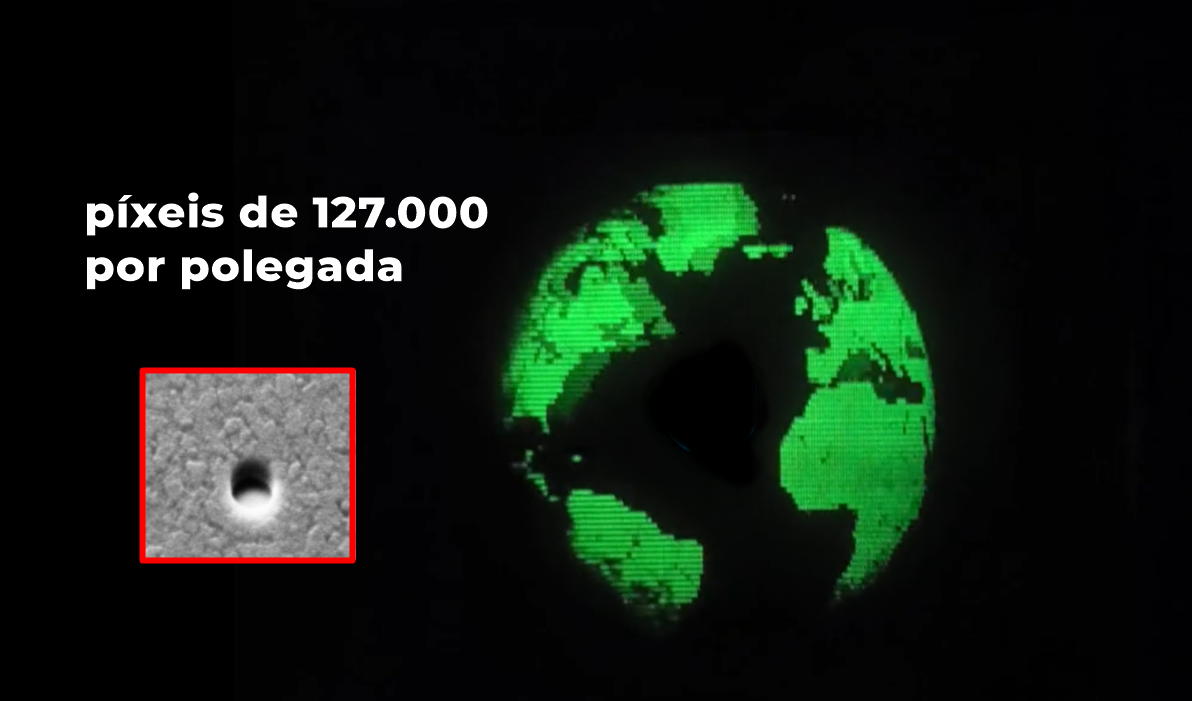


An Impressive Discovery Was Made By A Team Of Physicists And Engineers: LED Pixels The Size Of A Virus. This Extreme Miniaturization Could Transform Screen Design And Expand The Use Of Displays In Medical Technologies And Next-Generation Electronics.
An international team of physicists, engineers, ophthalmologists, and photonics specialists took a bold step towards the future of digital displays. Scientists from Zhejiang University in China, in partnership with colleagues from the University of Cambridge in the UK, have managed to create LED pixels as small as a virus. The Secret? A Mineral Called Perovskite.
Smaller, Brighter, And More Efficient
The challenge was old: how to further reduce the size of the pixels without losing quality or increasing costs?
The answer came from nature. Perovskite, already known for its promising use in solar cells, has shown potential to also revolutionize displays.
-
Engineers Develop Jacket That Converts Air Humidity Into Drinkable Water, Producing Up to 900 ml Daily for Hikers, Campers, Rescuers, Rural Workers, and Military in Remote Areas

-
NASA Plans to Repurpose Mars Rover for Lunar Mission, Sending a 1-Ton Nuclear-Powered Vehicle to Explore the Moon’s South Pole Without Solar Dependence
-
Early Humans Made Beds Nearly 200,000 Years Ago in African Caves, Study Reveals

-
Japanese Smart Bike Detects Cyclist’s Intent to Turn and Potential Falls


The researchers fabricated small perovskite semiconductors capable of emitting light upon receiving electricity.
In tests, these LEDs shone with the same intensity as traditional models. No loss of efficiency. And the best part: without increasing production costs.
A Nanometer-Scale Advancement
Excited, the scientists decided to go further. They further reduced the size of the LEDs until they reached a width of only 90 nanometers — about the size of a virus.
This is an impressive number. This allowed for achieving a pixel density of 127,000 per inch, a new record.
By comparison, high-resolution mobile phone screens usually have between 400 and 500 pixels per inch. The difference is huge.
Applications And Limitations Of LED Pixels
Despite the advancement, the work is still in the experimental phase. The LEDs created so far are monochromatic, meaning they only emit a single color.
The next step will be to discover if it is possible to produce colored versions with the same efficiency.
Another open question is durability. Scientists still do not know how long these LEDs would last in real use, in devices such as mobile phones, augmented reality glasses, or portable screens.
Technology For The Future
There is also a physical limit that researchers acknowledge: human vision has a maximum capacity to perceive details.
In other words, at some point, making the pixel smaller no longer makes a difference to the user.
Even so, the team believes that this technology could be useful in very specific niches, such as augmented reality devices with ultra-high resolution.
For now, perovskite LEDs are not yet ready for the market. But the technical advancement shows that new solutions are emerging to make future screens even sharper, more compact, and accessible.
Study published in the journal Nature.


