






 Portuguese
  Spanish


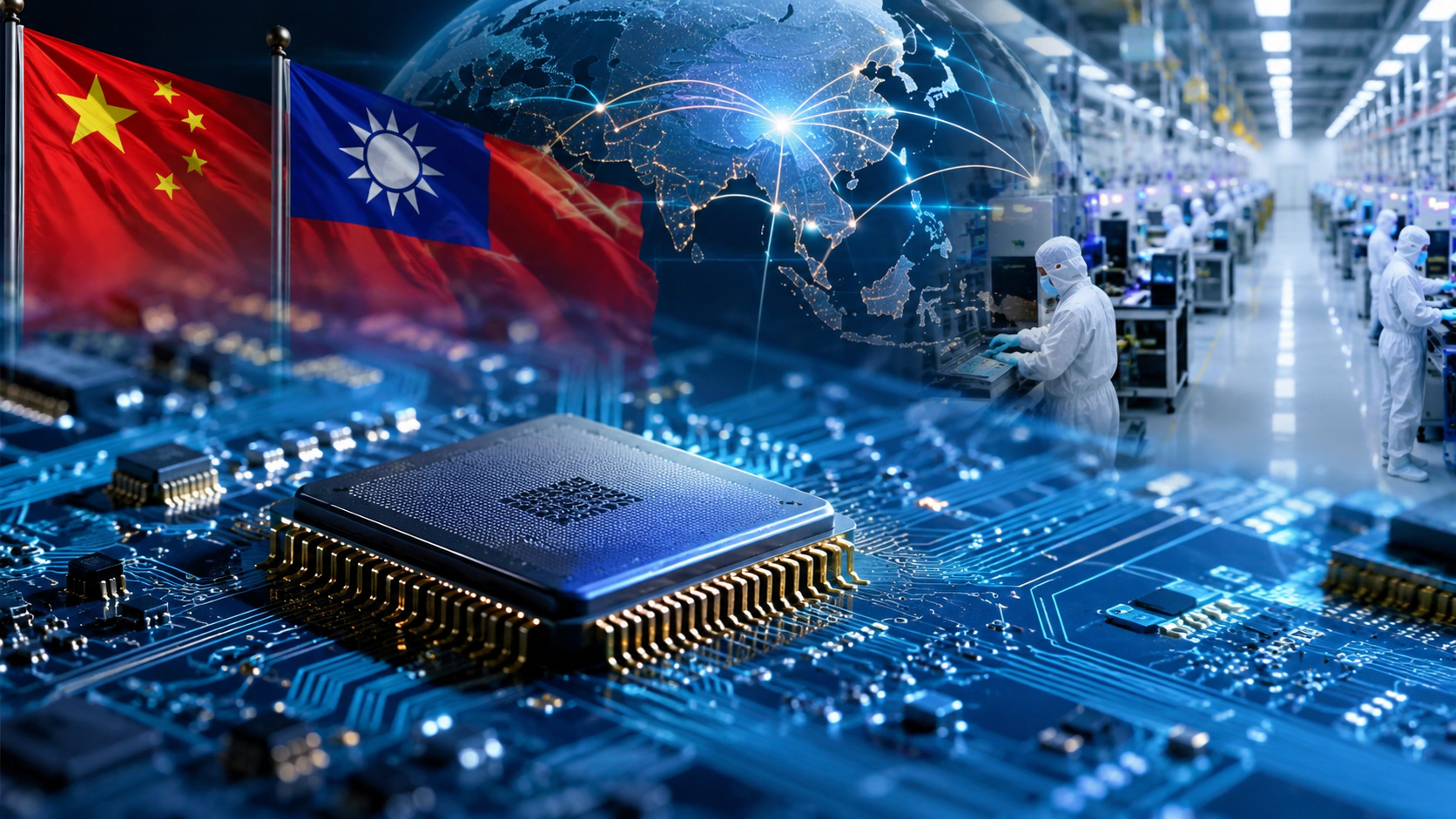

China and Taiwan lead the construction of 64 new semiconductor factories, expanding the advancement of artificial intelligence and the global industry.
The global race for semiconductors has entered a new phase. According to data from SEMI, an international organization linked to the electronics and integrated circuits industry, 64 new chip factories are expected to start operations in Asia by 2029. Of this total, 58 will be concentrated in China and Taiwan, while only six will be installed in Southeast Asian countries.
According to data from Xataka Brasil on May 14, the simultaneous advancement of China and Taiwan is happening at a strategic moment for the global industry. The explosion of artificial intelligence, the expansion of data centers, and the growth of cloud computing have drastically increased the demand for high-performance semiconductors.
Meanwhile, the United States and Europe are trying to accelerate billion-dollar programs to reduce Asian dependency. Even so, the industrial dominance of the region continues to grow and is already causing concern among governments, technology manufacturers, and economic security experts.
-
Brastemp Unveils New Dishwasher with Smart Sensor, 14 Place Settings, Acquaspray Jet, 70°C Rinse, Water Efficiency, and Intelligent Drying

-
Antarctic Sea Creature Yields Promising Compound Against Melanoma, Captivating U.S. Researchers

-
Underwater Guardian: The Autonomous Robot Monitoring Submarine Cables, Self-Returning, Wirelessly Charging, and Transmitting Data Without Onboard Crew

-
Robots Clean Solar Panels in Desert Power Plants Without Water, Preventing Energy Losses




China accelerates new semiconductor factories to face US restrictions
China has made semiconductors a national priority. The country is trying to reduce its external technological dependency after the restrictions imposed by the United States on advanced chip manufacturing equipment.
Companies like SMIC and Hua Hong Semiconductor have increased investments in new factories to strengthen local production.
Today, China still faces significant limitations to advance beyond 7 nanometers without access to ASML’s extreme ultraviolet lithography machines. Even so, Chinese manufacturers continue to expand production capacity at a rapid pace.
Huali Microelectronics, a division of Hua Hong Semiconductor focused on outsourced chip manufacturing, is preparing to start the production of 7 nm semiconductors at its plant located in Shanghai.
Chinese investments have very clear objectives:
- Reduce dependency on foreign suppliers
- Strengthen the national technology industry
- Expand infrastructure linked to artificial intelligence
- Ensure greater economic and industrial security
Furthermore, China wants to occupy a strategic position in the global artificial intelligence market, considered one of the most important sectors of the next decade.


Taiwan expands production capacity in the face of the artificial intelligence boom
If China seeks technological independence, Taiwan is experiencing a different scenario. The territory is home to key companies in the global semiconductor supply chain, including TSMC and UMC.
TSMC, the world’s leading manufacturer of advanced chips, is facing growing demand for 2 nm and 3 nm technologies. These semiconductors are used in artificial intelligence servers, premium smartphones, supercomputers, and data centers.
The growth of generative AI has further increased the pressure on the company’s production capacity. Therefore, Taiwan has been accelerating the opening of new factories to avoid bottlenecks in global supply.
Experts point out that artificial intelligence has completely changed the dynamics of the semiconductor industry. Advanced models require enormous computing power, which increases the need for increasingly efficient chips.
Currently, Taiwan occupies a strategic position because it precisely dominates the production of the most advanced semiconductors on the planet.
Global race for semiconductors redefines economy and technology
The growth of new factories shows that semiconductors have become essential assets for the global economy. Today, practically all sectors depend directly on these components.
Among the most impacted segments are:
- Artificial intelligence
- Cloud computing
- Electric cars
- 5G networks
- Smartphones
- Military systems
- Industrial automation
According to projections by consultancy McKinsey, the global semiconductor market could exceed $1 trillion by 2030. Much of this growth is linked precisely to artificial intelligence and the accelerated digitalization of the economy.
This scenario helps explain why China and Taiwan concentrate so many investments in new factories. Production dominance ensures economic, technological, and even geopolitical influence.

US and Europe expand subsidies to reduce dependence on China and Taiwan
Western governments have started to treat semiconductors as a strategic national security issue.
In the United States, the Chips and Science Act allocated more than $52 billion to strengthen the local industry. The European Union has also launched billion-dollar programs to expand its production capacity.
Even so, experts warn that reclaiming decades of Asian leadership will not be simple. Building new factories requires massive investments, highly skilled labor, and constant access to critical raw materials.
Moreover, the global semiconductor supply chain is extremely complex. Various countries participate in manufacturing, from mineral extraction to the final packaging of chips.
Vulnerabilities concern the global semiconductor sector
SEMI itself has expressed concern over the strong industrial concentration in China and Taiwan. Ajit Manocha, the organization’s CEO, advocates for other allied countries to increase investments to reduce risks in the global chain.
One of the main concerns involves Taiwan. TSMC’s factories are considered strategic not only for the Taiwanese economy but also for the United States and international partners.
In addition to geopolitical tensions, another issue worries the industry: the scarcity of essential resources for semiconductor manufacturing.
Among the most critical materials are:
- Helium
- Bromine
- Strategic minerals
- Industrial chemical components
Helium, for example, saw a significant increase in value after international tensions involving natural gas production in the Middle East. As the gas is essential for industrial processes related to semiconductors, the price increase has raised a global alert.
Southeast Asia tries to capitalize on the expansion of new factories
Despite the leadership of China and Taiwan, Southeast Asian countries are trying to gain ground in the sector.
Malaysia, Singapore, Vietnam, and Thailand appear as strong candidates to host future new semiconductor factories. Malaysia already has advanced Intel packaging and verification centers, which strengthens its regional position.
SEMI believes that geographical diversification will be important to reduce logistical risks and political vulnerabilities over the next decade.
Global companies are also beginning to explore alternatives to reduce excessive dependence on China and Taiwan in the global chip supply chain.
The new technological dispute that may define the future of artificial intelligence
The expansion of new factories shows that the semiconductor industry has entered a decisive phase. China and Taiwan are rapidly expanding their production capacity just as artificial intelligence becomes the main driver of the digital economy.
At the same time, the United States and Europe are trying to regain ground through billion-dollar subsidies and industrial incentives.
The problem is that Asian leadership remains extremely strong. Taiwan dominates the manufacturing of the most advanced chips on the planet, while China accelerates investments to reduce technological limitations and expand its industrial independence.
In the coming years, semiconductors are expected to gain even more strategic importance. Those who control the production of these components will have economic, technological, and geopolitical advantages in key sectors of modern society.
The global dispute has already begun — and the impacts of this race are expected to directly influence the future of artificial intelligence, technological innovation, and the world economy in the coming decades.
With information from Xataka Brasil


