






 Portuguese
  Spanish


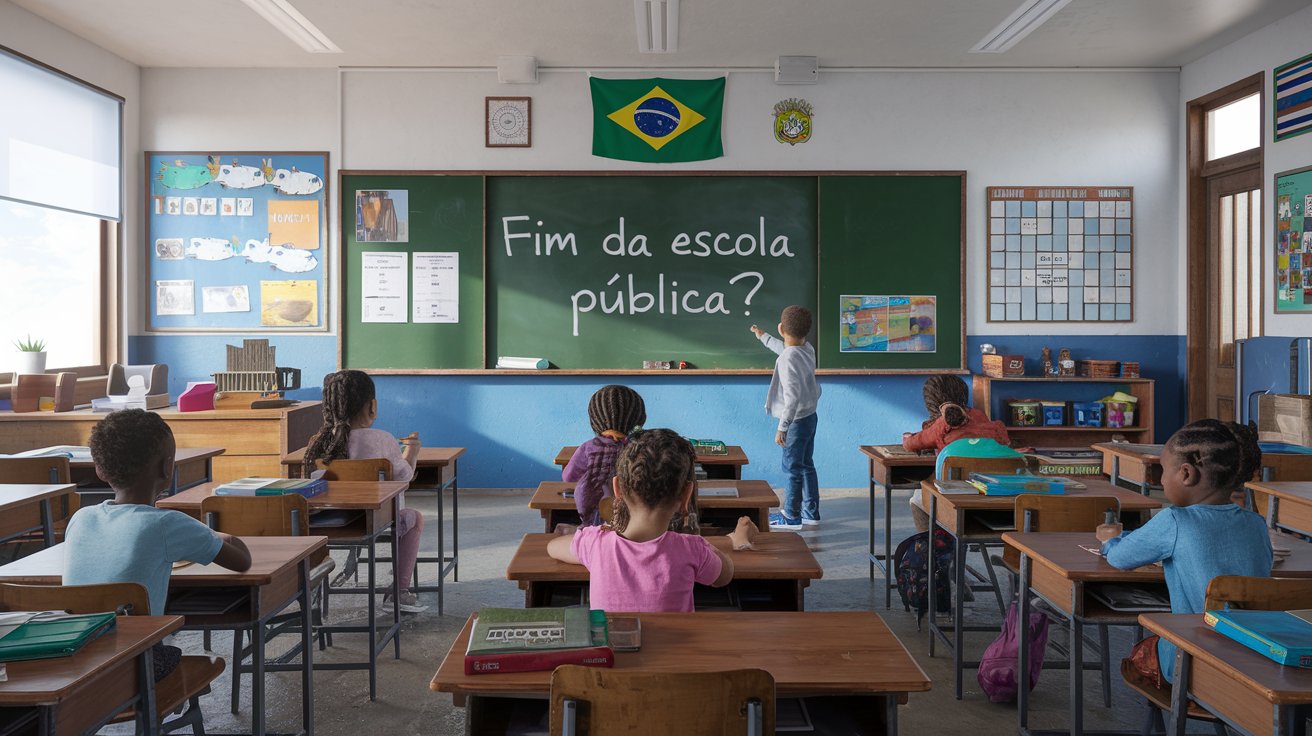

Public Schools in São Paulo Are Set to Change Radically! The Government of Tarcísio de Freitas Advances with a Privatization Plan that Outsources the Management of 143 Units. The Decision, Full of Controversies and Legal Disputes, Raises Doubts About the Future of Education in the State. Will This Be the End of Public Education as We Know It?
The government of São Paulo has officially announced the privatization of the management of 143 state public schools, transferring their administration to the private sector.
The measure was published in the Official Diary and provides that successful bidding companies will be responsible for services such as maintenance, security, meals, and internet.
The model adopted by the state government is part of a strategy to decentralize management and seek greater efficiency in school infrastructure management.
-
Stingless Bee Honey from Brazil Can Cost Up to $120 a Liter, Surprises with Flavors of Wood, Citrus, and Even Cheese

-
Woman Claims to Have Spotted a Technical Pattern in Recent FIFA Tournaments, Predicts Possible World Cup Winner
-
Brazilian Job Market Surprises: Unemployment Falls to 5.6%, Hits Record Low for May, Brazilian Incomes Rise, and Underemployment Reaches Lowest Level Ever Recorded by IBGE
-
Chevrolet Offers Chance to Win a 2026 Sonic RS for Free via WhatsApp


According to specialists, the proposal aims to improve the quality of the school environment but faces criticism regarding its potential impact on the autonomy of the public education system.
Concession Includes Renovation and Operation of the Schools
The bidding notice was approved during a meeting of the State of São Paulo Partnerships Investment Program (PPI-SP).
According to the deliberation, the final model was approved and authorized for publication.
With this, the state government aims to ensure structural renovations and better functioning of school units.
In addition to physical renovations, the public-private partnership seeks to optimize the provision of essential services for the daily activities of schools.
However, specialists warn that outsourcing may pose challenges, such as potential increases in operational costs and the need for strict oversight to ensure the quality of the services provided.
Vice-Governor Justifies the Privatization
The Vice-Governor Felício Ramuth argued that the schools chosen for the concession are those that face the worst structural conditions.
He emphasized that the initiative will allow for extensive renovation and better management of essential services.
The winners of the auction will be responsible for administering cleaning, food, security, and technology in the educational institutions.
Ramuth stressed that the government will continue to monitor the quality of education and that pedagogical activities will remain under state control.
The idea, according to him, is that the structure and services offered to students improve without compromising the didactic autonomy of the schools.
The Public-Private Partnership (PPP) Model
The project is part of the New Schools PPP, an initiative of the state government to grant the private sector the management of non-pedagogical services in schools.
The government argues that this model will allow for more efficient administration of services and better conditions for students.
The proposal follows a trend seen in other Brazilian states and countries that have adopted similar models to improve educational infrastructure.
Proponents of the measure believe that the concession enables more agile and efficient management.
On the other hand, critics argue that the presence of the private sector in public schools may compromise universal access to quality education.
Controversies and Challenges in Court
The privatization of school management has generated intense discussions and faced barriers in the courts.
Last year, the government held two auctions granting 33 state schools to the private sector.
The first auction was won by the Consortium New Schools West SP, while the second was awarded to the Consortium SP+Schools.
Together, these concessions involve 33 units, 938 classrooms, and services for about 34,000 students.
In March of this year, a court decision suspended the bids, citing the risk of compromising pedagogical autonomy.
Judge Luiz Manuel Fonseca Pires noted that it would be difficult to dissociate infrastructure management from pedagogical administration.
Civil society organizations and education unions have strongly criticized the measure, arguing that privatization may compromise the transparency of public resource management allocated to education.
Supreme Court Allows Continuation of Concessions
Despite the initial suspension, the São Paulo government appealed the decision, and the president of the Supreme Federal Court (STF), Minister Luís Roberto Barroso, authorized the continuation of the concession of the 33 schools to the private sector.
With this decision, the government advanced with the project and is now expanding the concession to 143 new school units.
Experts state that, regardless of the decision, it is essential to ensure effective mechanisms for oversight and evaluation of the impacts of this privatization.
The measure continues to receive criticism and support, dividing public opinion on the impacts of this model on the state’s public education.
What do you think about this change? Can the privatization of school management improve the quality of education or compromise its autonomy? Leave your opinion in the comments!


