






 Portuguese
  Spanish


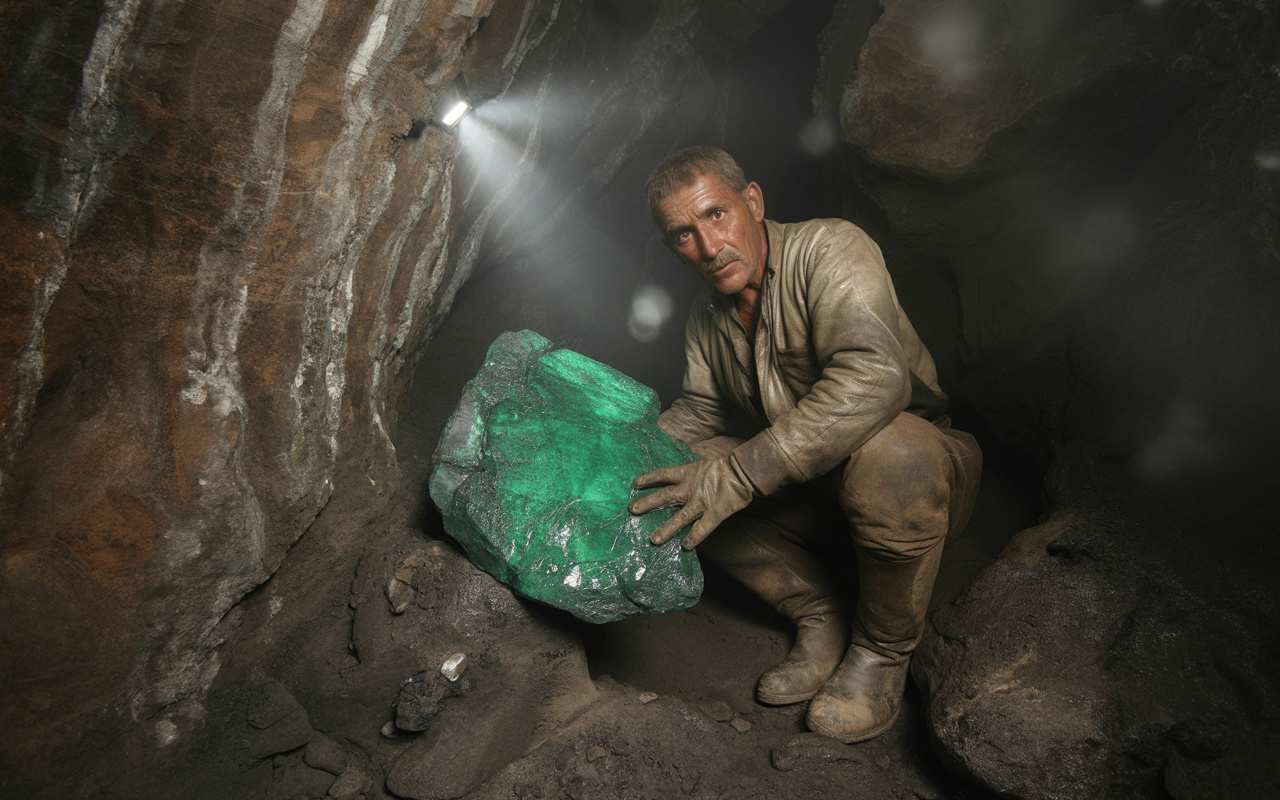


Discovery in Pindobaçu, Northern Bahia, the Bahia Emerald of 380 Kilograms and 1.9 Million Carats Is Considered the Largest Ever Found in Brazil and Valued in Millions.
In the depths of the Brazilian hinterland, where the sun reflects off the rocks and silence dominates the underground, a group of miners made one of the most impressive discoveries in the history of global mining. In an underground gallery, at a depth of 200 meters, a colossal green stone was found — a raw emerald weighing 380 kilograms, composed of 1.9 million carats of pure mineral beauty. The find, made in a mine in Pindobaçu, Northern Bahia, quickly became news worldwide. Valued at over US$ 400 million, it entered history as the largest emerald ever found in Brazil — a true natural monument that united luck, persistence, and the power of Brazilian mining.
One of the Largest Gemstones Ever Found
Discovered in 2001, in the Carnaíba region, municipality of Pindobaçu (BA), the Bahia Emerald quickly became one of the most extraordinary finds in the history of global mining.
Weighing about 340 to 380 kilograms and over 1.3 meters tall, the rock contains dozens of raw emerald crystals embedded in a matrix of quartz and mica, which required extreme care in its removal by local miners.
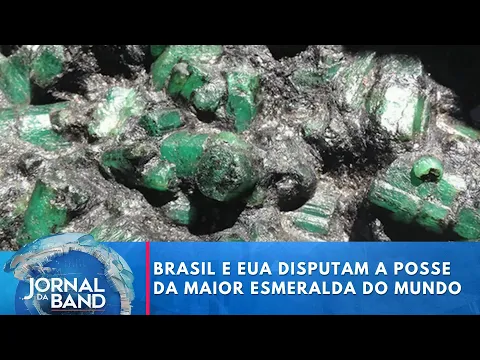

According to reports from Wired magazine and specialized portals such as GeologyIn, the extraction was done manually, using simple tools, and took several hours due to the weight and fragility of the structure. The discovery put the name Carnaíba on the global gemology map and drew the attention of collectors, investors, and the Brazilian government itself.
-
U.S. Invests $75 Million in Projects to Extract Rare Earths, Gallium, Germanium, and Aluminum from Coal Waste

-
Eni Acquires 25% Stake in Chilean Lithium Project, Plans to Invest Up to $225 Million in Eco-Friendly Extraction Method
-
Mexico’s Giant Crystal Cave: A Deadly 58°C Underground Palace with 11-Meter Crystals Formed Over Nearly a Million Years

-
China Dominates Over 90% of Rare Earth Refining, Prompting Global Concerns: Canada and Japan Launch Billion-Dollar Plan to Reduce Dependency and Safeguard Batteries, Semiconductors, and Defense


A Jewel Valued in Millions of Carats
To put it in perspective, one carat equals 0.2 grams, which means a stone weighing 380 kilograms would correspond to about 1.9 million rough carats — although only a fraction of that weight is made up of pure, gem-quality emerald.
The value of the Bahia Emerald has been informally estimated in the hundreds of millions of dollars, but there is no official evaluation confirmed, as the piece is a mixed geological formation and not a typical commercial gem. Still, its symbolism and rarity place it among the largest and most valuable rough emeralds ever recorded on the planet.
Repatriation Authorized by the U.S. Justice
Currently, the Bahia Emerald is under custody in the United States, in security deposits of the Los Angeles police. In November 2024, Judge Reggie Walton of the District Court of Columbia ruled that the stone — considered a Brazilian national heritage extracted illegally — must be repatriated to Brazil.
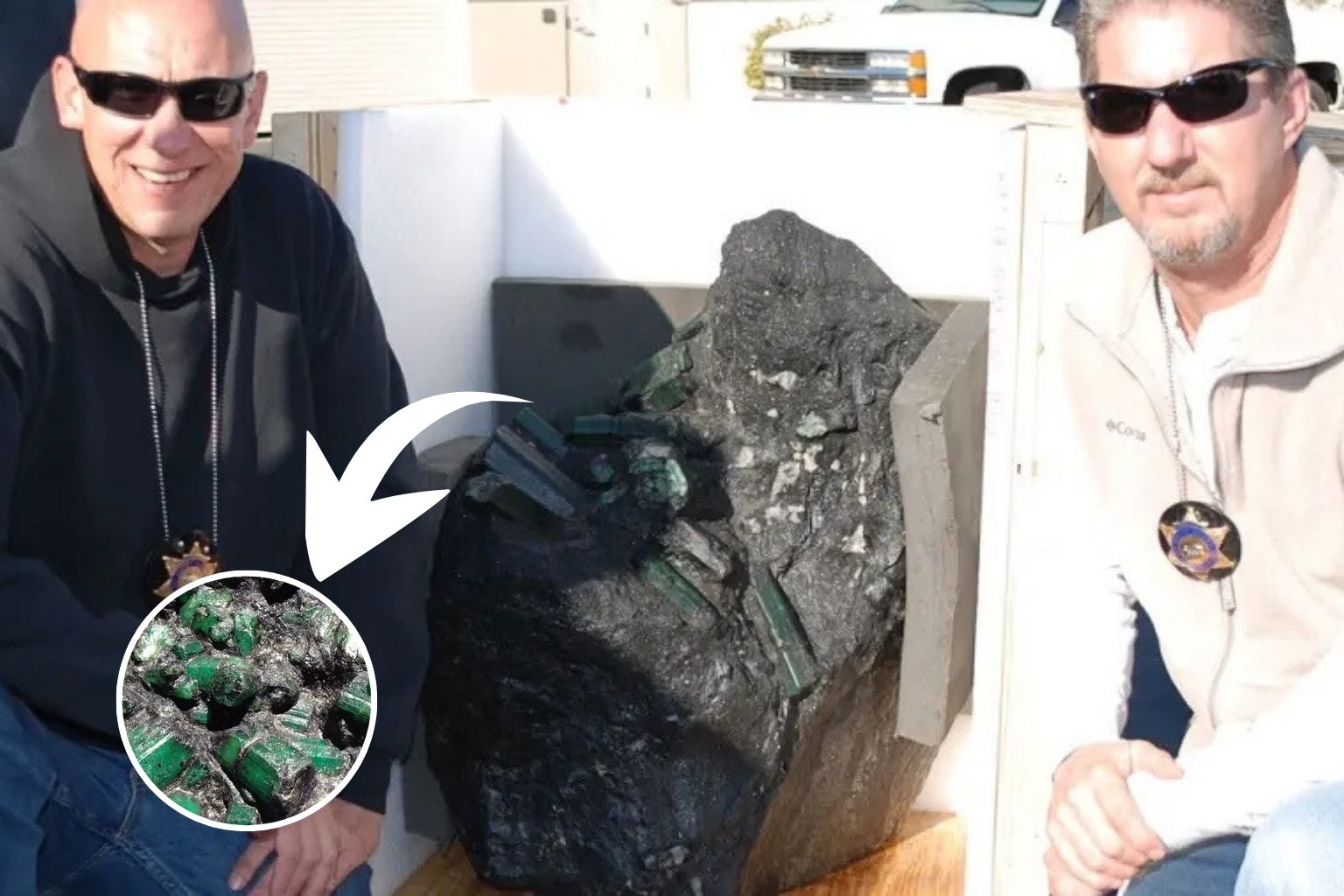
The judicial decision, reported by outlets such as G1 and confirmed by the Ministry of Justice and Public Security, established that the U.S. Department of Justice coordinate the return of the piece in cooperation with Brazilian authorities. The Brazilian government is monitoring the final procedures to ensure that the emerald returns to its country of origin.
The Struggle for Possession of the Largest Emerald in Brazil
A few days after the find, the story took unexpected turns. The stone was sold and resold multiple times, crossing borders and ending up in the center of one of the most complex legal disputes in the gemstone industry.
The so-called “Bahia Emerald Case” dragged on for years in U.S. courts, with businessmen, collectors, and intermediaries claiming ownership of the rock. Meanwhile, the Brazilian government, through the Ministry of Justice and the Federal Police, began to officially act for repatriation, arguing that the extraction occurred without the proper mining licensing.
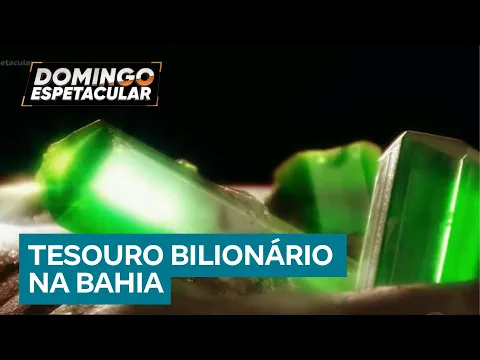
The BBC, G1, Folha de S.Paulo, and O Globo closely followed the trajectory of the case, highlighting the mystery and the astronomical estimated value of the gem. Images released by international gemology portals showed the rock in all its grandeur — green, dense, and monumental — reinforcing its status as one of the largest rough emeralds in the world.
A Geological Phenomenon That Fascinates Science
The Carnaíba Emerald is not just a gemstone — it is also a rare geological phenomenon.
Formed millions of years ago, under intense temperature and pressure conditions, it reveals much about the mineral history of northeastern Brazil and the complex geology of Bahia.
Emeralds form when beryllium, chromium, and vanadium combine in deep hydrothermal environments, creating intensely green-colored crystals.
These conditions are extremely rare, even in mineral-rich regions.
Brazil is currently one of the three largest emerald producers in the world, alongside Colombia and Zambia. The Carnaíba and Campo Formoso deposits, both in Bahia, have been studied for decades by geologists from the Brazilian Geological Service (CPRM) and federal universities, as they house some of the continent’s most notable hydrothermal systems.
According to reports from CPRM, these deposits “represent one of the most singular occurrences of emeralds in the southern hemisphere,” both for purity and the scale of the formations.
The Economic and Social Impact of Mining in Carnaíba
The Carnaíba region has been marked by the presence of informal mining since the 1960s. The discovery of the Bahia Emerald reignited interest in local mining and boosted the regional economy, generating direct and indirect jobs and attracting national and foreign investors.
Small communities of miners, lapidaries, and traders grew around the mineral activity. The increase in the flow of visitors and traders revitalized commerce, transport, and even the hotel sector in the region, which experienced a new cycle of prosperity for some time.
On the other hand, the episode also brought to light the need for public policies aimed at the legalization and regulation of artisanal mining, which still supports a large portion of local families.
Many miners work in precarious conditions, without legal support, exposing them to risks and conflicts with large mining companies.
Mystery and Symbolic Power
The exact whereabouts of the Bahia Emerald were kept secret for years, fueling the mystery surrounding its history. The case became a symbol of Brazil’s mineral and human potential — a gigantic stone that emerged from the Brazilian hinterland to challenge the logic of geology and fortune.
Experts estimate that if it were auctioned off entirely, the rock could fetch values exceeding US$ 100 million, ranking among the most valuable gems ever known, alongside legendary diamonds like the Cullinan and the Hope.
Today, the name Carnaíba is not just that of a small hinterland town: it is a mark in the global history of mining. The Bahia Emerald remains a reminder that Brazil still holds treasures capable of surprising the planet — stones that not only shine but tell stories of courage, sweat, and destiny.







I must say this article is extremely well written, insightful, and packed with valuable knowledge that shows the author’s deep expertise on the subject, and I truly appreciate the time and effort that has gone into creating such high-quality content because it is not only helpful but also inspiring for readers like me who are always looking for trustworthy resources online. Keep up the good work and write more. i am a follower.