






 Portuguese
  Spanish
 3 min of reading
  0 comments


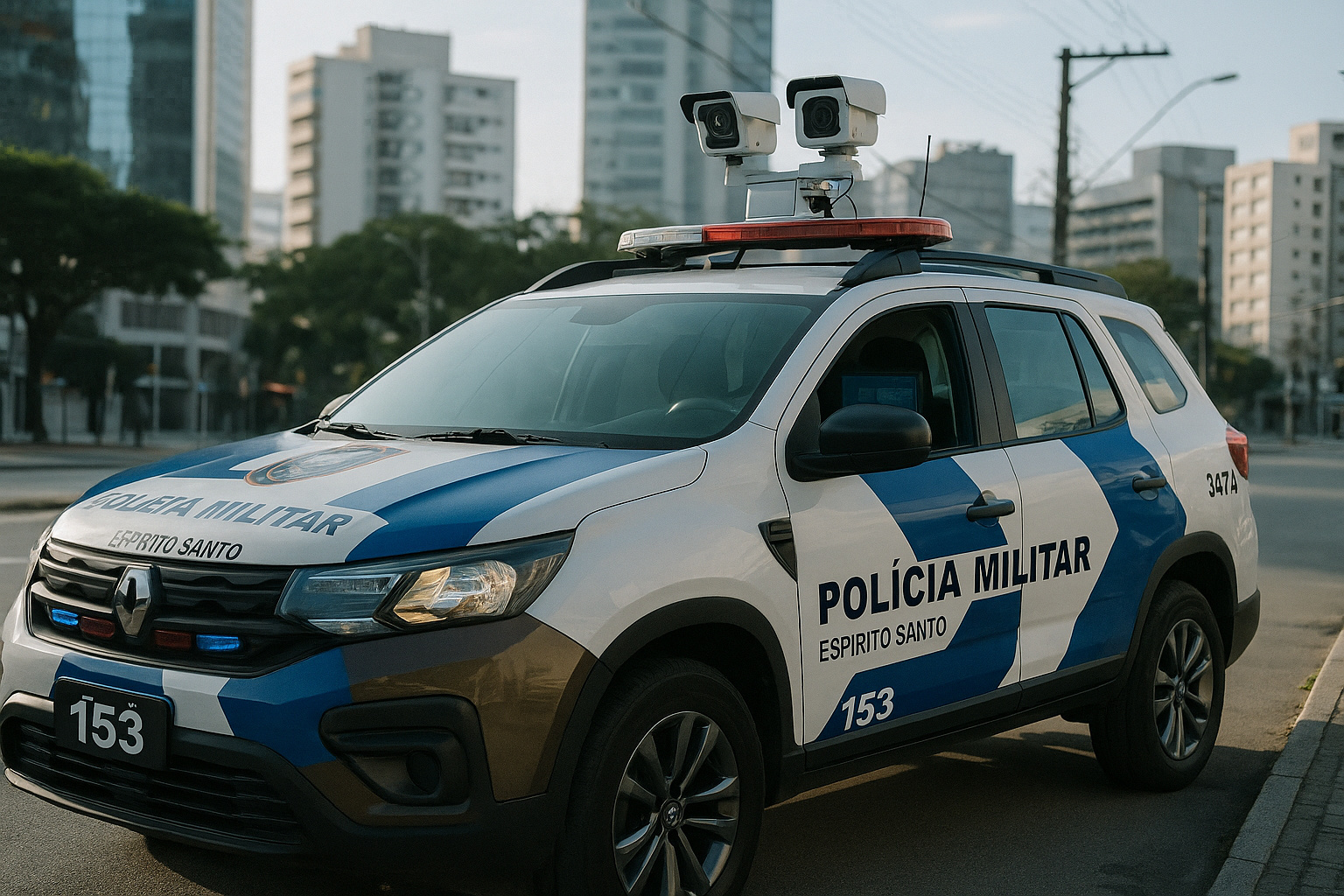
The Government of Espírito Santo Begins a Technological Revolution in Public Safety, Equipping Vehicles with Smart Cameras and Digital Readers Connected to a Real-Time Monitoring System That Will Soon Integrate Facial Recognition Throughout the Capixaba Territory
The government of Espírito Santo has launched an unprecedented pilot project to enhance street safety. About 300 cameras are being installed in Military Police vehicles, directly connected to the State’s intelligent perimeter. These devices are capable of automatically reading vehicle license plates, allowing for real-time identification of stolen, robbed, cloned, or crime-related vehicles.
With the new technology, the vehicles will serve as mobile monitoring posts, increasing the police’s response capability and improving operational efficiency. The system also identifies vehicles with debts or irregularities, which should speed up approaches and minimize human errors during inspections.
Digital Readers and State Data Integration
In addition to the cameras, the vehicles will be equipped with digital readers integrated with state databases. The technology allows police officers to have instant access to information on open arrest warrants, criminal backgrounds, and judicial restrictions during suspicious stops.
-
Helicopter Drops 180 Tons of Sand and Gravel on Swedish River to Revive Ecosystem Damaged by Decades of Exploitation

-
Brazilian Company Launches Retro Smartphone with 48 MP Camera, T9 Keyboard, and Privacy Features for Social Media-Free Use

-
Self-Taught Chinese Farmer Builds 5-Ton Submarine from Scrap, Launches It in Anhui River
-
Invisible Induction Technology Enables Wireless Power for Blenders, Coffee Makers, and Air Fryers, Reducing Countertop Cables





According to Governor Renato Casagrande, the equipment will begin operating in the next 15 days.
“They will streamline police activities and combat crime,” Casagrande emphasized during a lecture at the 20th Pedra Azul Summit, an event hosted by Rede Gazeta, on Saturday morning (18).
The information was originally published by A Gazeta, which highlighted the positive impact of the project on public safety and the strategic use of vehicle recognition and tracking technologies.
Facial Recognition and Expanded Urban Monitoring
The Espírito Santo government is also investing in facial recognition as part of the project’s second phase. The integration of the new cameras with the existing system will allow for identification of fugitives from justice and repeat offenders based on official records.
As of September, the facial recognition program had enabled more than 400 arrests in Greater Vitória.
Most of those detained had warrants for drug trafficking (87 cases), robbery (69), and homicide (57), in addition to theft (20) and rape (19).
The system, expanded earlier this year, currently includes more than 500 cameras installed in public agencies, government buildings, and Transcol system buses. The technology is also present in 40 kiosks spread throughout the Metropolitan Region, enhancing 24-hour urban monitoring.
A Step Forward in Combating Crime
The project’s expansion represents a new phase for Capixaba security, combining artificial intelligence, data analysis, and rapid response. The expectation is that in the coming months, Espírito Santo will become a national reference in smart policing, strengthening the fight against crime and increasing the population’s sense of security.
The use of cameras mounted in vehicles and integrated facial recognition is expected to transform the way the State prevents, identifies, and neutralizes threats, making the digital perimeter increasingly precise.




Be the first to react!