






 Portuguese
  Spanish
  5 min of reading
  0 comments



European Study Analyzed Aging and Driving, Pointing Out the Age Range in Which Reflexes Start to Decline and Accident Risks Increase, in Addition to Highlighting the Importance of Regular Medical Assessments for Older Drivers.
Researchers in Barcelona point out that from the age of 75 there is a significant decline in reflexes and attention capacity, which increases the risk of accidents on the road.
The group states that age, by itself, cannot be the sole criterion for taking someone off the road, but recommends periodic assessments to identify those who no longer maintain ideal driving conditions.
How the Study Arrived at the Number of 75 Years
The investigation collected clinical examinations, driving tests on simulators, and data from real incidents involving elderly drivers.
-
He started with a jigsaw, his father’s screwdriver, and many drawings made during classes; years later, the young man who built a roller coaster in his own backyard went viral on the internet, was hired by Cacau Park, and now coordinates Brazilian and foreign professionals in the installation of an attraction weighing 737 tons, 55 meters high, one kilometer long, featuring moments of zero gravity and a speed of 120 km/h, in a journey that turned curiosity, calculations, and persistence into a professional career.

-
Between Egypt and Sudan, Bir Tawil is no man’s land that neither country wants on paper, but in practice has gold mining, nomadic tribes, and even fake “kings.”

-
Swimming champion Shavarsh Karapetyan dove about 40 times into a frozen lake in Armenia to rescue a sunken bus, saved 20 lives, and lost his career because of it.
-
Júlia Pimentel, an 11-year-old from Minas Gerais, independently invented a new formula to calculate the square root using simple addition and multiplication, and her method was published in one of the most important mathematical scientific journals in Brazil.


By cross-referencing the results, the authors noted that, on average, the degradation of functions such as peripheral vision, fine motor coordination, and reaction time becomes more pronounced starting from the mid-70s.
This means that simple maneuvers, such as changing lanes, require more time and cognitive effort.
Even though the sample analyzed was Spanish, the methodological design sought to isolate variables such as comorbidities, medication use, and driving history.
Still, scientists emphasize that the findings do not serve as a “hard cut” applicable to everyone, as the pace of aging is heterogeneous.
What Worsens with Age Behind the Wheel
The collected data indicates three critical points.
First, the gradual loss of lateral visual field, which makes it difficult to notice pedestrians, cyclists, and approaching vehicles.
Secondly, slowness in decision-making in risky situations, such as sudden braking or abrupt changes in traffic flow.
Finally, more difficulty adapting to scenarios of heavy traffic, where the excess of stimuli demands constant divided attention.
These changes do not happen overnight.
They accumulate and may go unnoticed in daily life, especially when the driver sticks to familiar routes and predictable schedules.
However, in new contexts, the safety margin decreases.
Age Is Not the Only Factor
Despite the age demographic, the study emphasizes that evaluating the individual is more effective than setting a universal limit.
The recommendation is to combine physical health evaluations and regular cognitive screenings to assess operational memory, sustained attention, and visuospatial processing.
With this, decisions such as reducing mileage, avoiding night driving, or, as a last resort, retiring the driver’s license, cease to be arbitrary and become based on clinical evidence.
Another guideline is to review diseases and medications that interfere with driving.
Uncontrolled hypertension, sleep disorders, and sedative medications, for example, can increase risks regardless of age.
What European Countries Are Doing
In parts of Europe, the renewal of licenses for elderly drivers involves periodic medical examinations starting from old age, precisely to identify functional declines before they translate into accidents.
In general, the frequency of these checks increases with aging, and additional assessments may be required if the doctor identifies signs of impairment.
Although requirements vary, the common guideline is to anticipate problems.
Thus, the authorization to continue driving may come with conditions, such as mandatory use of visual correction, time restrictions, or reevaluation at shorter intervals.
How Brazil Treats Elderly Drivers
In Brazil, there is no maximum age for driving.
The current legislation states that drivers from the age of 70 must renew their driver’s license every three years, with a physical and mental fitness exam.
Before this milestone, the renewal period is longer, and requirements vary according to the age bracket established by the Brazilian Traffic Code.
Experts consulted by industry organizations argue that the renewal process should incorporate, more systematically, simple and standardized cognitive tests.
The idea is to identify early signs of divided attention loss, slow processing, and visuospatial difficulties that often precede incidents behind the wheel.
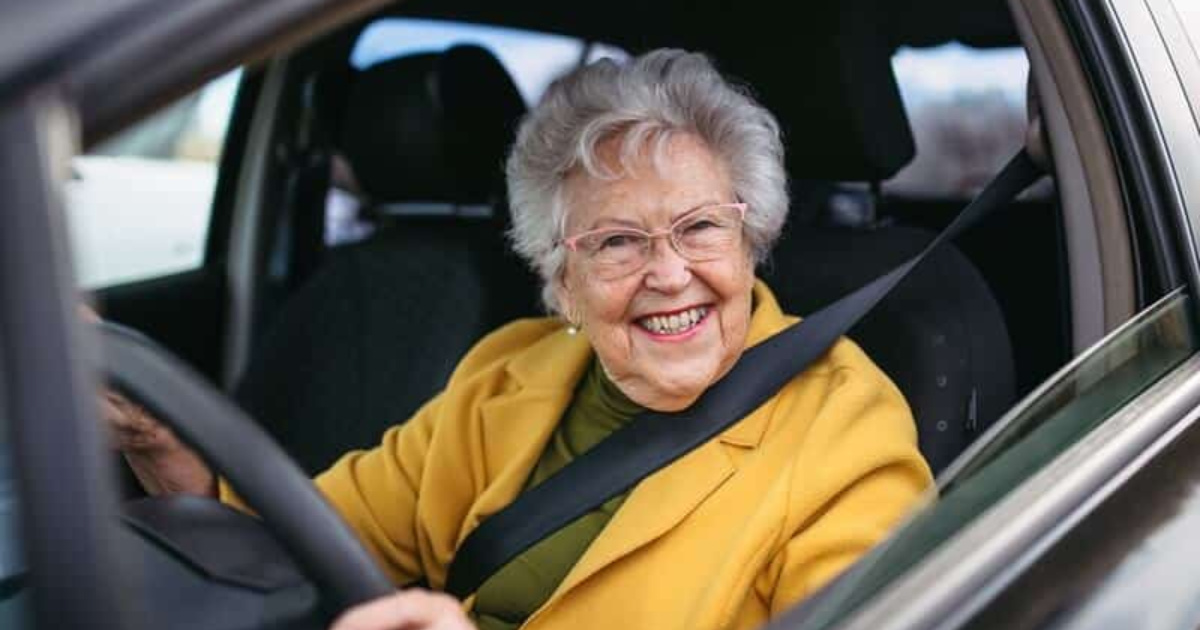
What the Research Suggests for Individual Decisions
The number of 75 years, according to the authors, serves as a population reference, not as a mandatory rule.
In practical terms, the decision to become a passenger can be gradual.
It starts with recognizing limitations, changing travel routines, and when medical assessment indicates, culminates in the voluntary withdrawal of driving.
The family and health services play an important role in this process.
Open conversations, monitoring of episodes of inattention, and offering alternatives — public transport, apps, organized rides — reduce the impact of the transition and preserve the elderly’s autonomy.
Impact of Aging Population
As life expectancy increases, so does the number of drivers in older age groups.
The discussion about age limits and assessment models tends to gain relevance, especially in large urban centers where traffic is more complex and requires quick responses.
Scientific literature has already mapped correlations between mild cognitive decline and an increased risk of collisions, which reinforces the importance of a preventive approach.
At the same time, it is essential to avoid stigmas.
Many elderly individuals maintain safe performance for years, especially when they control risk factors and reevaluate driving habits.
The key, as the study points out, lies in regular assessments and personalized decisions.
What to Consider Before Retiring the Driver’s License
When signs such as confusion at intersections, difficulty staying in lane, delayed braking, and frequent scares emerge, it’s time to seek evaluation.
Another alert comes from changes in routine to avoid complex routes without clinical justification, which may signal a subjective perception of risk.
If the medical recommendation indicates interruption, planning in advance helps maintain mobility and quality of life.
Accessible transportation systems and support networks make a difference in this adaptation.
Municipalities that offer safe and predictable transport options tend to facilitate the transition for those leaving the driver’s seat, reducing resistance and anxiety.
And What Science Says About the Future
New driver assistance technologies, such as automatic emergency braking and blind spot alerts, can mitigate some of the limitations described.
However, they do not replace the minimum capability required to drive safely.
Moreover, the unequal adoption of these resources and the learning curve suggest that clinical assessment will remain central in guiding whether to continue or retire the driver’s license at advanced ages.
Ultimately, the debate proposed by researchers starts from a common point: road safety and elderly autonomy are not conflicting objectives.
With technical evaluation, periodic monitoring, and transportation alternatives, both can coexist.
When do you consider it’s time to reevaluate your driving — and what signs should weigh more in that decision?





-

-

-

-

-

-

80 people reacted to this.