Portuguese
  Spanish




National Survey Shows Large Salary Differences Between Brazilian States and Reveals How Teachers’ Earnings Evolve Over Their Careers
A recent survey on teacher salaries in Brazil revealed significant differences between states.
The study was released in 2025 by the Teaching Profession Movement, an organization that analyzes official data on the valuation of the educational career in the country.
According to the analysis, the average starting salary of Brazilian teachers is R$ 6.2 thousand, an amount that does not include additional bonuses or incentives.
-
Portugal “hides” gold reserves of 382 tons valued at 47 billion euros in an armored building, and the story involves gold from colonial Brazil, Nazi Germany, and a fortune that once amounted to 866 tons.

-
Truck drivers avoid deliveries to supermarkets due to waits that can hinder trips, increase costs, and leave vehicles idle, while the law limits loading and unloading to five hours and provides for payment for the excess time.

-
Oil feels the weight of the war between the United States and Iran on the same day that Tehran buries its assassinated supreme leader and the world watches to see who will control the Strait of Hormuz, a strategic route for global oil.
-
The perks at Nubank are over: the bank announces a monthly fee for HBO Max, which was “free,” with a 12-month term on Ultravioleta, 6 months on Nubank+, and the fee starting from January 2027.




This amount represents about four minimum wages, exceeding the national minimum wage for basic education, set at R$ 4,868 the previous year.
Nevertheless, although there is a national minimum wage, data shows that each state has its own salary policies, which creates significant differences in the initial compensation of the teaching career.
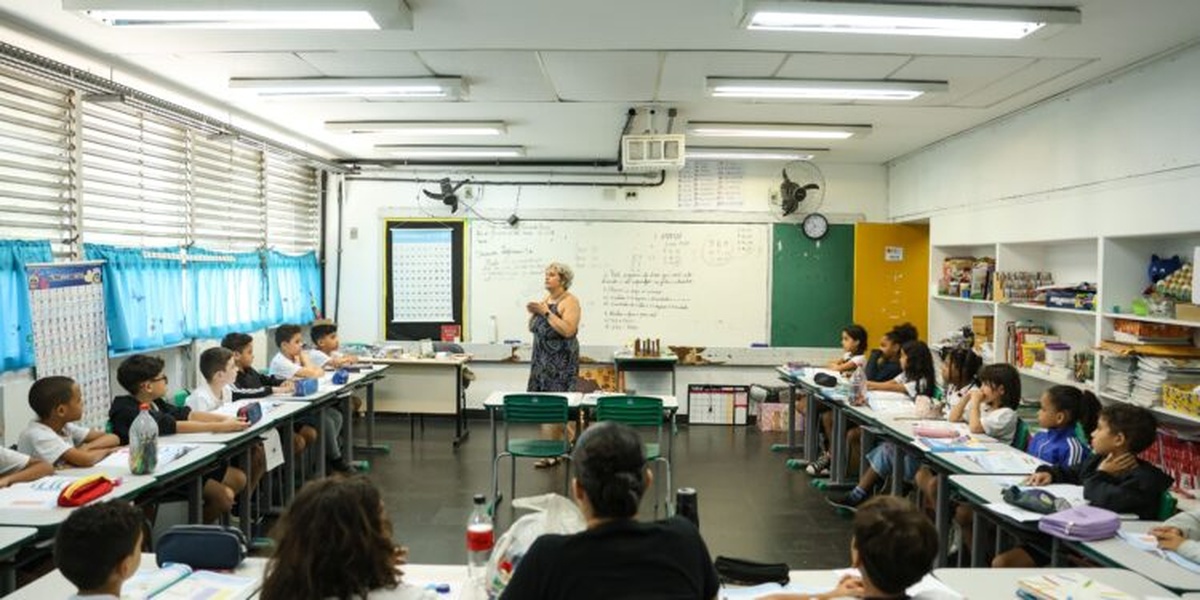
Teachers in Mato Grosso do Sul Lead National Salary Ranking
Among all the state networks analyzed, Mato Grosso do Sul appears as the state with the highest starting salary for teachers in Brazil.
According to the study released in 2025, teachers start their careers in the state earning approximately R$ 13 thousand per month.
Additionally, the survey shows that Sulho-Mato Grossense teachers also lead the compensation at the end of their careers.
In this case, salaries can reach up to R$ 26.5 thousand monthly as they progress in their careers.
Currently, Mato Grosso do Sul’s state education network has about 21 thousand teachers, according to educational data analyzed in the study.
Salary Differences Between States Reach Almost Three Times
When comparing values between Brazilian states, the salary disparity becomes even more evident.
According to the survey by the Teaching Profession Movement, Rio de Janeiro has the lowest starting salary among the analyzed states.
In this case, the amount paid to beginner teachers corresponds exactly to the national minimum of R$ 4.8 thousand.
Next is São Paulo, where teachers beginning in the state network receive approximately R$ 5.5 thousand monthly.
However, São Paulo has the largest state education network in the country, with approximately 200 thousand active teachers.
Moreover, despite the lower starting salary, teachers in São Paulo can earn up to R$ 14.4 thousand at the end of their careers, according to the analyzed data.
Thus, when comparing the extremes of the ranking, the starting salary paid in Mato Grosso do Sul is about 2.7 times higher than that offered in Rio de Janeiro.
Salary Growth Occurs Throughout the Teaching Career
Another point highlighted by the study is the salary progression throughout the teaching career.
In general, as professionals gain experience and advance through career stages, salaries tend to gradually increase.
The national average identified by the survey indicates a difference of approximately 49% between the starting salary and the final salary of the teaching career.
However, this evolution does not occur equally across all states.
For example, Piauí and Santa Catarina show an average difference of only 3% between the start and end of the career.
Still, in most Brazilian state networks, the salary difference throughout the career exceeds 25%.
Thus, although there are significant regional differences, data indicates that professional experience remains an important factor for the growth of teacher compensation in Brazil.
In light of these differences between states and throughout the career, an important reflection arises: what should weigh more in educational policies — increasing starting salaries or strengthening salary progression over time?