






 Portuguese
  Spanish


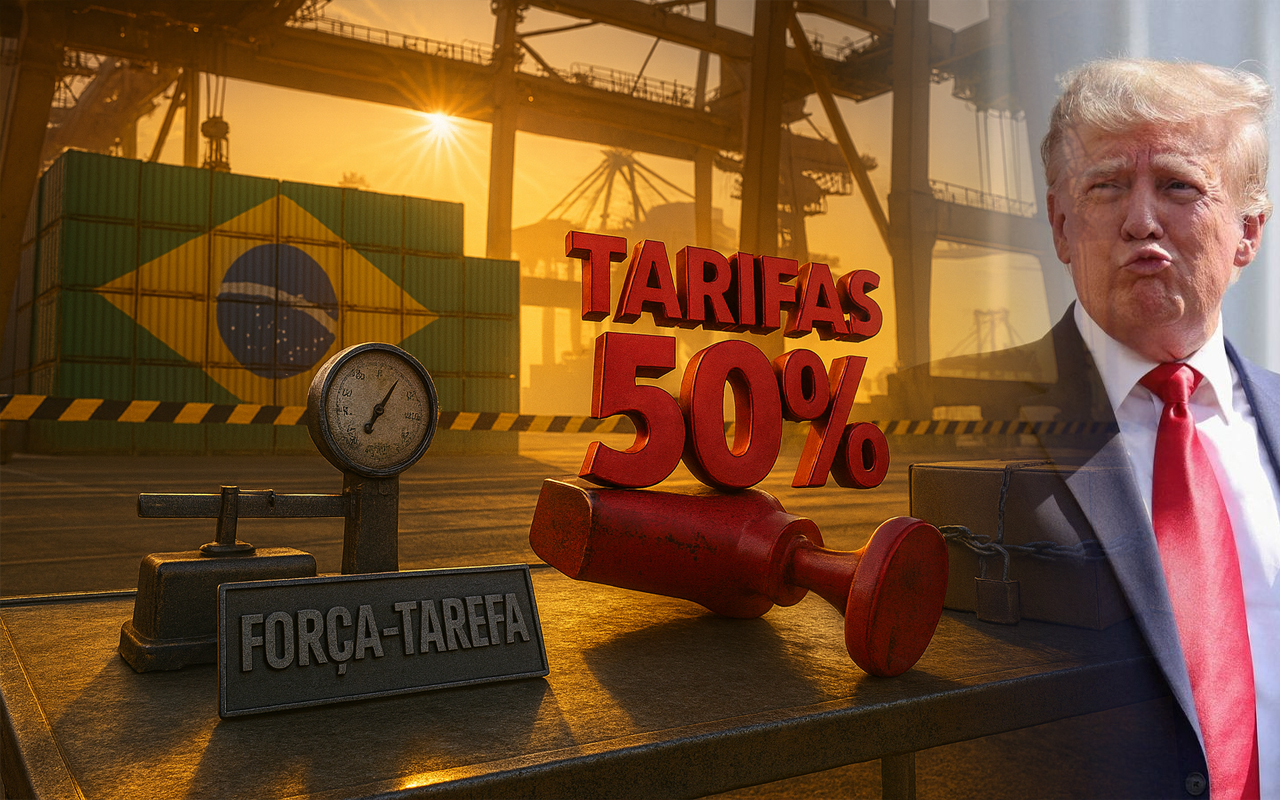


Ceará, One of the States Most Exposed to the American Market, Acknowledges Emergency Situation and Expands Support for Exporters. In Brasília, the Sovereign Brazil Plan Opens Credit and Reinforces Guarantees to Cushion the Shock.
The Government of Ceará published Decree 36.828/2025 recognizing the emergency situation resulting from the tariff increase imposed by the United States and authorizing a coordinated response to protect businesses and jobs. The goal is to accelerate decisions, reduce logistical bottlenecks, and provide legal backing for public purchases and other counter-cyclical measures.
The state measure follows the implementation, in August, of tariffs of up to 50% on Brazilian products sold to the American market, which have pressured margins, deadlines, and export contracts. According to local surveys, more than 90% of the Ceará exports destined for the USA were subject to the additional tariff.
Beyond the state front, the federal government launched the Sovereign Brazil Plan on August 13, with lines of credit, reinforcement of guarantees, and tax adjustments to mitigate losses, prioritizing the most affected companies and the maintenance of jobs.
-
Brazil’s 2026 Tax Refund: Record 9.58 Million Filers in Largest Payout Ever, But a Key Detail on Priority Recipients Draws Nationwide Attention

-
Itaú Alters Hybrid Work Model, Increasing Office Days from 2028, Prompting Employees to Adjust to New Routine
-
Facing Labor Shortage, Japan Plans to Invest $34 Million to Attract Foreign Workers in Construction, Healthcare, Industry, and Commerce

-
Brazilian City Makes Remarkable Leap, Becomes 4th Wealthiest in the Country with GDP of R$ 134.1 Billion



Decree 36.828/2025, What the “Recognition of Emergency” Unlocks for Ceará
The decree published on September 4, 2025, allows the state to activate rapid response tools, such as targeted public purchases, budget prioritization, and intersectoral coordination. The Civil House explains that the measure enables the use of contingency reserves to support affected chains and prevent disruptions.
In practice, the regulation provides predictability for state agencies to buy from producers with a decline in shipments to the USA, sustaining income and production until the external environment improves. The focus is on regional items with a higher multiplier effect on the local economy.
The decision also creates an institutional basis for alignment with the federal front, avoiding policy overlaps and accelerating the execution of financial assistance.
Tariff of Up to 50% in the USA, When It Started, Who Was Affected, and What Exceptions Exist
The United States government formalized the tariff increase in late July, with collection beginning in August by U.S. Customs and Border Protection, ranging between 10% and 50%, reaching the ceiling for Brazil. American authorities justified the measure based on economic policy and security reasons.
Despite the broad scope, some products were exempted, such as aircraft and certain specific commodities, partially mitigating the sectoral impact. Nevertheless, the aggregate effect on Brazilian sales to the American market appeared as early as August, with a drop of about 18% in Brazil’s exports to the USA.
For Ceará, the exceptions have limited reach against the state agenda. Therefore, most shipments to the American market remain under the surcharge.
Ceará’s Dependence on the USA, 44.9% of the Agenda, and Most Pressured Sectors
In 2024, the United States accounted for 44.9% of Ceará’s exports, with US$ 659 million in sales and a positive trade balance. This level of exposure places the state among the most sensitive to the new scenario.
The Ceará agenda concentrates on steel, fruits, fishery products, wind turbine blades, and footwear, items that have a high share in sales to American clients. In the absence of additional relief, margin compression and elongated logistical deadlines are likely to persist.
Local data indicate that more than 90% of what Ceará sends to the USA is subject to the 50% increase, as the state’s products are among those least covered by exceptions.
Immediate Measures from the State: Public Purchases and Sectoral Notice
As a first response, the Ceará government opened and extended a notice of support for food companies that can demonstrate declines in exports to the USA compared to the average of the second half of 2024, focusing on products such as honey, nuts, fish fillet, coconut water, and cajuína. The idea is to provide outlet through public purchases at a reference price.
The coordination targets the most vulnerable links, avoiding harvest interruptions and preserving the income of producers and workers. With the legal basis of the decree, acquisitions gain agility and budget predictability.
In parallel, the federal government announced that it will also purchase some of the nationally impacted products, such as açaí and coconut water, to stabilize prices and stocks while the surcharge persists.
Sovereign Brazil Plan: Credit, Guarantees, and Tax Adjustments
The Sovereign Brazil Plan, launched on August 13, allocates R$ 30 billion from the Export Guarantee Fund (FGE) to enable credit at more accessible rates, especially for chains with greater dependence on the USA and for small and medium-sized enterprises via guarantee funds. There will be adjustments in Reintegra and priority for those who maintain jobs.
The Civil House and the Ministry of Finance outline three axes: strengthening the productive sector, protection for labor, and commercial diplomacy, with access through accredited public and private banks. Congress is reviewing the MP 1.309/2025, which provides regulatory support for the package.
For Ceará’s companies, the combined use of credit, guarantees, and state public purchases is expected to reduce the need for abrupt cuts in production during the tariff period.
And you, do you think the Sovereign Brazil Plan and the measures from the Government of Ceará are sufficient to protect companies and jobs against the tariffs of up to 50% from the USA, or is coordination and speed still lacking at the ground level? Leave your opinion in the comments.








Tarifa de 50% inquifale 100 dólares …
Se os planos do Brasil soberano são suficientes não sabemos mas… que é uma oportunidade fantástica pra desvio de dinheiro com certeza será