






 Portuguese
  Spanish


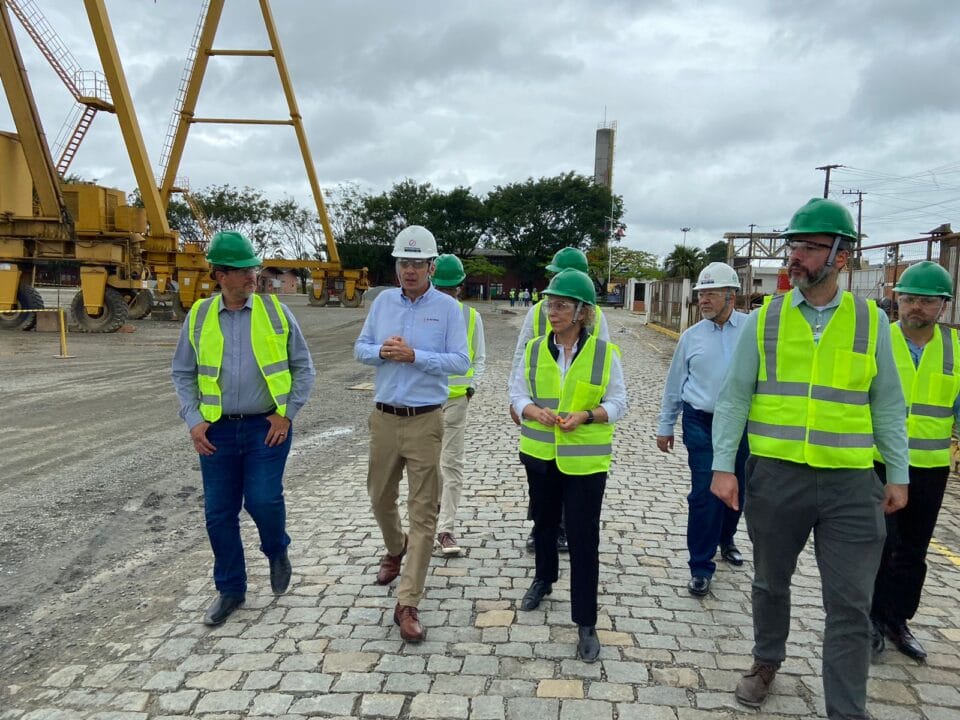
A Journey of Discovery at the Shipyards of Itajaí
Recently, the Parliamentary Front in Defense of the Brazilian Naval Industry, under the leadership of federal deputy Alexandre Lindenmeyer (PT-RS), accompanied by the regional vice of the Front, federal deputy Ana Paula Lima (PT-SC), conducted a series of visits to the Thyssenkrupp and Detroit shipyards in Itajaí, Santa Catarina. This initiative was part of an ongoing effort to better understand the challenges faced by the Brazilian naval industry and to appreciate the skill and technology involved in the construction of medium and large vessels.
The delegation, impressed by the use of modern techniques and high technology in shipbuilding, recognized the strategic importance of these shipyards for the national industry. These visits are part of a broader work plan of the Parliamentary Front, which has already included shipyards in other regions of Brazil, such as Rio Grande, São José do Norte, and Rio de Janeiro, as well as Maragogipe in Bahia.
The Potential of the Brazilian Naval Industry
Lindenmeyer emphasized the importance of these visits, highlighting the international standard infrastructure and advanced technology of the Itajaí shipyards. For him, this quality places Brazil in a favorable position to restore jobs in this crucial sector, which employed over 80,000 workers in 2016. “We are working hard through the Parliamentary Front to see the naval industry regain its strength. It is a strategic sector that generates jobs, income, national technology, taxes, and is fundamental for national sovereignty,” the deputy stated.
-
Bolivian Female Construction Workers Form Association to Combat Discrimination and 38% Pay Gap in the Industry

-
Near Amsterdam, residents buy land and discover they must also build streets, manage drainage, handle waste, and grow food on half their plot.
-
Without a mansion, without high investment, and without a traditional classroom, a teacher living in a 22 m² house taught students to build a 9 m² studio apartment with the equivalent of R$10,000.
-
Without her own home and pressured by rent, a 25-year-old bought a small 15-meter boat, gradually renovated the interior by herself, transformed the interior with paint, new flooring, a larger bathroom, and started living on the canals, paying much less per month.


Deputy Ana Paula Lima also expressed her support for the technical visits, recalling a prosperous past in Santa Catarina’s naval sector and the importance of fostering this industry for the blue economy. She emphasized the need for recovery and strengthening of the sector, which has been harmed in recent years, affecting national sovereignty.
Representatives from organizations such as Sinaval, Abimaq, and the National Confederation of Metalworkers, among others, also participated in the visits, witnessing the idle installed capacity of the country’s naval industry.
Next Steps and Future Visions
The Parliamentary Front, following the visits to Itajaí and other regions, is working on a comprehensive report that will include suggestions and diagnostics for the recovery of the naval industry. This report, which will be presented in December to the Presidency of the Republic, is a fundamental step in defining strategies that can revitalize the Brazilian naval sector.
With plans for new technical visits in 2024 to states such as Amazonas and Pernambuco, the Parliamentary Front shows a continuous commitment to the development of the Brazilian naval industry. The hope is that these actions will contribute to the recovery of a sector vital to the economy and sovereignty of Brazil, highlighting the quality and production capacity of the country’s naval industry.
Source: Juliana Thomaz.









Be the first to react!