Portuguese
  Spanish


With the Extinction of the Three Pedals Approaching, a French Model Becomes the Choice of Purists Seeking the Last Connected Driving Experience Before the Dominance of Automatics.
The feeling of shifting gears is numbered. The manual transmission, once standard in the Brazilian market, is heading towards an announced extinction. Consumer preference for comfort, increasingly stringent environmental laws, and the pragmatic strategies of automakers accelerate this end. In this scenario, one car stands out as one of the last representatives of this lineage: the Peugeot 208 1.0. It emerges as a refuge for those who value pure driving, but its story reveals the complexities of the end of an era.
Why Is the Manual Transmission Becoming Extinct in Brazil?
The disappearance of the manual transmission is not an isolated event. It is the result of the combination of three powerful factors. First, consumer preference has changed radically. In 2010, about 90% of the cars sold in the country were manual.
By 2023, automatics already represented 60% of the market. This shift is driven by the quest for comfort, especially in the congested traffic of large cities, where constant gear changes become tiring.
-
Man with Metal Detector Finds Medieval Silver Seal in England, Uncovers 2,000-Year-Old Roman Gem with ‘Richard’s Secret’

-
Thailand Converts 8 Tons of PET Bottles into 3,500 School Backpacks, Showcasing Circular Economy with Over 40 Factories Involved

-
Mysterious Bats Spotted in Paris’s Père Lachaise Cemetery, Drawing Tourists to the “Vampire Cemetery”

-
From Selling Street Food to Leading a $300 Million Construction Firm: The Journey of a Brazilian Entrepreneur





Second, environmental regulations act as an accelerator. Starting in 2025, phase L8 of Proconve (Program for the Control of Air Pollution by Motor Vehicles) imposes stricter emission limits.
Modern automatic transmissions, such as CVT, are more efficient in keeping the engine in the ideal rev range during homologation tests. Adapting a manual car to meet these standards would require high investments, making it economically unfeasible for lower volume versions.
Finally, the industry’s response has been to cut costs. Automakers like Fiat and Citroën have already removed the manual transmission from mid-range versions of models like Argo, Cronos, and C4 Cactus. This strategy associates manual transmission with “entry-level cars,” reinforcing the perception that automatics are items of greater value and technology, which further depresses demand for three-pedal models.
The Last Lion or a Pragmatic Survivor?
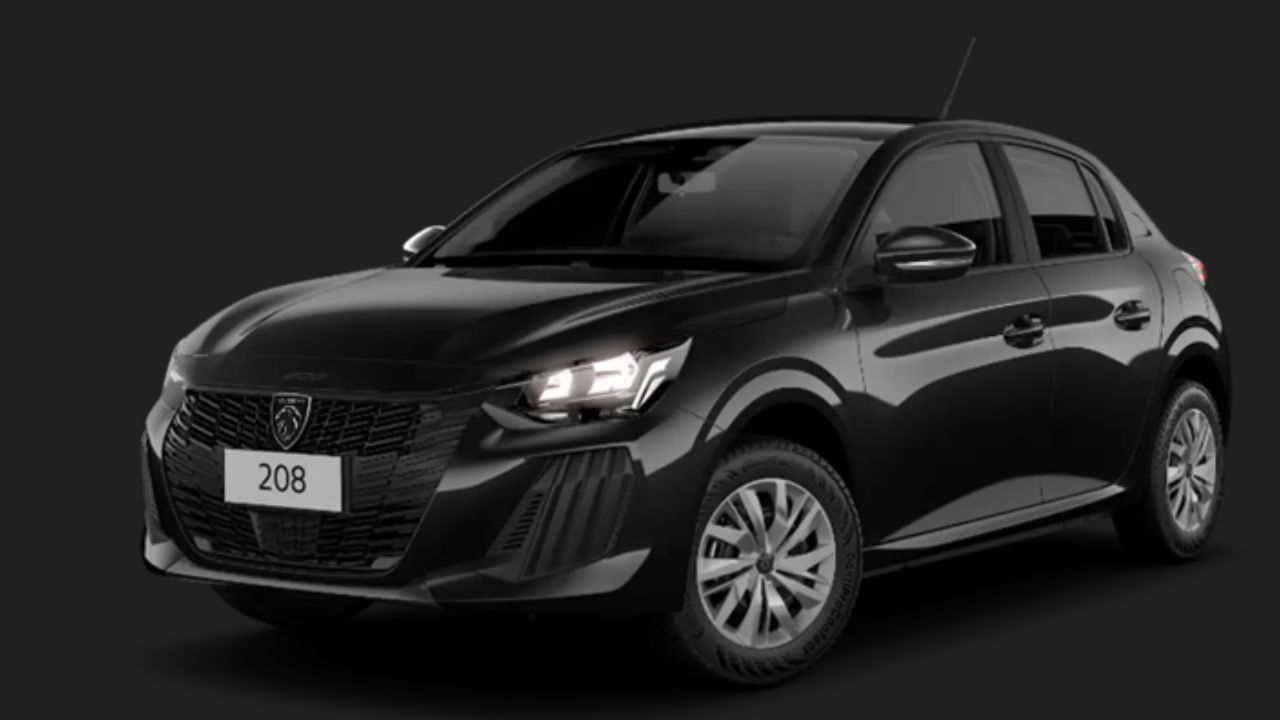
The Peugeot 208 1.0 with manual transmission is a fascinating case study. Its design, with daytime running lights shaped like “saber teeth,” is one of its biggest assets, promising a premium and sporty experience.
Inside, the i-Cockpit concept with its small steering wheel and elevated dashboard is modern, but it can be controversial for manual driving, even interfering with the legroom of some drivers.
Under the hood, it houses the 1.0 Firefly engine, sourced from Fiat, with 75 hp of power and 10.7 kgf.m of torque with ethanol. However, the promise of sportiness in the design meets a different reality in performance. To comply with Proconve L8, the car has been recalibrated with a total focus on efficiency.
The result is a paradox. The acceleration from 0 to 100 km/h takes a long 16.6 seconds, a disappointing figure that is slower than its rivals. In compensation, the fuel consumption is extraordinary: 14.5 km/l in the city and 16.3 km/l on the highway with gasoline. Therefore, the manual 208 is not a car for the performance purist, but rather an extremely pragmatic and economical vehicle, dressed in a sporty guise.
Who Are the Rivals in the Manual Transmission Battle?
The Peugeot 208 is not alone in this trench. Its main competitors also offer manual versions, each with a different proposal. The Chevrolet Onix 1.0 positions itself as the true car for the purist from a technical standpoint.
Its engine delivers 82 hp and, more importantly, it is one of the few in the segment with a manual six-speed transmission. The sixth gear allows the engine to operate at lower revs on highways, resulting in less noise and greater efficiency.
Its mechanical set is considered superior and more rewarding for those who value the engineering of driving. Meanwhile, the Hyundai HB20 1.0 represents the rational choice. Equipped with an 80 hp engine and a five-speed transmission, its great appeal lies in the value package.
It offers a good list of features and a five-year factory warranty, an important differentiator for those seeking security and lower ownership costs in the long term. It is a balanced option for those focused on cost-effectiveness.
Collector Cars or Forgotten Relics?
The extinction of the manual transmission in the volume market is inevitable. Its survival will be restricted to specific niches: ultra-basic entry-level cars, where price is the only factor; utility vehicles aimed at heavy work; and high-value sports cars, where manual transmission is offered as a luxury item for purists.
The question remains whether today’s manual Peugeot 208, Chevrolet Onix and Hyundai HB20 will become collectible. The answer is uncertain. On one hand, they are mass-produced cars with modest performance. On the other, history shows that models representing the end of an era can become desirable. It is possible that, in 20 or 30 years, well-preserved versions will become a curiosity for nostalgic collectors.
The disappearance of the manual transmission is a necessary evolution. A visceral connection with the machine is lost, but comfort, safety, and efficiency are gained. The Peugeot 208 and its rivals are the monuments marking the end of this chapter, offering a last chance for enthusiasts to experience a mechanical ritual that will soon belong only to memory.