Portuguese
  Spanish


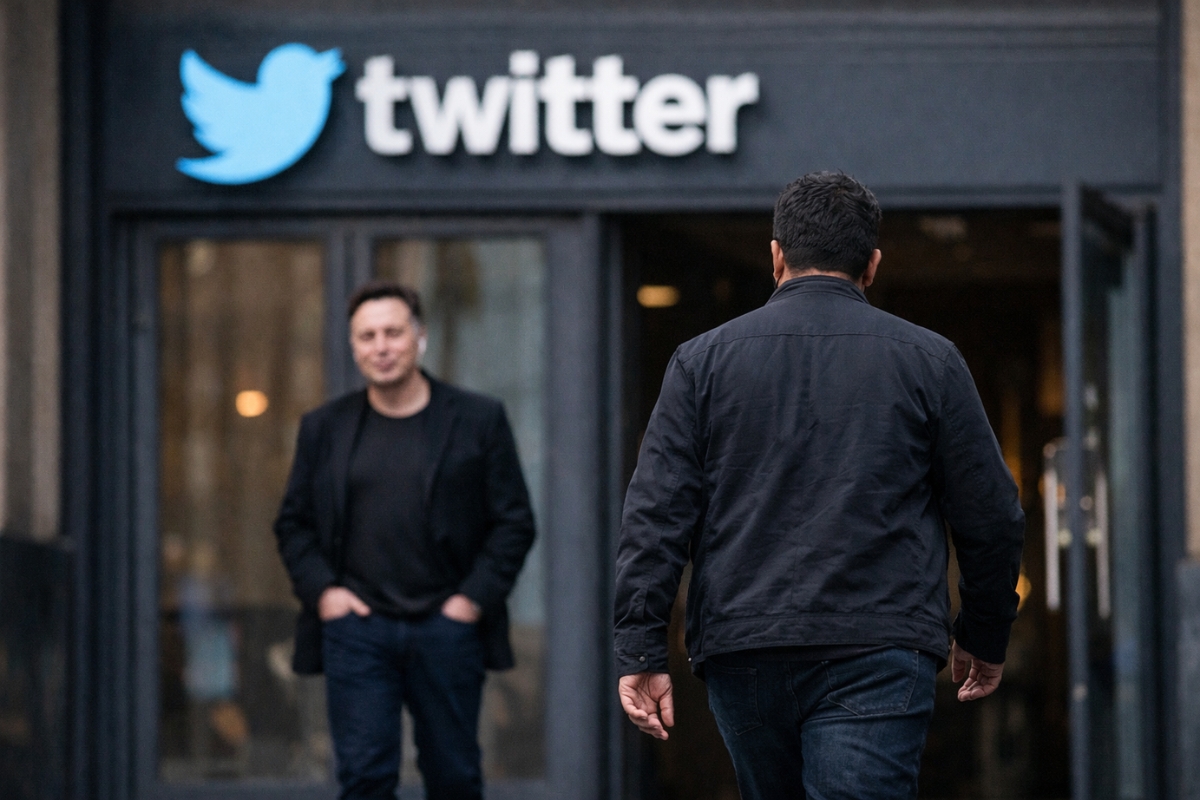


Former Twitter CEO Parag Agrawal Reappears After $44 Billion Acquisition, Launches Startup For AI Agents To Navigate The Web In Real Time And Rekindles Competition For Live Internet Dominance
After stepping down from Twitter amid one of the most tumultuous acquisitions in technology history, Parag Agrawal shifted focus.
Rather than competing in social media, he decided to tackle one of the biggest current bottlenecks in artificial intelligence: enabling models to interact with the live internet reliably.
This move comes at a time when the race for AI infrastructure is moving billions of dollars and redefining the balance of power in Silicon Valley.
-
New York removed the tracks from over 2,500 subway cars and dumped everything at the bottom of the Atlantic, and what seemed like trash turned into an artificial reef teeming with fish and divers.

-
From matches sold by bicycle at age 5 to a global furniture empire: the lumberjack’s son founded IKEA at 17 in his uncle’s kitchen and transformed a small company into the largest furniture retailer on the planet.
-
The mansion in Flamengo, built in 1865 for the Baron of São Clemente and closed for 20 years, has become a spa, event hall, and gym for “Symphony,” a luxury condominium that sold 70% of its gross development value in the first month on the R$ 60 million land of the former Bennett College.

-
The Ipiranga convent, a 1924 building adjacent to the Museum that remained vacant for a decade and became home to dozens of cats, is reborn as “Alma Mater,” a luxury development worth R$ 130 million with a pool in the courtyard and a clubhouse in the former nuns’ chapel.





Termination Following $44 Billion Acquisition Marked Turning Point In Career
In 2022, Elon Musk completed the acquisition of Twitter for $44 billion.
Upon closing the deal, much of the senior management was terminated, including Parag Agrawal, who had taken over as CEO in November 2021.
At 37, he became the youngest CEO of a S&P 500 company at the time. His tenure lasted about 11 months.
After the dismissal, a new dispute arose. The $40 million severance stipulated in his contract began to be contested. Agrawal responded legally.
The episode turned his departure into one of the most talked-about chapters in the recent history of big tech.

Doctor From Stanford And Architect Of Twitter’s AI For 250 Million Users
Parag Agrawal did not come from nowhere.
A doctor from Stanford University, he joined Twitter in 2011 as a software engineer.
He initially worked on advertising-related products, then shifted to artificial intelligence projects.
In 2017, he became Chief Technology Officer, leading AI and machine learning initiatives that powered the platform’s recommendation engine, used daily by 250 million users.
He also led Project Bluesky, focused on a decentralized social networking protocol.
New Startup Bets On AI Agents Navigating The Web In Real Time
After leaving Twitter, Agrawal turned his attention to a still unresolved technical challenge.
While many AI models are efficient at analyzing static data, they still face limitations in accessing live websites, retrieving updated information, and executing complex tasks in dynamic environments.
The startup he co-founded develops infrastructure to allow AI agents to browse the web, collect real-time data, and perform multi-step actions securely and programmatically.
This technical foundation is considered essential for enterprise applications and for developers who need reliable systems operating outside controlled environments.
The Race For AI Infrastructure Moves Billions In 2025
The context is one of strong heat in the sector.
AI and machine learning startups led venture capital investments in the first quarter, totaling $73.1 billion.
Giants are also increasing their bets. Amazon announced an investment of up to $4 billion in Anthropic.
Other movements include leadership changes at OpenAI and the launch of new startups by former executives in the field.
The scenario shows that the real value of AI may lie less in end applications and more in the invisible layers that enable systems to operate in the real world.
What Is At Stake In Parag Agrawal’s New Phase
The bet on infrastructure could represent a significant strategic shift.
Instead of merely competing in conversational models, the proposal aims at the practical functioning of AI on the open internet.
This involves security, reliability, governance, and the ability to perform complex tasks without constant oversight.
If this approach solidifies, it could redefine how companies use artificial intelligence in their daily operations.
Parag Agrawal’s trajectory shows how a public dismissal after a $44 billion deal can turn into a starting point for a new technological competition, now centered on the structural base that will enable AI agents to operate in the real world autonomously.
Do you believe that the next big revolution in artificial intelligence will be in the applications visible to the public or in the invisible infrastructure that supports it all? Share your opinion in the comments.