






 Portuguese
  Spanish


In the Netherlands, CEO Mattijs Slee leads Battolyser, a machine that is both a battery and an electrolyzer: it stores solar and wind energy during the day and, when full, becomes a battery that produces hydrogen. It raised 30 million euros and, after the 1 MW pilot at RWE, is preparing larger modules.
What if a single machine could store the energy of the sun and wind and, when full, start producing hydrogen? That’s exactly what the Dutch company Battolyser Systems, led by CEO Mattijs Slee, has achieved. The device functions as both a battery and an electrolyzer at the same time, two devices in one. In practice, it is a battery that produces hydrogen: it stores renewable energy during the day and, when full, starts breaking water to produce hydrogen.
The company has just raised 30 million euros to accelerate the technology, according to Hydrogen Tech World. After an industrial pilot of 1 MW at a plant of the energy giant RWE in the Netherlands, Battolyser is preparing larger modules of 2.5 and 5 MW to reach the scale of factories and the power grid. It’s not a laboratory prototype: it’s energy storage and hydrogen targeting heavy industry.
A machine that is both a battery and a hydrogen factory
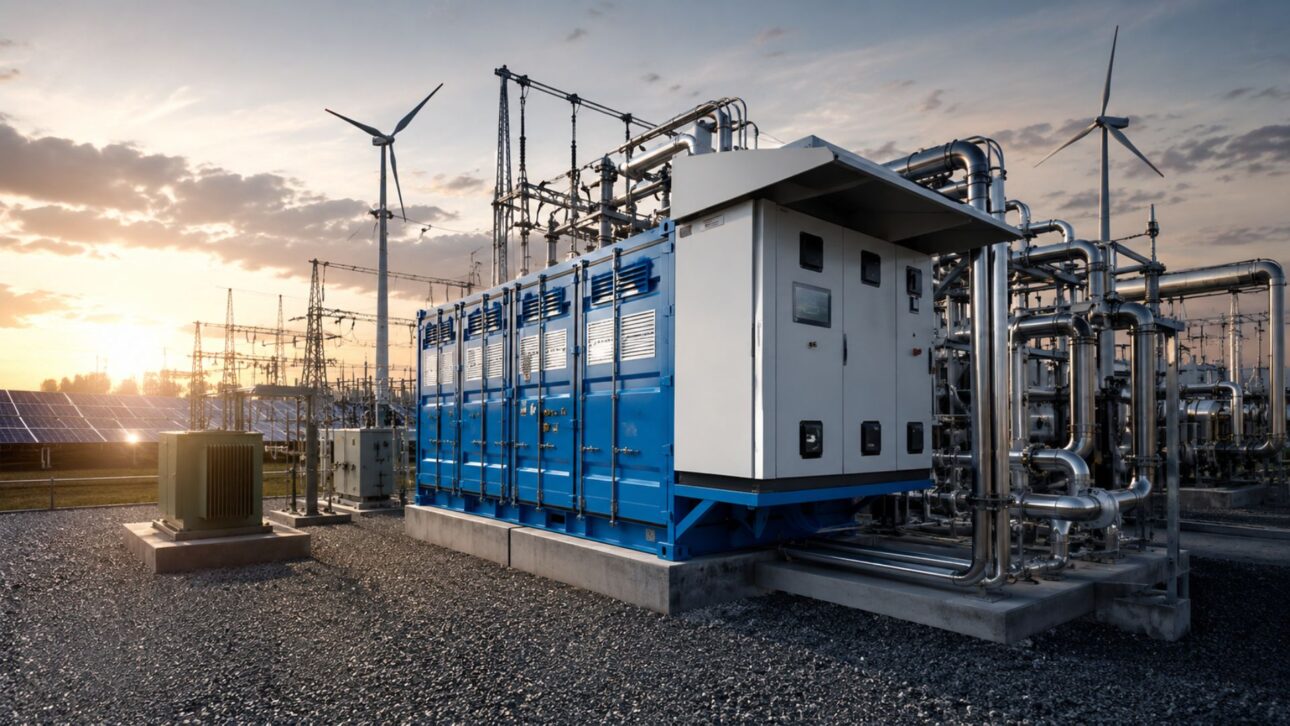
The idea is to combine two functions that normally require separate machines into one piece of equipment.
-
Construction Begins on First U.S. Modular Nuclear Reactor, Smaller Than a Sports Court

-
Scott Nolan Secures $900 Million from U.S. Government to Produce Enriched Uranium for Next-Gen Reactors, Reducing Reliance on Russia and China for Nuclear Fuel

-
Hiker in Norway Discovers Rare 1,500-Year-Old Gold Sword Ornament, One of Only 17 Worldwide
-
Brazil’s Largest Grain Port Faces Delays in the Hinterlands, Missing Rail Link Costs Agribusiness Billions


On one side, it stores electricity like a common battery; on the other, it functions as an electrolyzer, breaking water to release hydrogen. When the internal battery is full and there is still excess energy, instead of wasting it, the system uses this surplus to produce hydrogen.
This is where it literally becomes a battery that produces hydrogen. Two problems of the energy transition solved by the same box.
Stores Energy During the Day, Then Produces Hydrogen
The operation follows the rhythm of clean energies. During the day, when the sun and wind produce in abundance, the Battolyser stores energy, saving the surplus like any battery.
When the charge reaches its limit and energy continues to flow in, the device doesn’t stop: it activates the electrolyzer mode and starts producing hydrogen. Thus, nothing is wasted, because the surplus energy is converted into storable fuel in the form of hydrogen.
This flexibility makes the battery that produces hydrogen so appealing to those who rely on sources that vary throughout the day.
Made of Nickel and Iron, Without Rare Materials
A technical detail explains much of the appeal. The Battolyser is built on a nickel and iron chemistry, which are cheap and abundant materials, and does not rely on rare and expensive metals like lithium.
This is a huge advantage in a world competing for critical materials for batteries and electrolyzers. The foundation is an old chemistry, the type of battery that Thomas Edison himself helped popularize, now reinvented.
Using iron and nickel makes the system cheaper and easier to scale. It’s robust technology with abundant raw materials.
Who is Mattijs Slee and Battolyser Systems
Behind the company is a team betting on heavy industry. Mattijs Slee is the CEO of Battolyser Systems, a deep-tech scale-up based in Rotterdam, Netherlands.
Under Mattijs Slee’s leadership, the company moved from the lab to a real industrial pilot in just a few years. Battolyser Systems was born to tackle two bottlenecks of clean energies at once: how to store the surplus and how to produce green hydrogen at scale.
It’s not an app startup, but rather one of heavy physical equipment. And Mattijs Slee is at the forefront of this shift.
€30 Million and the 1 MW Pilot at RWE
The technology has already passed the toughest test: operating outside the lab. Battolyser raised 30 million euros in an investment round to accelerate production.
The major milestone was the 1 MW industrial pilot installed at the Magnum plant, owned by the German energy giant RWE, in Eemshaven, Netherlands, according to Offshore Energy. Proving the system in a real plant is what opens the door to scaling up.
Now the company is preparing larger modules, of 2.5 and 5 MW. From 1 MW to 5 MW, the leap targets the size the industry needs.
Why this matters for factories and the grid
The scope of the idea goes beyond a good machine. The electrical grid suffers when sun and wind produce too much at one moment and too little at another, and energy storage is the missing piece to balance this.
Having equipment that stores energy and also produces hydrogen offers factories and the grid two solutions in one investment. Many industries need hydrogen as a raw material and stable electricity at the same time.
The Battolyser promises to deliver both, taking advantage of renewable energy that is often wasted today. It is valuable flexibility in a system increasingly dependent on clean sources.
What the Battolyser shows
The biggest lesson is that storing energy and producing hydrogen can be the same gesture. Mattijs Slee and the Battolyser show that a battery that makes hydrogen can solve two problems of the energy transition at once.
Of course, it’s important to keep your feet on the ground. The technology is still moving from a 1 MW pilot to larger modules, and proving performance and cost on an industrial scale is the remaining challenge, so it’s an advanced promise, not a solution already widespread.
Even so, seeing an electrolyzer that is also a battery, made of nickel and iron and tested at an RWE plant, is the kind of innovation that can change how we store clean energy. From the surplus of sun and wind to hydrogen for the industry, the Battolyser tries to close this gap, proving that sometimes the best solution is to combine two machines into one.
And you, did you know that there is already a battery capable of producing hydrogen when it fills up? Tell us in the comments what you think about this type of clean energy storage.


