Portuguese
  Spanish


Mariana had only driven a car and motorcycle before becoming a truck operator in mining. Today she drives 15-meter vehicles at almost 4,800 m altitude at the Veladero gold mine in Argentina, where women already make up about 16% of the workforce, a result of a training program.
The largest machine she drove could fit in a garage; today, it measures 15 meters. Mariana Olivares swapped the car and motorcycle for gigantic off-road trucks and became a truck operator in mining, working at almost 4,800 meters altitude at the Veladero gold mine. The story was told by the radio Cadena 3.
The case is also a portrait of change in the sector. In Veladero, in the San Juan mountain range, in Argentina, women already represent about 16% of the workforce, a number that grows every year. Many of them arrived there specifically to operate the mine’s trucks.
Behind the numbers, there are stories of technical overcoming like Mariana’s. She says that the first feeling in front of the machines was fear, but training and practice brought confidence. Next, see how an ordinary driver became a truck operator in one of the highest mines in the world.
-
1,600-Year-Old Byzantine Christian Lamp Shaped Like a Sandaled Foot May Have Biblical Origins

-
Brazilian Researchers Develop Cassava Starch and Grape Peel Packaging That Changes Color to Indicate Spoilage of Meat and Fish

-
Revolutionary Air Fryers: New Models Offer Up to 12 Liters Capacity, 10 Functions, and 90% Less Fat Starting at $80
-
New Helmet Rule in Brazil Requires Inmetro Digital Seal and QR Code from July 1, 2026, But Existing Helmets Are Exempt — Here’s What Changes and How to Verify Authenticity


Who is Mariana Olivares, the truck operator of Veladero
Mariana’s journey began far from mining. Before joining Veladero, she had only driven a car and motorcycle, everyday vehicles, with no experience with heavy machinery. The idea of driving a giant truck seemed, at first, something far from her reality.
It was a training program that opened the door. Through training aimed at women, Mariana learned to operate the enormous off-road trucks used in the mine. What was an unknown world became a profession, and today she has about three years as a truck operator.
The beginning, however, was not easy to face. “The first thing is fear,” admitted Mariana to Cadena 3, recalling how the enormous size of the machines impressed her at first. It’s no wonder: sitting in the cabin of a 15-meter vehicle requires overcoming a natural shock.
Over time, fear gave way to security. “I thought several times that I wouldn’t make it,” she said, but explained that training and repetition gradually built her confidence. Today, Mariana is part of the team that keeps the gold mine running, proving that the barrier was more mental than real.
Her case comes at a time of expansion in mining in Argentina. The province of San Juan has become one of the main gold extraction hubs in the country, attracting investments and generating jobs. It is in this growth scenario that stories like Mariana’s multiply, inside and outside the cabins.
15-meter trucks at almost 4,800 m altitude
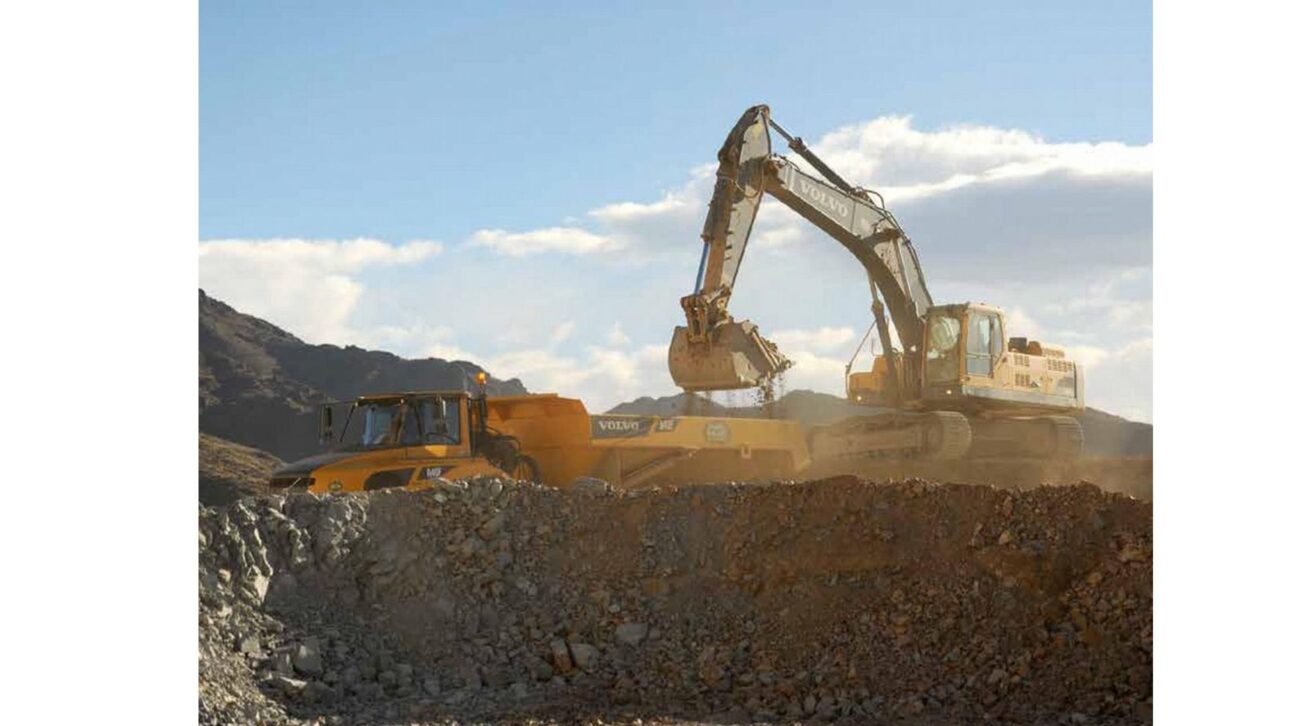
Mariana’s work environment is extreme in every sense. The gold mine Veladero is located in the Andes mountain range, in San Juan, Argentina, at altitudes ranging from 4,000 to 4,850 meters. In this scenario of thin air and intense cold, she spends her shift driving one of the largest vehicles that exist.
The trucks are impressive in size. The machines Mariana operates are about 15 meters long and 7 meters high, true buildings on wheels. These off-road trucks are made to carry enormous loads of ore within the mine, on long and repetitive routes.
To get an idea of the scale, just look at the load. Off-road trucks of this size usually transport dozens, sometimes hundreds, of tons of ore per trip, more than the weight of several buses combined. Each maneuver by the truck operator moves a volume of rock that would be impossible to remove manually.
The routine is also demanding. Mariana works 12-hour shifts, alternating between day and night periods, in a regime of 14 days of work followed by 14 days off. It is the typical scheme of large-scale mining, where the operation cannot stop and employees live on the mountain during their shifts.
Operating under these conditions requires extra preparation. In addition to mastering the machine, the truck operator needs to deal with the altitude, which affects the body, and with the inherent risks of an active mine. Therefore, training and safety are taken seriously, and Mariana’s experience shows that women can handle the challenge.
“I thought I wouldn’t make it”: the fear that turned into confidence
Mariana’s story is, above all, about technical learning. The initial fear in front of the machines is a common reaction, and what made her move forward was not a magical gift, but hours of training and practice. This process is what transforms an ordinary driver into a mine truck operator.
Integration with colleagues also helped. “They always integrated me well,” said Mariana, indicating that she found a respectful environment in the team. In a historically male sector, feeling part of the group makes a difference for those breaking a stereotype.
Her account dismantles the idea that this work is for men. Driving a giant truck in mining depends on technique, attention, and responsibility, qualities that have no gender. The growing presence of women in Veladero is practical proof of this.
Such cases serve as a reference for others. When a car and motorcycle driver becomes a truck operator in a gold mine at 4,800 meters, it becomes easier for other women to imagine that they can too. Mariana’s example paves the way for those who come after.
Women already make up 16% of the workforce: the numbers of change


The individual story is supported by a larger transformation. According to information from TiempodesanJuan, in Veladero, women already make up about 16% of the entire direct workforce, equivalent to more than 200 employees. For a gold mine in a remote region, it is an impressive and growing figure.
The progress becomes even clearer when compared to the past. A few years ago, in 2020, women represented only about 5% of the mine’s workforce. The jump to nearly 16% shows a rapid change, the result of deliberate policies to open the sector to them.
According to information from Cadena 3, in the position of truck operator, the female presence is even greater. According to operational data, Veladero has 128 women operating off-road trucks, which represents about 30% of the total professionals in this strategic area. In other words, in some sectors, participation already exceeds one-third.
These numbers did not appear by chance. They reflect the company’s effort to recruit and train women, especially from communities near the mine. Mining, once seen as a closed world, has begun to open up in a concrete and measurable way.
Several factors explain this turnaround. Pressure for more diversity, a shortage of qualified labor, and the good results of the first operators helped convince the company to invest in women. What started as a gamble ended up becoming a consolidated policy in the gold mine.
The program that trains women operators in mining
The entry point for many of these workers is a specific program. Veladero created a training program for women off-road truck operators, which became one of their main access routes to mining. It was through this path that professionals like Mariana reached the cabin.
The training is comprehensive and takes time. In total, the program lasts about six months, with one month of theoretical stage and five months of practical phase within the mine itself. Thus, the future truck operator learns not only the theory but also how to handle real machines in the work environment.
The initiative has already had several editions and dozens of graduates. Since 2021, over five editions, the program has trained about 115 women, and new classes continue to be opened. Recruitment is aimed at women over 18 who live in Iglesia and Jáchal, the regions neighboring the gold mine.
This local focus has an important effect. By prioritizing residents of nearby communities, the program turns mining into an income opportunity for the region, not just gold extraction. It’s a way to spread the benefits of the mine among the families living around it.
For many of these women, the program meant their first signed contract in a qualified job. In regions with few opportunities, becoming a truck operator represents a leap in income and autonomy. The effect goes beyond the driver, reaching entire families in the communities neighboring the mine.
From operator to leadership: women in leadership positions
The change in Veladero is not limited to the truck cabins. Gradually, women also began to occupy supervisory and leadership roles in the operation, no longer being just at the execution end. Since 2023, several of them have joined the mine’s command teams.
This changes the logic of the sector from within. When there are women in decision-making positions, new references emerge for those starting out, and the environment tends to become more diverse from top to bottom. Female presence ceases to be a sporadic exception and becomes part of the structure.
For the truck operator who dreams of growing, this scenario is encouraging. Knowing that there is a path to reach supervision or management gives a sense of career, not just a job. The trajectory within mining becomes a real possibility.
In the end, diversity also becomes a matter of efficiency. Companies in the sector have realized that mixed teams, with women at different levels, usually bring gains in safety and work environment. Making space has ceased to be just talk and has become a strategy in the gold mine.
This effect tends to accelerate over time. Each of the women who takes on a leadership role inspires others to try, creating a cycle that reinforces diversity itself. In Veladero, what was rare five years ago has already become part of the daily life of mining.
How the Veladero Gold Mine Works
To understand the achievement, it’s worth knowing the place. Veladero is a large open-pit gold mine located in the province of San Juan, in western Argentina, right in the Andes mountain range. Operated by the mining company Barrick, it is among the most important in the country.
The operation runs non-stop. Like many large mines, Veladero operates 24 hours a day, every day of the year, with shifts rotating to keep extraction continuous. It is practically a city on the mountain, with accommodations, cafeterias, and infrastructure for the workers.
Veladero also has economic weight for Argentina. Gold export is an important source of foreign exchange for the country, and mines like this account for a good part of national production. Therefore, what happens in the San Juan mountain range resonates far beyond the mountains.
The altitude makes everything more challenging. Working above 4,000 meters requires body adaptation, health care, and equipment prepared for the cold and low pressure. It is in this environment that gold mining takes place, moving tons of rock every day.
In this context, each truck operator is an essential piece. These giant vehicles transport the ore within the mine, feeding the entire gold extraction process. Without them, and without those who drive them, the gold mine simply wouldn’t function.
What This Has to Do with Brazil
Brazil is experiencing a similar debate in its mining. Large companies in the sector, like Vale, maintain programs to attract women to traditionally male roles, from equipment operators to engineers and technicians. The goal is to reduce a historical imbalance between men and women on sites and in mines.
The Brazilian reality still shows a long way to go. Despite advances, women remain a minority in much of the country’s heavy industry, which makes examples like Veladero useful as inspiration and a benchmark. Seeing a consolidated truck operator shows that change is possible.
In Brazilian mines, there are already women operating giant trucks in places like Carajás, in Pará. Training programs similar to those in Veladero are being adopted by mining companies here, which seek to increase the presence of women in operational roles. The difference often lies in the scale and speed of change.
There is also the economic weight of the sector here. Mining is one of the main activities of the Brazilian economy, and opening more positions for women means expanding the available talent pool. Diversity, in this case, directly relates to productivity and the lack of qualified labor.
Finally, there is a lesson about training and community. The model of training local residents for the gold mine aligns with the Brazilian discussion on how to make mineral wealth benefit the cities where extraction takes place. Qualifying the neighboring population is a concrete way to spread the gains from gold.
And you, would you face a 15-meter truck?
The story of Mariana Olivares shows how technique and opportunity break down stereotypes. From a car and motorcycle driver, she became a 15-meter truck operator at almost 4,800 meters altitude in the Veladero gold mine in Argentina, where women already make up about 16% of the workforce. All this from a training program and a lot of practice.
And you, would you have the courage to operate a giant truck high in the mountains? Share your thoughts in the comments about Mariana’s story and whether you believe Brazilian mining will increasingly make room for women.