Portuguese
  Spanish


Kairos Power has begun construction of Hermes in Oak Ridge, Tennessee — the first demonstration nuclear reactor in the United States licensed by the NRC in over fifty years, a small modular reactor that fits in a space smaller than a sports court, uses molten salt as a coolant instead of pressurized water, and can be factory-built before being assembled on-site, changing the economic logic that made nuclear energy synonymous with budget overruns and decades-long delays.
What Hermes is and what Kairos Power is trying to prove
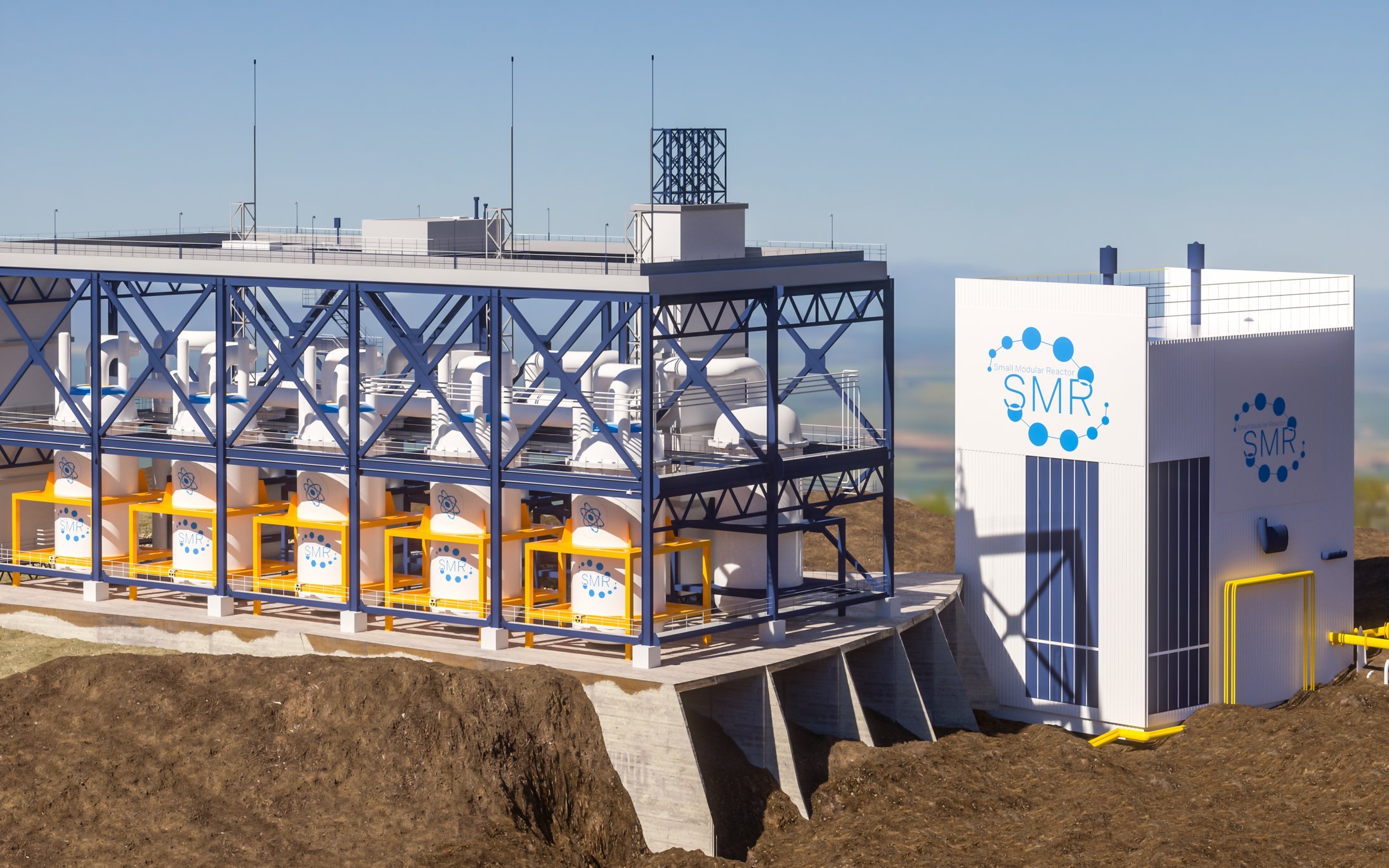
Hermes is not a commercial nuclear plant — it is a 35-megawatt thermal demonstration reactor that will not generate electricity for the grid. The goal is to prove that Kairos Power’s design — flibe fluoride molten salt as coolant, TRISO fuel encapsulated in graphite spheres, operation at atmospheric pressure — works safely and reliably on a real scale before building the commercial version, the 320-megawatt electric KP-FHR.
The project is in Oak Ridge for historical and practical reasons: the Oak Ridge National Laboratory, part of the U.S. Department of Energy, has decades of experience with molten salt reactors — the world’s first molten salt reactor was operated there in the 1960s as part of the Molten Salt Reactor Experiment nuclear bomber program. The existing infrastructure and technical knowledge in Oak Ridge reduced the cost and complexity of licensing Hermes.
The NRC — Nuclear Regulatory Commission — issued the construction license in December 2023, after a design review that lasted more than two years. It was the first non-water nuclear reactor construction license issued in the U.S. in over half a century.
-
Dutch Innovator Develops Dual Battery and Electrolyzer Machine for Solar and Wind Energy Storage, Raises €30 Million Following 1 MW Pilot

-
Scott Nolan Secures $900 Million from U.S. Government to Produce Enriched Uranium for Next-Gen Reactors, Reducing Reliance on Russia and China for Nuclear Fuel
-
Hiker in Norway Discovers Rare 1,500-Year-Old Gold Sword Ornament, One of Only 17 Worldwide
-
Brazil’s Largest Grain Port Faces Delays in the Hinterlands, Missing Rail Link Costs Agribusiness Billions


Why molten salt instead of water
Conventional light water reactors — which generate 93% of American nuclear electricity — operate with pressurized water at 155 bar pressure to keep the coolant in a liquid state above 300 degrees. This high pressure is the dominant source of risk in accidents: if the containment system fails, the water explosively turns into steam. This is what happened at Three Mile Island in 1979 and what contributed to the Chernobyl scenario in 1986.
Fluoride molten salt operates at atmospheric pressure. There is no pressurization, no risk of explosion from sudden depressurization. If the reactor loses power completely, the salt simply hardens and blocks the flow of neutrons by geometry — it is a passive shutdown by solidification, without the need for pumps, valves, or human intervention.
TRISO fuel — uranium particles encased in layers of carbon and silicon carbide — can withstand much higher temperatures than conventional UO₂ fuel without releasing radioactive material. The result is a reactor that, according to Kairos simulations, can withstand total cooling loss without fuel melting — the most feared scenario in nuclear history.
The promise of modularity and what is still uncertain
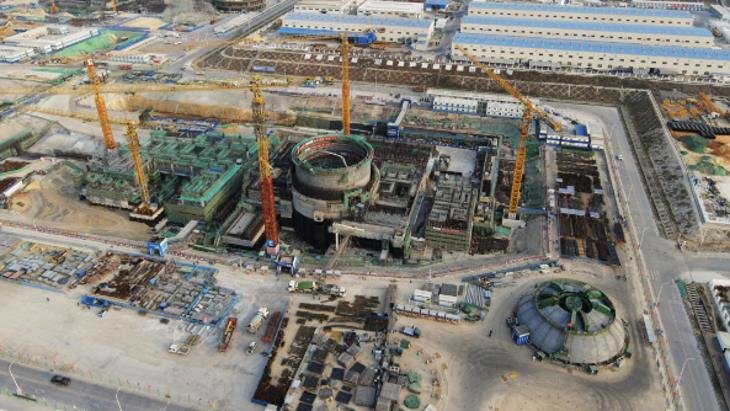
The central argument of SMRs — Small Modular Reactors — is that factory manufacturing and design standardization reduce costs and construction times. Conventional reactors like the AP-1000 were designed as unique projects built on-site, with a learning curve that restarts with each plant. The SMR theory is that the tenth unit comes out cheaper and faster than the first because the factory process is refined in series.
The theory still needs large-scale proof. NuScale, another American SMR, had its project canceled in 2023 after projected costs rose from 58 to 89 dollars per megawatt-hour — still competitive with solar energy without storage, but not with the original projection. Kairos Power is betting that its molten salt design has cost advantages that NuScale’s pressurized water reactor did not have.
I imagine the engineers in Oak Ridge who worked on the 1960s molten salt reactor — some still alive, as the project was closed in 1969 — knowing that what they proved in theory is now being built again, with sixty years of advanced materials and computing available.
Brazil and the race for modular reactors
Brazil has the fifth complete nuclear fuel cycle in the world, from uranium mining in Caetité to enrichment in Resende and fuel fabrication for Angra 1 and Angra 2. Angra 3, the third conventional reactor, has been under construction for decades with repeated budget and schedule overruns — exactly the problem that SMRs promise to solve.
Eletronuclear is monitoring the development of international SMRs. GE Vernova Hitachi has advanced talks with Brazilian companies about the BWRX-300 — a 300-megawatt modular boiling water reactor. If Hermes works as expected in Oak Ridge, it will be the best possible argument for Brazil to consider SMRs as an alternative to the third large conventional reactor the country will need in the medium term.
Brazil’s long nuclear history deserves a plant that finally delivers on time and on budget.
Read also: the AI data centers that have already contracted reactors that don’t even exist | the Godzilla robot assembling piece by piece the world’s largest fusion reactor.
Do you think modular nuclear reactors will be commercially viable in Brazil before 2040, or should the country focus on renewables to meet future energy demand? Comment here.