Portuguese
  Spanish


At USP, researchers created a cement that absorbs CO2 instead of just emitting: made with magnesium oxide instead of calcium and reinforced with plant fibers, the material captures about 100 kg of carbon dioxide per cubic meter, is more resistant and durable, and can decarbonize the construction industry.
Cement is one of the biggest climate villains, responsible for a huge share of the planet’s emissions. What if it could do the opposite, absorb carbon instead of releasing it? That’s what USP researchers developed: a cement that absorbs CO2 from the air and even gets stronger. The material, made with plant fibers and magnesium oxide, can capture about 100 kg of carbon dioxide per cubic meter. Instead of polluting, it stores the CO2 within its own structure, helping to clean up the construction industry.
The research was published by the Jornal da USP and came from FZEA, the USP faculty in Pirassununga. The idea was to replace the calcium in common cement with magnesium oxide, which reacts with carbon dioxide and transforms it into a solid part of the material. It’s not just a less polluting cement: it’s a cement that captures carbon and becomes more durable by doing so.
A cement that absorbs 100 kg of CO2 per cubic meter
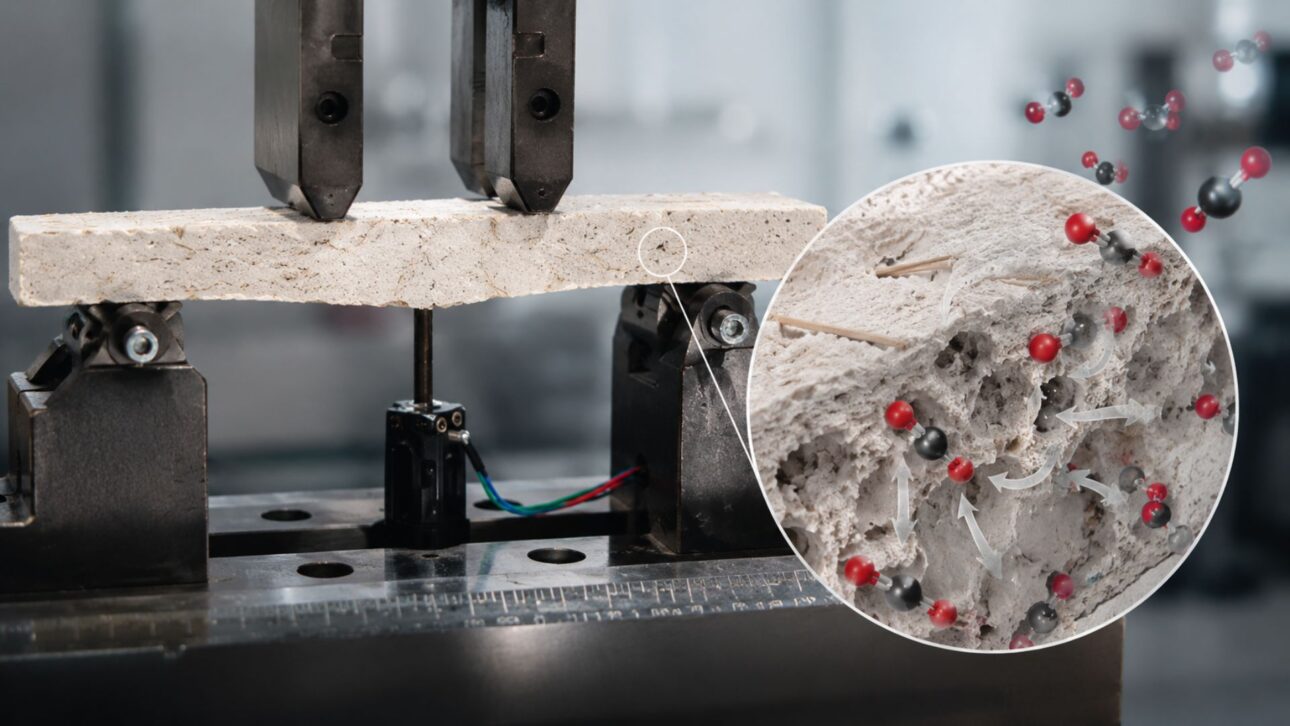
The CO2-absorbing cement developed at USP can capture about 100 kilograms of carbon dioxide for every cubic meter of material produced.
-
Brazil’s Largest Sewage Plant Boosts Capacity with New High-Performance Pumps, Treating Over 1 Billion Liters Daily

-
Brazilian Mother and Homemaker Becomes Bioconstructor, Builds 24-Ton Earth Dome and Teaches Technique Across Argentina
-
Manchester Builds 40 Furnished Homes for the Homeless Under Railway Arches, Complete with Community Hall, Laundry, Garden, and Sports Court
-
New Highway Section in Brazil’s Serra das Araras Opens: $300 Million Investment, 24 Viaducts, and Promised Travel Time Cuts of Up to 50% to Rio de Janeiro and 25% to São Paulo


Instead of the cement being a source of emission, like the traditional one, it becomes a carbon sink. It’s as if each block built removes a bit of pollution from the air.
In an industry that produces cement by the billions of tons, capturing carbon instead of emitting changes the equation. The secret lies in the chemistry behind the material.
Magnesium oxide instead of calcium
The big change is in the main ingredient. Common cement, Portland, is calcium-based and releases a lot of CO2 during production. USP replaced this calcium with magnesium oxide.
When magnesium oxide comes into contact with carbon dioxide, it reacts and forms magnesium carbonates, which incorporate into the material instead of becoming emissions. These carbonates fill the microstructure of the cement, making it denser, less permeable to water, and more resistant.
In other words, the same process that captures carbon is what strengthens the block. Magnesium oxide does double duty.
Why plant fibers last longer
The reinforcement of the material comes from nature. USP’s cement is reinforced with plant fibers, which act as a kind of framework that holds the material together.
The problem is that, in common cement, high alkalinity attacks and degrades these plant fibers over time. Here’s another advantage of magnesium oxide: it makes the environment less alkaline, with a lower pH than Portland.
With less chemical aggression, plant fibers last much longer and continue to fulfill their reinforcing role. It’s the combination that makes the material both strong and durable.
Captures CO2 from sugarcane ethanol
The research targets a very Brazilian carbon source. The idea is to use the CO2 left over from ethanol production from sugarcane, a gas that is currently released into the atmosphere.
Each ton of ethanol generates almost a ton of CO2, and the state of São Paulo alone emits about 11.3 million tons of this gas per year in fuel production. Instead of releasing this carbon into the air, the proposal is to trap it within the cement.
Thus, two sectors help each other: ethanol provides the CO2, and construction stores it. It’s circular economy connecting fuel and cement.
Who’s behind it: FZEA-USP
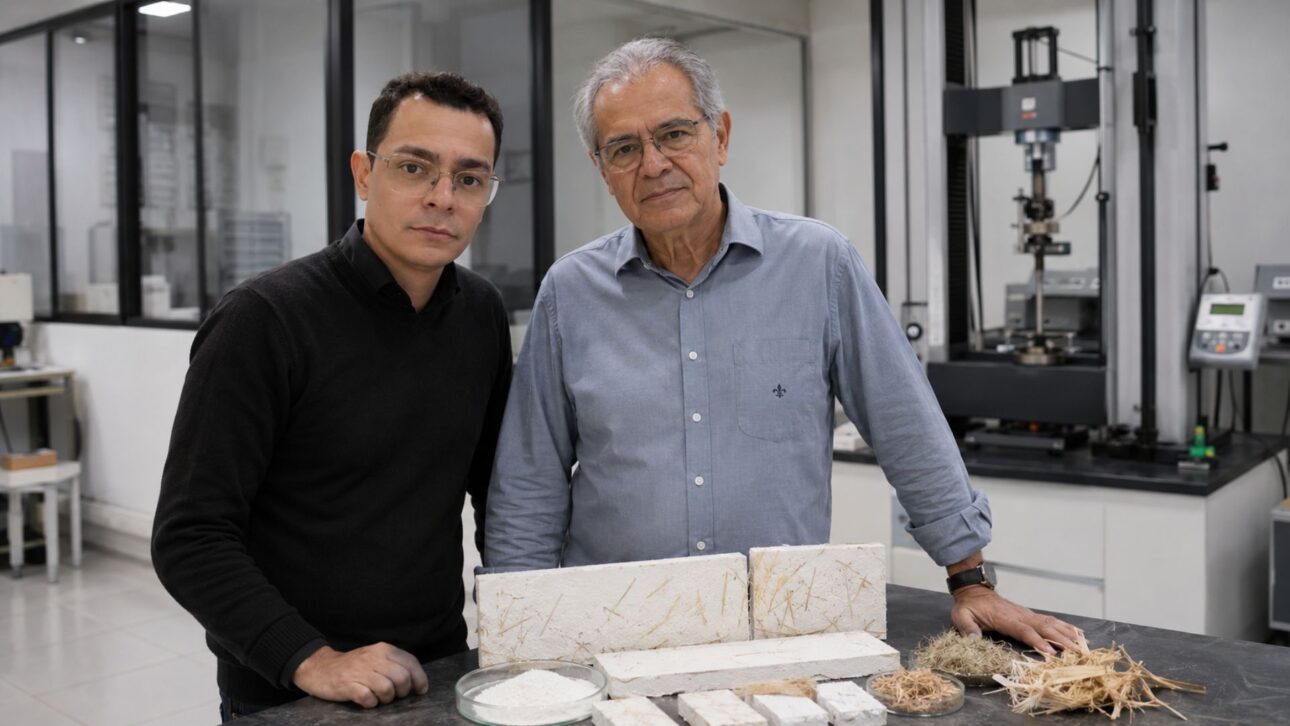
The work was led by chemist Adriano Galvão de Souza Azevedo, alongside Professor Holmer Savastano Junior, both from FZEA-USP, in collaboration with the University of Manchester, in the United Kingdom.
The results were published in the scientific journal Construction and Building Materials, one of the leading journals in the field of construction materials, according to Cimento Itambé.
FZEA, in Pirassununga, is a reference in cement composites with vegetable fibers. It is not a guess from an improvised laboratory; it is peer-reviewed and published science.
Why this matters for civil construction
The weight of the idea is measured on the scale of the sector. Cement production accounts for about 8% of global CO2 emissions, so any change in this material has a huge effect on the climate.
A cement that absorbs CO2, instead of emitting it, would directly tackle one of the biggest carbon problems in civil construction. Add to that the gain in durability, which makes constructions last longer and require less maintenance.
For civil construction, having a greener and more resistant material at the same time is the ideal scenario. It is the chance to transform the climate villain into part of the solution.
What USP’s cement shows
The biggest lesson is that it is possible to rethink even the most basic construction material. USP researchers showed that a cement that absorbs CO2, with magnesium oxide and vegetable fibers, can be cleaner and stronger than the common one.
Of course, it’s important to keep grounded. The result comes from laboratory tests and a scientific article, and taking this technology to the scale of constructions requires mass production and competitive cost, which is still a challenge.
Even so, seeing a Brazilian cement capture 100 kg of carbon per cubic meter is the kind of breakthrough that can change the face of civil construction. From sugarcane to concrete, USP tries to transform pollution into structure, and proves that the future of construction can be, at the same time, more durable and less dirty.
And you, did you imagine that cement, the climate villain, could become a carbon capturer? Tell us in the comments what you think of this type of sustainable material.