Portuguese
  Spanish


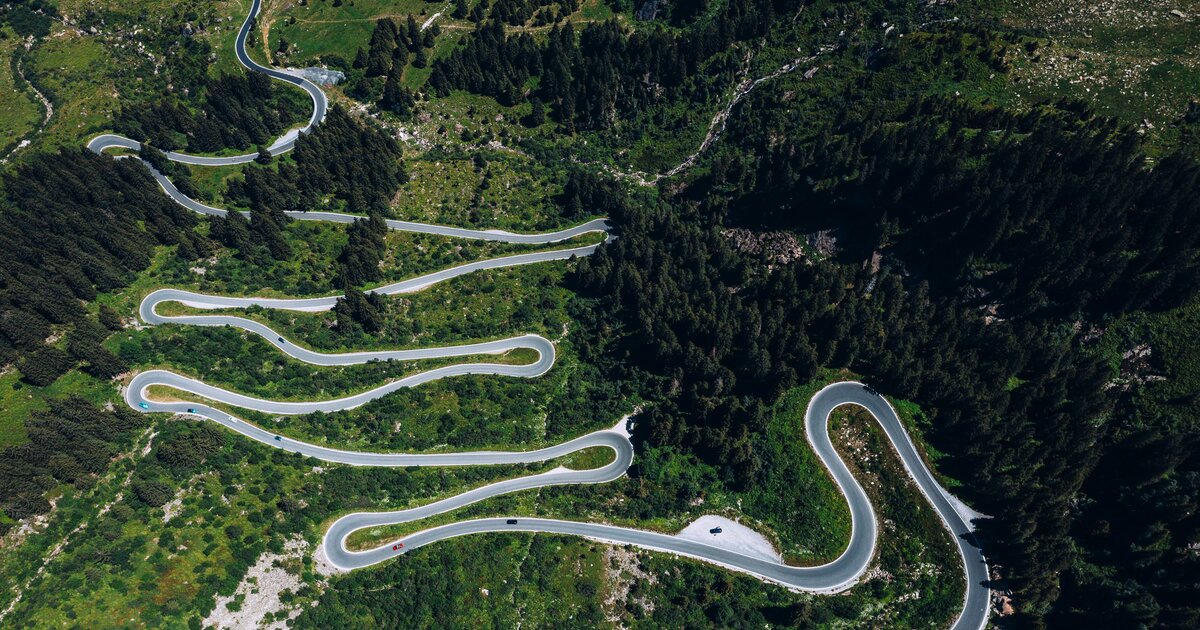


With 22.3 km, 34 Hairpin Turns, and an Altitude of 2,032 Meters, the Silvretta High Alpine Road Crosses the Austrian Alps in One of the Most Impressive Routes in Europe.
There are roads you drive to get somewhere. And there are roads where the journey is the destination itself. The Silvretta High Alpine Road in Austria definitely belongs to the second group. With 22.3 kilometers in length, 34 hairpin turns, and a brutal climb that reaches 2,032 meters in altitude, this road winds through the Austrian Alps connecting two states, Vorarlberg and Tyrol, on a route that leaves even experienced drivers with sweaty hands on the wheel.
But it’s not just the difficulty that makes it famous. It’s the absolutely spectacular view: glaciers shining in the sun, breathtaking turquoise lakes, snow-capped peaks that seem to touch the sky, and engineering so bold that it seems to challenge the laws of physics.
Motorcyclists from all over the world consider riding this road a must-do item on their wish list. Professional cyclists rank it as one of the toughest climbs in Europe. And over 400,000 visitors each year pay a toll just for the privilege of traveling along it. The Silvretta is not just a road. It’s a masterpiece of alpine engineering that took 29 years to complete and that, even today, closes for half the year due to extreme snow conditions.
-
Couple Transforms Suffolk’s Last 1891 Windmill into Luxurious Four-Story Home with Zinc Observation Room in England

-
Father and Son Build 97 cm Thick Circular Stone House in Brazil, Inspired by Scottish Architecture, Creating a New Agrotourism Hub
-
Sweden Removes 200-Ton Concrete Gallery to Restore Pjältån River’s Natural Flow in Europe’s Largest Aquatic Restoration Project

-
Key Infrastructure Projects for Brazil’s Next President: Expanding Railways to Cut Transport Costs, Reduce Truck Traffic, Create Jobs, and Boost Industries Nationwide


How the Silvretta High Alpine Road Was Built Backwards Over 29 Years
The story of the Silvretta began in 1925, but not as a tourist road. It was a construction road for a hydropower plant project.
The company Illwerke needed to transport heavy equipment and workers to build a giant dam high in the mountains. The problem? The terrain was so steep and rugged that a conventional road would be impossible.
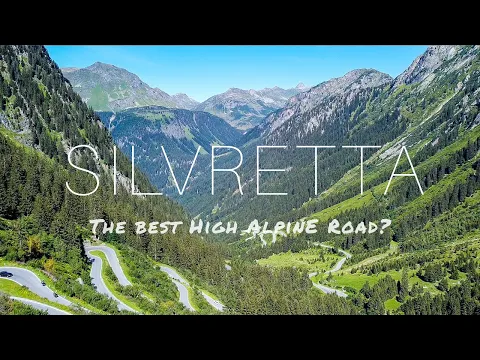

The solution was radical: build the road backwards, descending from the mountain.
Between 1925 and 1930, they created the first transport routes to Vermunt Lake. In 1938, during the construction of the Silvretta dam, they opened the section between the lake and Bielerhöhe, the highest point.
But the most difficult part was still missing: the climb from Partenen to Vermunt. The terrain was almost vertical. Rock cliffs. Rivers cutting through the path.
In 1951, engineers used a giant excavator, originally made for digging reservoirs, to literally carve the road through the vertical landscape. Working from top to bottom.
Finally, on June 23, 1954, a continuous road from Partenen to Galtür was completed. It took 29 years to build. In 1961, it was expanded to two full lanes. Today, the road that started as an industrial necessity is one of the most famous scenic routes in Europe.
The 34 Hairpin Turns with a 12% Incline That Challenge Drivers and Cyclists
The Silvretta High Alpine Road is not for the faint of heart. The road rises 1,051 meters from Partenen (starting altitude) to 2,032 meters at Bielerhöhe in just 15.1 km from the Vorarlberg side. This is an average incline of 6.6%.
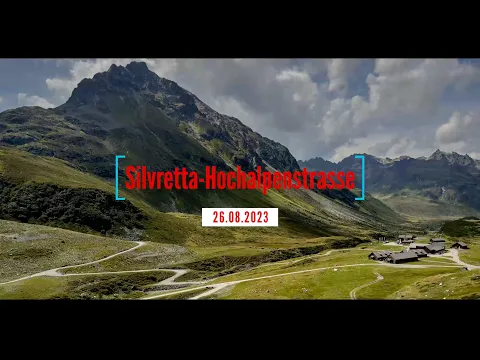
But the average is misleading. In some sections, the incline reaches 12% nearly vertical. In the hairpin turns, the road “relaxes” to 5%, but that means that in the straight sections between curves, you are climbing at over 10% consistently.
And then there are the turns. 34 hairpin turns along the total route. Turns of 180 degrees where you need to downshift to first gear, turn the steering wheel completely, and trust that the engineering won’t let you fall off the mountain.
The asphalt is perfect, described by cyclists as “smooth as a billiard table.” But that doesn’t make the road easy. It only makes it possible.
Motorcyclists love the turns. They are smooth, well-marked, and offer excellent visibility. But they require real skill; a hard brake or a bad entry, and you’re in trouble.
Professional cyclists classify the Silvretta as Category 1, the same rating as some of the toughest climbs in the Tour de France. Only well-trained cyclists can reach the top without suffering. Recommended gear: 34×32 (or even 34×34 for amateurs).
A Dutch cyclist who climbed in 2022 reported: “The average incline is deceptive. The road is steep from start to finish, except in the curves themselves and near the reservoir. My legs burned. But the views… are worth every drop of sweat.”
Glaciers, Turquoise Lakes, and Views of 4 Countries: What You See as You Climb to 2,032 Meters
As you climb, the scenery changes dramatically. In the first kilometers, you pass green alpine pastures with cows wearing bells, the metallic sound of the bells echoing among the mountains. Traditional wooden houses with flower-filled balconies.
As you gain altitude, the vegetation decreases. The trees disappear. You enter the alpine zone, bare rocks, persistent snow even in summer, thin air.
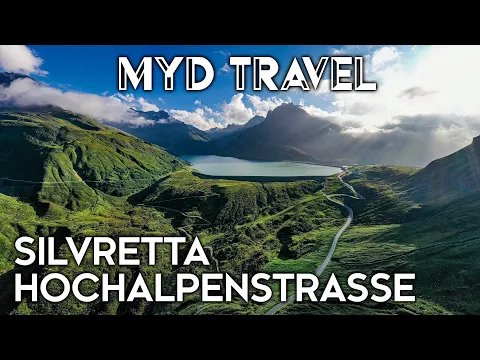
Then you catch sight of the first lake: Vermuntsee (Vermunt Lake). Bright turquoise water, surrounded by rocky peaks. It is an artificial reservoir part of the hydropower plant that justified the construction of the road.
Further up, the view becomes even more impressive: Silvretta Stausee (Silvretta Lake) appears like a turquoise gem set in the mountains. The water has this surreal color because it is fed by glaciers, the sunlight reflecting off the particles of ground rock that the glaciers carry.
Behind the lake, standing tall, is Piz Buin at 3,312 meters, the highest peak in the Silvretta region. Even in summer, its summit is covered in snow and ice.
And then you arrive at Bielerhöhe, the highest point of the road, at 2,032 meters. From here, on clear days, you can see four countries: Austria (where you are), Switzerland, Germany, and even Italy in the distance.
It’s common for visitors to stop here for hours. There is a restaurant, a souvenir shop, and hiking trails that start right from the parking lot. The trail around Lake Silvretta takes about 2 hours and offers even more spectacular views.
Toll of €18 Keeps the Alpine Road Operational Following the Removal of 6 Meters of Snow
Unlike many alpine roads, the Silvretta is not free. It is a toll road operated by Illwerke VKW, the same energy company that originally built it.
Toll Prices (2023):
- Car: €18.00
- Electric Car: €14.00 (environmental discount)
- Motorcycle: €14.50
- E-motorcycle: €11.50
- Bus: €4.50 per person (minimum €36)
- Cyclists and pedestrians: FREE
Many complain about the price. “€18 for 22 km?” A visitor on TripAdvisor wrote: “Seems a lot for such a short road.”
But there’s a reason. Maintaining an alpine road at 2,000 meters altitude is absurdly expensive.
Every year, before the road reopens, teams need to:
- Remove snow — sometimes with 6 meters deep
- Reinstall signs and safety barriers
- Repair the asphalt damaged by ice
- Remove loose rocks that fell during the winter
- Rock specialists (“rock clearers”) climb the slopes above the road to remove unstable stones that could fall on cars
And there’s more: In 2024 and 2025, severe storms and torrential rains caused severe geological damage. Landslides. Massive erosion. Unstable rocks. Because of this, in 2026, the Vorarlberg side of the road will remain completely closed. Only the Tyrol side (from Galtür to Bielerhöhe) will be open and free of charge as compensation.
The company is investing in:
- Containment dams
- Rockfall protection nets
- Redesigning 500 meters of road
Visitors from Vorarlberg will still be able to reach the top using the Vermuntbahn cable car and a bus through the tunnel. Therefore, the toll is not profit. It’s operational survival.
Road Closes from October to June: How to Visit the Silvretta in the 6 Months of Opening
The Silvretta High Alpine Road only operates in summer.
Opening Period: Normally from early June to late October.
Winter Closure: From late October to the following June.
Why? Snow. A lot of snow.
At 2,032 meters in altitude, the alpine winter is brutal. Snow can accumulate 6 meters or more in some sections. Avalanches are common. Temperatures can drop to -20°C or worse.
Even in September — technically still summer — it can snow. Visitors without snow chains on their tires are banned from entering.
An Indian tourist recounted his experience: “I tried to climb in September 2019. It snowed a few hours before. I was stopped at the toll. No chains, no passage. I recommend going in the summer peak July/August to ensure.”
But beware: In peak summer, the road gets crowded. Over 400,000 visitors each year, concentrated in 5 months. This means 2,600 vehicles per day on average. On weekends, many more.
Parking at Bielerhöhe becomes impossible to find after 10 a.m. Arrive early or expect to be circling.
Motorcyclists, Professional Cyclists, and Tourists: Who Visits the Silvretta High Alpine Road
The Silvretta attracts very different audiences.
Motorcyclists: They consider the road “the roller coaster of the Alps.” Perfect turns, excellent asphalt, breathtaking views. Groups of motorcycles traverse the road repeatedly just for the joy of riding.
Cyclists: It’s a test of endurance. A climb of 15 km with 1,000 meters of elevation gain. Professional cyclists use it for training. Amateurs come to challenge themselves. Completing the climb is a personal trophy.
Casual drivers: They come for the scenery. They stop at every viewpoint. Take a thousand photos. Have lunch at the Silvrettasee restaurant at the top. Walk around the lake. For many, it’s the most beautiful drive they’ve ever done.
Hikers: The road is a starting point for alpine hiking trails. From Bielerhöhe, you can walk to the Wiesbadener Hütte (2,443 m), an alpine refuge with spectacular views of Piz Buin. Or take the trail around the lake 6.3 km, 2 hours, with no special equipment needed.
Classic car enthusiasts: The Silvretta is famous among classic car owners. The combination of challenging road + cinematic landscape + historical engineering makes it perfect for classic car rallies.
Why 400,000 Visitors Per Year Pay to Drive on the Most Scenic Road in the Alps
There’s something about driving on the Silvretta that changes people. Maybe it’s the absurd scale of the surrounding mountains; you feel tiny, insignificant.
Maybe it’s the daring engineering: humans literally carved a road through mountains that seem insurmountable.
Maybe it’s the raw beauty: glaciers, impossible blue lakes, snow-capped peaks piercing the sky.
Or maybe it’s simply the experience of being at 2,000 meters altitude, breathing thin air, looking down and seeing the valley so distant it feels like another world. Visitors leave comments that sound almost spiritual:
“One of the most beautiful roads I’ve ever driven in my life. Every turn reveals a new and even more stunning view.”
“I planned to stay 30 minutes. I stayed 4 hours. I couldn’t leave.”
“Worth WAY more than the €18. If I could, I would pay double just to be able to return.”
Even cyclists who suffer on the climb say it’s worth it. One commented: “My legs were dead. My heart racing a thousand. But when I reached the top and saw the lake surrounded by mountains… I forgot all the pain.”
Partial Closure in 2026: Vorarlberg Side Remains Closed Due to Geological Damage
Important: In 2026, the Silvretta High Alpine Road will not be fully accessible.
Due to geological damage caused by storms in 2024-2025, the Vorarlberg side (from Partenen to Bielerhöhe) will remain closed throughout the summer of 2026.
But you can still visit:
From the Tyrol side (from Galtür to Vermuntsee), the road will be open and toll-free.
From Vorarlberg, you can take the Vermuntbahn cable car (operating in summer 2026) + bus through the tunnel to Bielerhöhe.
That is to say: Bielerhöhe, the high point with the spectacular lake, will still be accessible. You just won’t be able to drive there from the Vorarlberg side.
The Illwerke company is working on extensive safety measures to fully reopen by 2027.
Silvretta vs Grossglockner: Why the “Alpine Dream Road” Is Worth the €18 Toll
The Silvretta High Alpine Road is not the most famous alpine road in Austria; that title likely goes to the Grossglockner High Alpine Road.
But many who have driven both say that the Silvretta is superior. It’s less touristy. Less commercialized. More authentic.
The turns are more challenging. The views are equally spectacular. And there’s something about the feeling of truly being isolated in the mountains away from crowds, surrounded only by peaks and glaciers that Grossglockner doesn’t offer.
No wonder the Austrians call it the “Traumstraße der Alpen” — “Dream Road of the Alps”.
Because when you’re behind the wheel, navigating curve after curve, with monumental mountains on either side, glaciers shining in the sun, turquoise lakes below, and nothing but wild and majestic nature all around.
You understand why over 400,000 people pay to take this journey every year.
You understand why motorcyclists cross continents just to feel these curves.
You understand why cyclists suffer climbing 1,000 meters in altitude just to say they conquered this mountain.
And you understand why, even after 29 years of brutal construction, even charging €18 in tolls, even closing for half the year.
The Silvretta High Alpine Road continues to be one of the most sought-after driving experiences in the world.
This is a road you do not drive to get somewhere.
You drive because the journey itself is worth every penny.