Portuguese
  Spanish


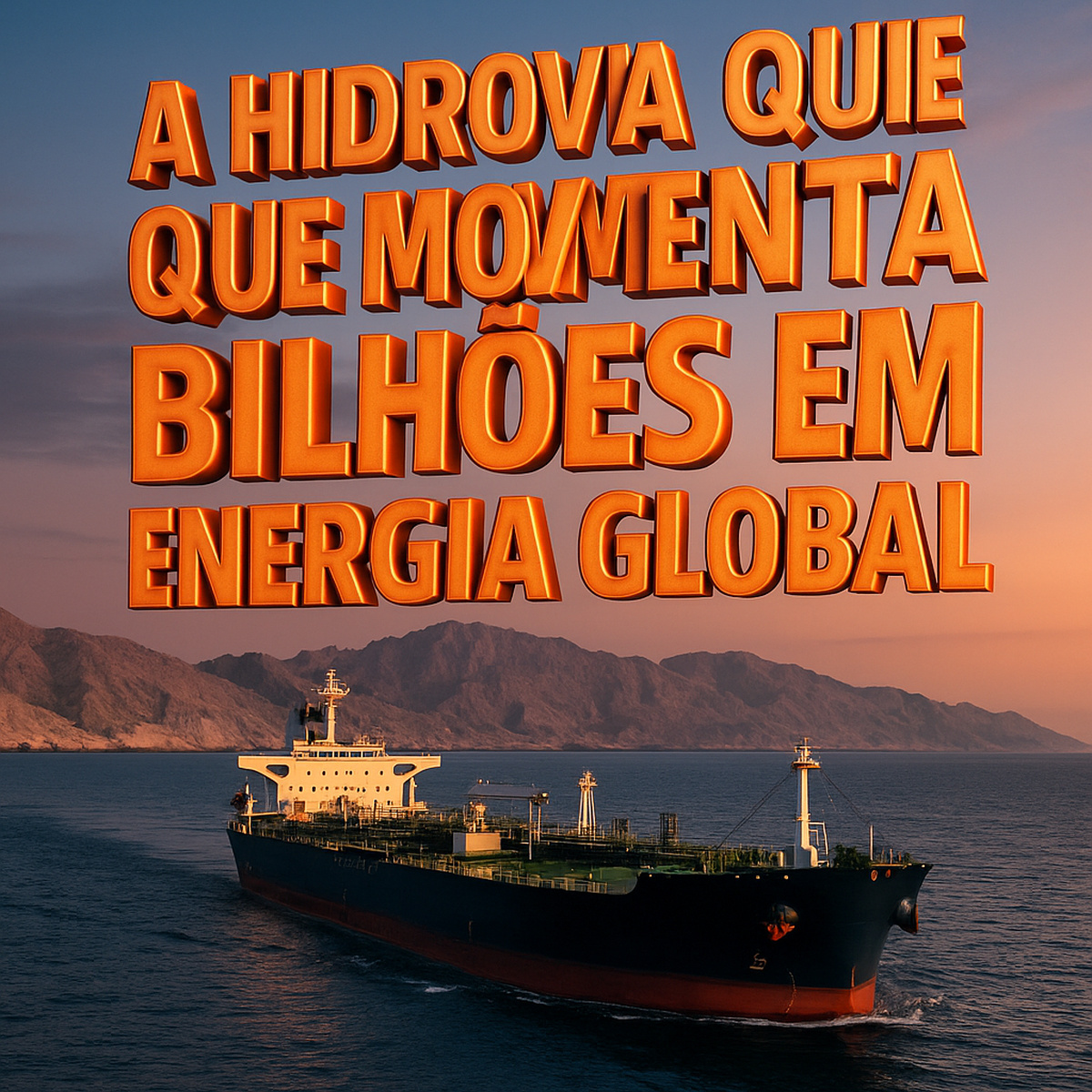

Strategic Passage for Oil and Gas Returns to the Center of Geopolitics, with Risks for Markets and Global Energy Security
The Strait of Hormuz, a maritime channel 33 kilometers wide, separates Iran from the Arabian Peninsula. Through it, about 20% of global oil and more than a quarter of the world’s liquefied natural gas (LNG) trade transit daily.
In June 2025, following Israeli airstrikes on Iranian nuclear facilities, the strait became a critical point once again. The Iranian response included public threats to block the passage, which immediately raised oil prices and increased the risk of an international energy crisis.
Experts from the Atlantic Council and the financial market warn that a total blockade would have severe impacts on the global economy.
-
The Arctic is no longer just a frozen region and is becoming a new military board with the opening of maritime routes, expansion of bases, nuclear icebreakers, and competition among Russia, NATO, the United States, and China.

-
U.S. Dismisses Brazilian Foreign Ministry’s Military Risk Warning as “Absurd,” Cites Brazilian Criminal Gangs Operating in the U.S. Since May 2026
-
Ukraine War Impacts Brazilian Fuel Supply: Russian Diesel Imports Drop 65% in June, Brazil Turns to US and India Amid Market Concerns

-
Chinese Nuclear Submarine Launches Simulated Warhead Missile in Pacific, Heightening Regional Tensions Amid Naval Drills with Russia Near Qingdao; New Zealand and Papua New Guinea Warn of Persistent Chinese Military Presence



Energy and Geopolitical Importance
The significance of the Strait of Hormuz lies in the colossal volume of energy that crosses its waters. According to the U.S. Energy Information Administration (EIA), approximately 21 million barrels of oil and about 4 trillion cubic feet of LNG pass through the route daily.
The flow supports strategic markets such as China, Japan, India, and South Korea, as well as Europe. The lack of large alternative routes means that any interruption has immediate effects on prices and the global energy supply.
According to JP Morgan, a potential prolonged disruption could raise the price of oil to as high as US$ 130 per barrel, further increasing global inflation.
Control and Military Presence
Navigation in the strait is governed by the United Nations Convention on the Law of the Sea (UNCLOS). However, the security of the area is complex.
Iran maintains a strong presence, with its regular Navy and the Islamic Revolutionary Guard Corps (IRGC), which employs an asymmetric warfare strategy — using fast boats, drones, and missiles.
Meanwhile, Oman, to the south, acts diplomatically and neutrally. The United States, since the 1980s, has maintained its Fifth Fleet in Bahrain, monitoring the security of the waterway.
New Escalation in 2025 Concerns the World
On June 13, 2025, Israel bombed Iranian nuclear targets. Two days later, Esmail Kowsari, commander of the IRGC, stated that the closure of the strait was under “active consideration.”
On June 22, the Iranian parliament approved a non-binding motion recommending the blockade. However, the final decision rests with the Supreme National Security Council of Iran, which has not yet commented.
Analysts claim that a total closure is unlikely. This is because Iran itself relies on the waterway to export about 2 million barrels of oil per day, especially to China.
Immediate Effects on the Market
The market reaction was swift. The price of Brent oil rose by about 10%, reaching US$ 85 per barrel in June.
Analysts from Rabobank and JP Morgan state that a partial blockade would already be sufficient to cause price volatility and trigger domino effects in the global economy.
Additionally, an incident in June, involving the collision of two oil tankers, heightened concerns about navigation safety, at a time when there were reports of electronic interference in the region.
History of Conflicts in the Strait
Since the 1980s, the Strait of Hormuz has been the site of various crises. In 1988, during Operation Praying Mantis, the U.S. destroyed Iranian vessels after an American ship was hit by a mine.
That same year, the USS Vincennes mistakenly shot down an Iranian civilian flight, killing 290 people.
More recently, between 2019 and 2024, there were seizures of tankers, such as the Advantage Sweet in 2023, and the St Nikolas in 2024, further escalating tensions.
Limited Alternatives to the Waterway
Although there are land pipelines, such as the Saudi Arabia East-West Pipeline and Abu Dhabi Pipeline, their capacity is limited.
According to experts, these routes cannot replace the daily volume of oil and gas that passes through the strait.
Thus, global dependence on the waterway remains high, reinforcing its role as one of the most sensitive points in the global energy trade.
Diplomatic Efforts to Avoid Crisis
As tensions rise, international diplomats are trying to contain the escalation.
American officials, such as Senator Marco Rubio, urged China to intervene with Iran, since more than half of China’s oil imports pass through the strait.
In response, the Chinese Ministry of Foreign Affairs called for “restraint from all parties.”
Oman, as in past crises, has offered to mediate an agreement to prevent a breakdown of security in the region.
What Will Be the Next Step?
The events of June 2025 demonstrate that the Strait of Hormuz remains a critical point for global energy security.
While a total blockade still seems unlikely, risks remain high, and markets continue to be vigilant.
The question remains: will it be possible to find a balance between economic interests and international security to ensure the free flow of energy through the Strait of Hormuz?