





 Portuguese
  English
  Spanish
  2 min of reading
  0 comments


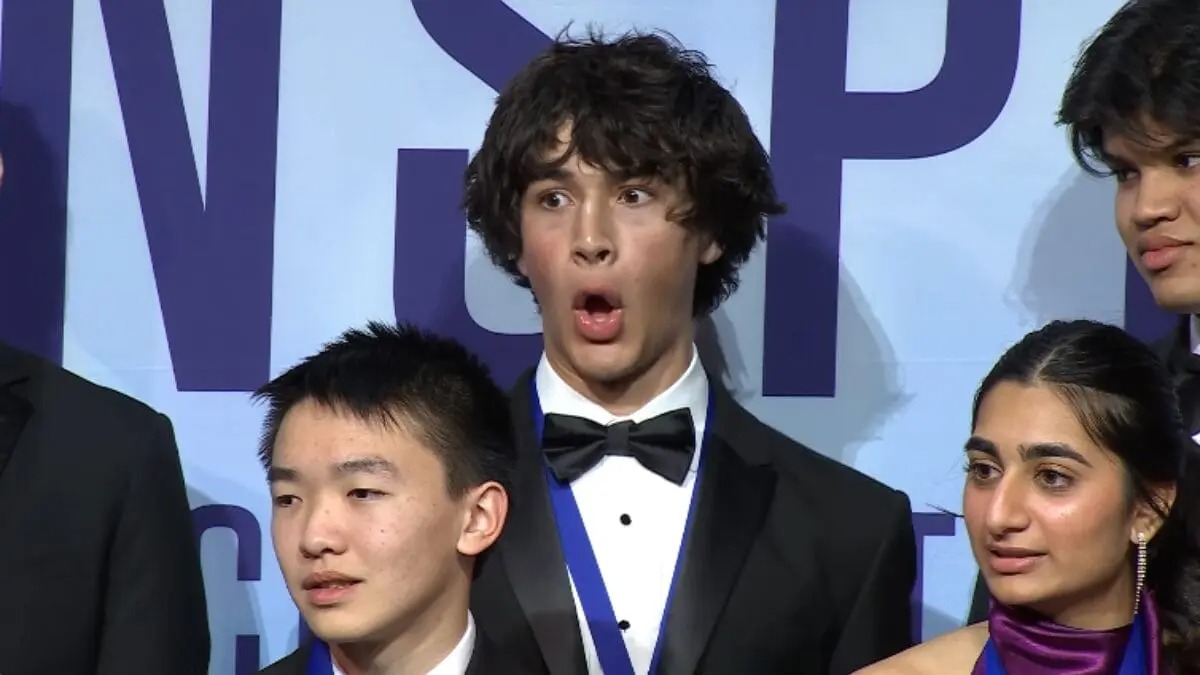
Student from Planet Finder Academy Analyzes 200 Terabytes from the NEOWISE Telescope, Catalogs More Than 2 Million Celestial Bodies and Creates Promising Technology for Various Scientific Areas of Advanced Research
Matteo Paz, an 18-year-old American, gained worldwide attention by identifying 1.5 million new space objects. To achieve this, he turned to artificial intelligence and analyzed a massive dataset provided by NASA. The result drew attention not only for the impressive number of discoveries but also for the speed with which the project was developed.
Million-Dollar Award and Scientific Recognition
The performance earned the student a prize of 250 thousand dollars, approximately R$ 1.4 million, in a prestigious scientific competition.
In addition to the financial reward, the work secured publication in a respected scientific journal. The study is described as revolutionary for mapping phenomena that were previously considered invisible to astronomers.
-
Secret chamber under Ukrainian castle remained hidden for 3 centuries until archaeologists removed 5,200 cubic feet of debris and found burned walls, underground ventilation, and signs of military use.

-
Pope Leo 14 shakes up the artificial intelligence board by advocating for public governance, independent auditing, protected data, and human responsibility in machine decisions.

-
New technology may retire the common bathroom fixture: smart shower turns on by voice, heats up before the shower, adjusts temperature via mobile phone, and transforms the shower stall into a digital system inspired by a connected home.

-
Workers were digging to build a railway in northern Mexico and found beneath their feet a 1,200-year-old village with underground houses, ancient burials, and rock engravings.




Six Weeks, 200 Terabytes and a Colossal Challenge for the Youngster
As a member of the Planet Finder Academy at the California Institute of Technology, Matteo worked with 200 terabytes of data from NASA’s NEOWISE telescope.
This material includes infrared observations accumulated since 2009. The database contained 200 billion lines of records, a volume that initially seemed intimidating.
Even so, in just six weeks, he developed a machine learning system capable of detecting subtle signals hidden within the data.
More Than 2 Million Celestial Bodies Cataloged
With the algorithm he created, Matteo cataloged more than 2 million celestial bodies. Among them, about 1.5 million were completely unknown.
The technology analyzes variations in infrared radiation and classifies different phenomena, such as black holes, binary star systems, quasars, and supernovae in distant regions.
Applications of the Youngster That Can Go Beyond Astronomy
According to mentor Davy Kirkpatrick, no one had attempted to utilize the entire NEOWISE dataset before. Although the current focus is on space, the system has potential in other areas.
The tool could, in the future, be adapted for finance, neuroscience, and environmental monitoring.
Currently, Matteo works as a paid research assistant and continues to refine his technology, expanding the possibilities opened by his work.
With information from NSC Total.




-

1 person reacted to this.