





 Portuguese
  English
  Spanish
  3 min of reading


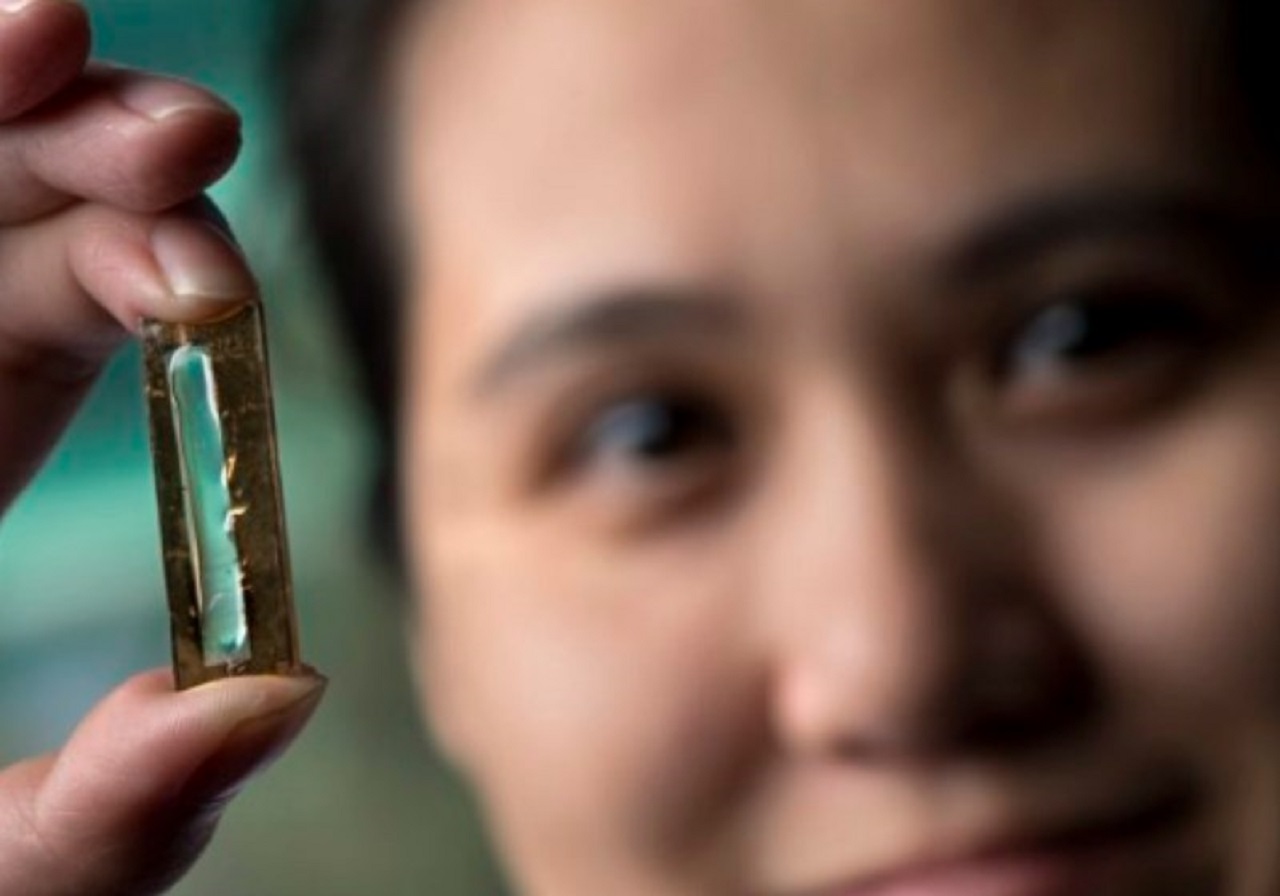
PhD Student From California Developed A Rechargeable Battery That Can Last Up To 400 Years And With More Than 200 Thousand Cycles.
An impressive new discovery was made by a student at the University of California named Mya Le Thai, which could change the future of all batteries currently in the world. The student accidentally discovered a rechargeable battery with the capability to last up to 400 years. Thai’s team was conducting experiments and research on the use of nanowires for potential compatibility with batteries. Until one day, the student changed the use of nanowires by coating them with gold in manganese dioxide and an electrolyte gel.
Rechargeable Battery Achieves 200 Thousand Cycles
According to the chair of the chemistry department at the university where Thai is a doctoral student, Reginald Penner, the project began to take its “first steps” with these gel capacitors, and that was when everyone was surprised.
According to Mya, the new rechargeable battery has already surpassed 10 thousand cycles and is still advancing. After a few days, the researcher returned and stated that the battery had exceeded 30 thousand cycles. According to Reginald, this continued for about a month, making this discovery essential for the current market. For example, the rechargeable battery of a laptop has a lifespan of only 300 to 500 charge cycles.
-
The giant reservoir that São Paulo needs to avoid collapse is surrounded by sewage, microplastics, and illegal settlements, while nearly 22 million people live in the region that depends on urgent water solutions.

-
São Paulo reaches a new level and will draw seawater to supply a tourist city: an unprecedented R$ 56.4 million plant will use reverse osmosis, deliver 20 liters per second, and expand the water supply.

-
Indigenous peoples of the Andes surprise scientists by revealing a rare genetic adaptation linked to potato consumption 10,000 years ago, a discovery that could change what we know about evolution, diet, and human survival.

-
China unveils unprecedented quantum computer with 2 cores and 200 qubits: new architecture promises to reduce errors, increase stability for up to 100 seconds, and accelerate the global race for more powerful and scalable quantum machines.


The nano-battery created by the student managed to reach 200 thousand cycles in just three months. This means it could significantly expand the average lifespan of a rechargeable battery, eliminating the almost constant need to plug the device in. Furthermore, it would also prevent the infamous “memory effect” and battery replacement consequently, considering that it is rechargeable and has a long lifespan.
According to the director, the overall scenario is that there may be a very simple way to stabilize the type of nanowires that were studied.
Scientists Develop Aluminum-Sulfur Battery
A team of scientists from China, Canada, and the USA decided to reverse the way research is conducted on new batteries, generating a aluminum-sulfur battery that can be charged in one minute.
Instead of searching for the most efficient compounds for electricity storage and then trying to reduce costs, researchers sought cheaper elements and found a significant advantage.
The first prototypes endured several charge and discharge cycles and reached an incredibly high charging speed, achieving maximum charge in less than one minute. The charging rate depends heavily on the operating temperature, with charging at 110º C being up to 25 times faster than at 25 °C.
Electric Car Market Drives Development of New Batteries
Without a doubt, a large part of current research and technologies in batteries arises to meet the demand from electric cars to achieve greater autonomy. The most anticipated technology at present is solid-state batteries, which can expand vehicle autonomy by up to 80%, with the ability to charge almost fully in just 15 minutes.
By using a solid electrolyte instead of a common liquid solution, these batteries can store considerably more energy by weight and volume than lithium-ion batteries, but developing a component that is reliable and has a lifespan within the requirements has proven difficult so far.
The energy density is excellent, and in volumetric terms, the new prototype can store 1 kWh/l, about four times more compared to the battery of the Tesla Model 3.








Be the first to react!