





 Portuguese
  English
  Spanish
  3 min of reading
  0 comments


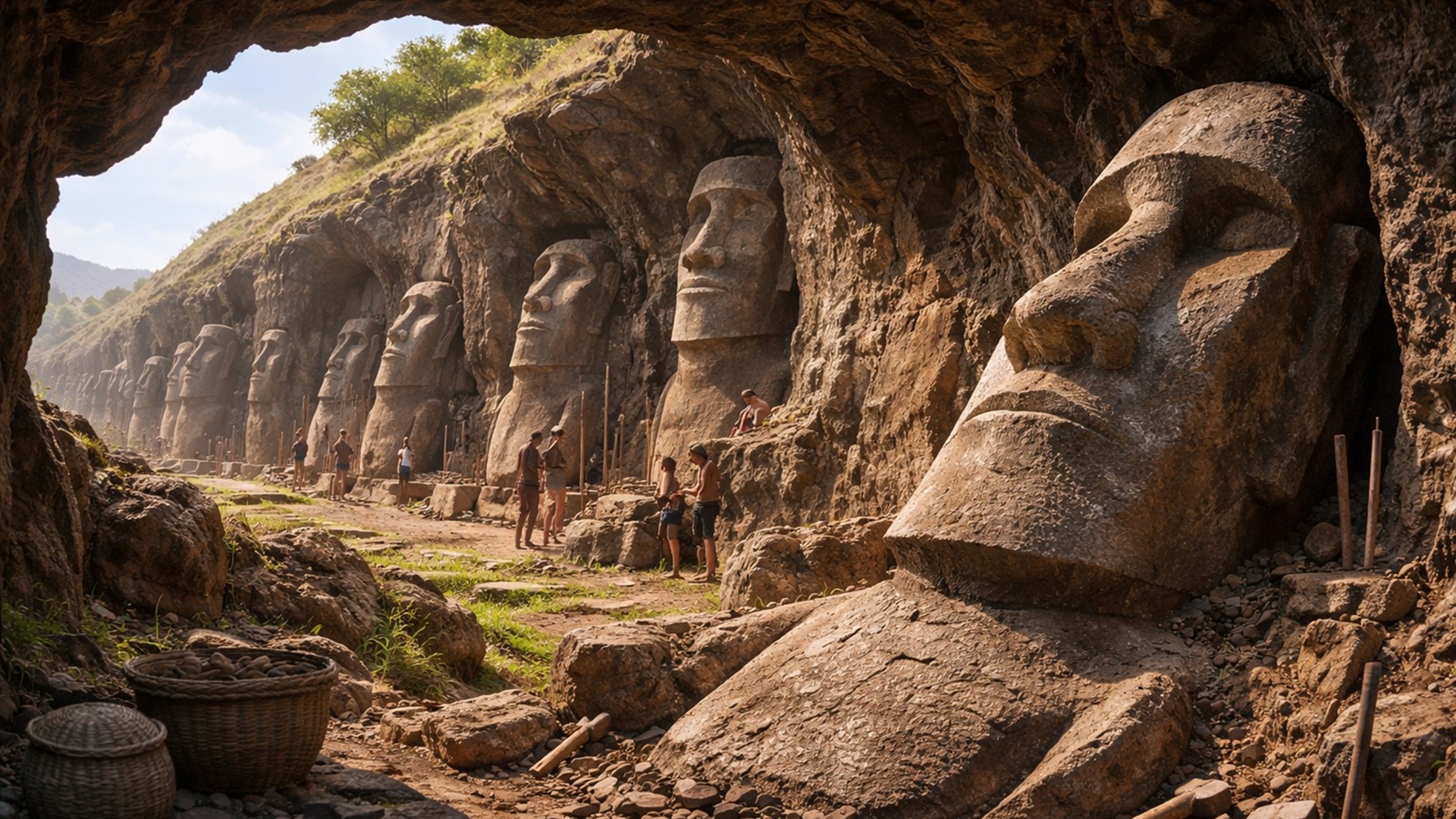
A New Archaeological Analysis Based on Three-Dimensional Mapping of Rapa Nui’s Main Quarry Identified About 30 Distinct Extraction and Carving Zones, Indicating That the Moai Were Produced Simultaneously by Multiple Independent Groups, and Not by a Centralized Authority
A study published on November 26, 2025, in PLOS One reveals, through 3D analysis with 11,686 images, that the moai of Rapa Nui were produced by dozens of independent workshops in Rano Raraku, indicating decentralized social organization since the 13th century.
Decentralized Production Challenges Centralized Models
The research concludes that the iconic statues of Rapa Nui, also known as Easter Island, did not result from a single governing authority. Instead, multiple autonomous groups operated simultaneously in production.
The work was published in PLOS One and led by Carl Philipp Lipo from Binghamton University, in collaboration with other researchers. The analysis offers a new reading on local social organization.
-
Three records at once: a 23,163-ton ship was moved on 880 axle lines, 3,520 wheels, and also transferred to three barges with 26,900 tons on wheels.

-
Elderly individuals who intend to drive in Brazil should be aware of a new requirement involving the CNH.

-
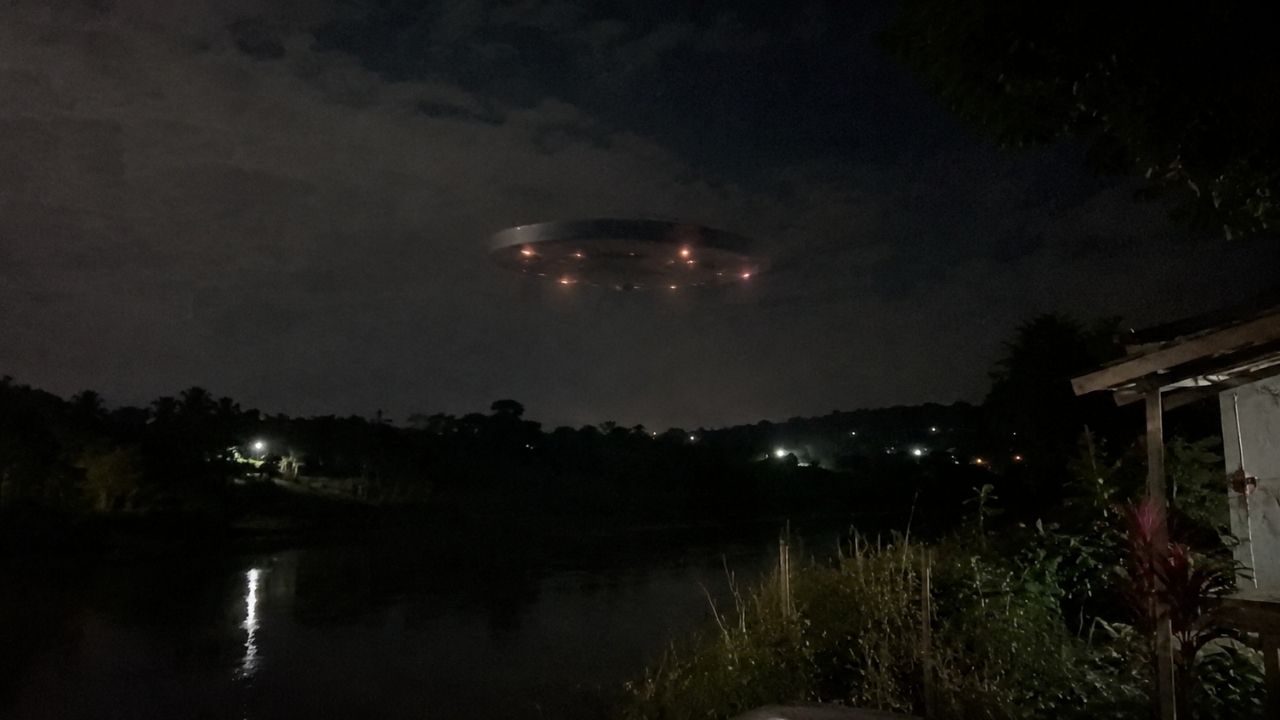
“There’s something growling”: alleged UFO appears over river surrounded by forest in Campo Largo, and man reports lights from an object up to 70 meters hovering for 30 minutes before turning off and heading towards the house, in a mystery recorded on video.

-
Santos earns the title of Brazilian Amsterdam after comparison reveals inspiring canals, 10,000 km distance, surprising historical connection, and a system that helped combat flooding, diseases, and transform Brazil’s largest port city.



The island houses hundreds of moai produced by Polynesian communities since the 13th century. Previous archaeological evidence already indicated small autonomous family groups, and the new study investigates how this structure influenced the carving of the statues.
3D Mapping Identifies 30 Activity Zones
To test the hypothesis, the team gathered over 11,000 images of the main quarry, Rano Raraku, combined into a detailed three-dimensional reconstruction. The model captured hundreds of statues in various stages of production.
The analysis revealed 30 distinct extraction zones, each with its own carving techniques. The dataset shows a complex spatial organization, with workshops distributed across different areas of the quarry.
Moreover, indications of the removal of finished or partial moai in various directions were identified. These patterns reinforce the interpretation of a decentralized production system, aligned with the social structure of the Rapa Nui population.
Evidence Questions Assumptions About Monuments
The conclusions challenge the notion that monumental constructions require rigid hierarchy or centralized coordination. The similarities among the moai suggest cultural exchange between communities, not a collective effort imposed by a single authority.
The high-resolution 3D model also creates a public database for future studies. The documentation can support comparative analyses and contribute to preservation strategies for the site.
Implications for Preservation and Future Research
The site of Rano Raraku is listed as a UNESCO World Heritage Site. The analytical approach presented can aid in cultural management and be applied to other archaeological sites with distributed production.
The authors state that part of the “mystery” of Rapa Nui arises from the lack of accessible detailed evidence. The study presents the first high-resolution 3D model of the central quarry, with nearly 1,000 statues, offering new perspectives on organization and manufacturing.
The research was published under the title “Production of Megalithic Statues (Moai) in Rapa Nui (Easter Island, Chile)”, authored by Carl Philipp Lipo and collaborators, on November 26, 2025, with DOI 10.1371/journal.pone.0336251, consolidating new and impressive evidence.




-

-

-

-

-

-

49 people reacted to this.