






 Portuguese
  Spanish


Toxic Dust From Mars Could Pose Serious Health Risks to Astronauts on Future Missions. Study Warns of Respiratory and Inflammatory Effects. See the Dangers
Space agencies around the world are preparing to send crewed missions to Mars in the coming decades. But new research from the Keck School of Medicine at the University of Southern California (USC) has raised an important warning. Dust storms on Mars may be dangerous not only for equipment but also for the health of astronauts.
A Planet Covered in Fine, Toxic Dust
These dust storms on Mars are not new. Every Martian year, which lasts about 687 Earth days, the Red Planet goes through regional storms during the summer in the southern hemisphere. Every three Martian years, these storms become so intense that they engulf the entire planet and can be seen from Earth.
In 2018 and 2022, NASA lost two important robotic missions: the Opportunity Rover and the InSight Lander. Both were affected by storms that prevented their solar panels from charging. But the new study focuses on future crewed missions. And the risks are even greater.
-
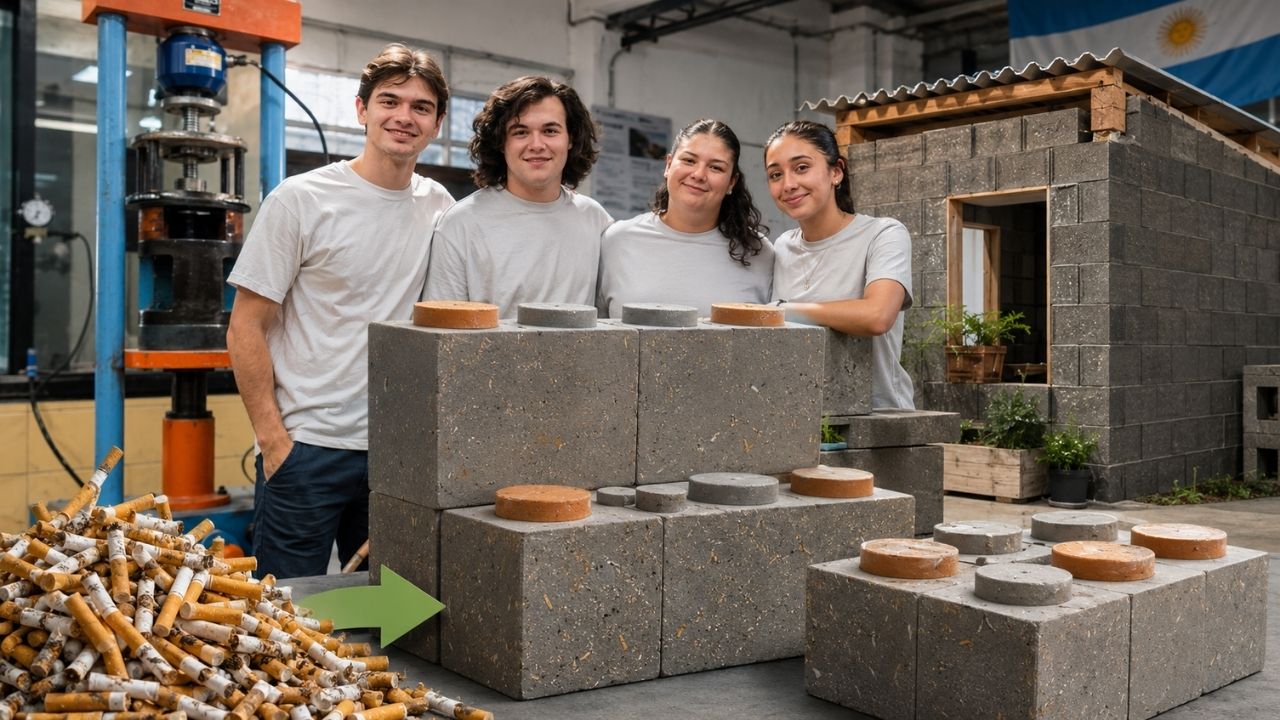
Argentinian Students Transform Cigarette Butts into Eco-Friendly Bricks, Cutting Cement Use by Over 50% and Halving Costs

-
For the First Time, Scientists Extract Ancient Human DNA from Cave Art, Revealing Insights into Prehistoric Cave Dwellers

-
Australian Teen Invents Device to Simultaneously Purify Water and Generate Electricity Using Sunlight

-
Indian Student Designs Bamboo Houses with Floating Blocks and Recycled Bottles for Flood-Prone Areas; University of Texas Project Aims for Sustainable Housing in Vulnerable Communities



Martian Dust: Study Reveals Dangers of Martian Regolith
The research was led by Justin L. Wang, an MD from USC. He received support from colleagues at the Keck School of Medicine, UCLA, UC Boulder, and NASA’s Johnson Space Center. The article with the results was published in the journal GeoHealth on February 12.
The study shows that the risks to humans on Mars go far beyond exposure to radiation and microgravity. There are also serious concerns about Martian regolith — the dust present on the surface of the Red Planet.
According to Wang, Martian dust contains silica, basalt iron dust, and nanophase iron. These particles are highly reactive to the lungs. And their size is so small that they exceed the body’s natural filtration capacity. In other words, it is difficult to eliminate them through pulmonary mucus.
“There are many potential toxic elements to which astronauts could be exposed on Mars. More critically, there is an abundance of silica dust, along with basalt iron dust and nanophase iron, both reactive to the lungs and capable of causing respiratory diseases“, Wang explained to Universe Today via email.
“What makes the dust on Mars more dangerous is that the average size of the dust particles on Mars is much smaller than the minimum size that mucus in our lungs can expel, so they are more likely to cause diseases“, Wang concluded.
Lunar Experience Serves as a Warning
The experience of the Apollo mission on the Moon also serves as a warning. Astronauts reported that lunar dust stuck to their spacesuits and spread throughout the spacecraft. After returning to Earth, many reported coughing, throat irritation, and watery eyes.
A NASA study conducted in 2005 analyzed Apollo astronauts’ reports. It concluded that the major risks of lunar dust were eye irritation, respiratory problems, and blurred vision. With Mars, the situation could be even more complicated.
“Silica directly causes silicosis, which is typically considered an occupational disease for workers exposed to silica (i.e., mining and construction). Silicosis and exposure to toxic iron dust resemble coal miner pneumoconiosis, which is common among coal miners and is colloquially known as black lung disease“, Wang said.
Dangerous and Poorly Understood Composition
In addition to silica, Martian dust may contain perchlorates, iron oxides, gypsum, and toxic metals such as chromium, beryllium, arsenic, and cadmium. The abundance of these elements is not well understood. But their effects are well documented here on Earth.
The research highlights another critical point: the distance between Mars and Earth. In 2003, the planets came to the closest distance in the last 50,000 years: 55 million kilometers. Even so, the trip would take six to nine months one way.
As a result, a complete mission could last up to three years. During this period, astronauts would spend a significant amount of time living in reduced gravity, which is only 36.5% of Earth’s. This brings risks such as muscle atrophy, loss of bone mass, and weakening of the cardiovascular system.
Additionally, there is the constant exposure to space radiation. This can cause lung diseases and exacerbate the effects of toxic dust.
“It is significantly more difficult to treat astronauts on Mars for diseases because the transit time is significantly longer than in previous missions to the ISS and the Moon. In this case, we need to be prepared for a wide range of health problems that astronauts may develop during their long-duration missions“, Wang and his team explained.
“Additionally, [microgravity and radiation] negatively impact the human body, making astronauts more susceptible to diseases and complicating treatments. In particular, exposure to radiation can cause lung diseases, which can exacerbate the effects that dust will have on astronauts’ lungs“, he concluded.
Toxic Dust From Mars: Prevention Is the Best Medicine
The authors of the study emphasize the need for prevention. They suggest that habitats on Mars should be protected against the entry of dust. It is also essential to develop efficient filters to prevent air contamination.
Even with these measures, some dust is still likely to enter. This becomes probable during storms, when maintaining a clean environment becomes more difficult. Therefore, the research points out possible medical countermeasures.
Previous studies show that vitamin C can help against the effects of chromium and iodine and may be useful against thyroid problems caused by perchlorates. But Wang warns of the risks of these solutions.
Excessive use of vitamin C can lead to kidney stones, something already common among astronauts after long stays in microgravity. Excess iodine can cause the same thyroid problems that are intended to be avoided.
Paths for the Future of Space Exploration
The research shows that space agencies are already developing solutions against Martian regolith. There are studies with special sprays, electron beams, and protective coatings. Other works investigate the behavior of dust to understand how it moves and accumulates.
With the advancement of the Artemis Program and plans to send humans to Mars, the study reinforces that the challenges go beyond engineering. The health of astronauts must be a priority, with effective solutions to prevent and treat possible diseases caused by Martian dust.
According to the authors, ensuring medical self-sufficiency during these missions will be essential. The distance impedes quick rescues and complicates the sending of supplies. Therefore, well-defined prevention and treatment strategies are crucial for the success of future human expeditions to Mars.
With information from Science Alert.


