






 Portuguese
  Spanish
  5 min of reading
  0 comments


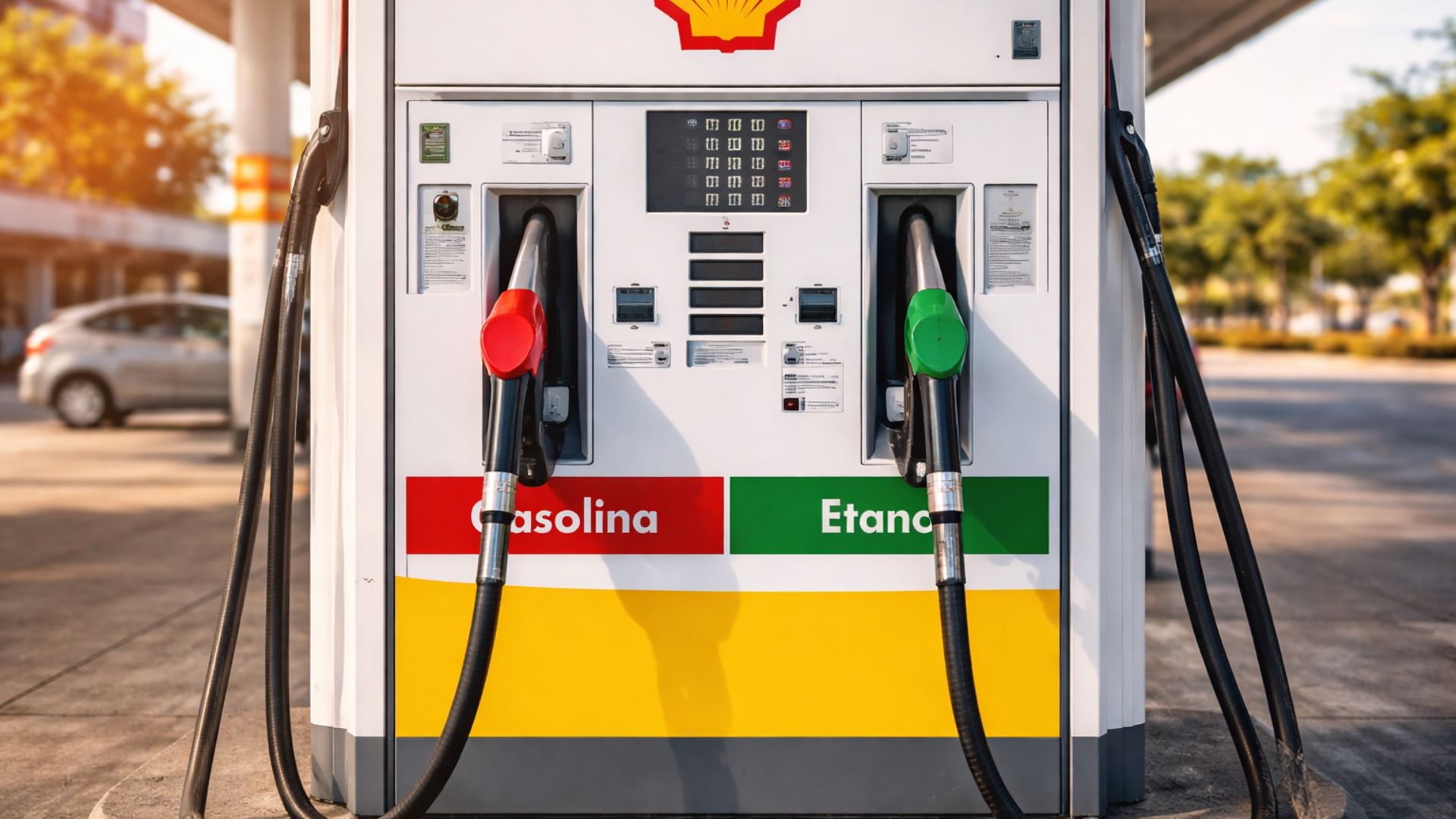
Change in E30 Gasoline and Advancement of Flex Engines Alter Traditional Calculation That Guided Drivers for Years, While Price of Anhydrous Ethanol, Octane of 94 RON and Efficiency Above 20 km/l Make Decision More Technical and Dependent on Actual Consumption of Each Vehicle.
The so-called “70% rule,” used by drivers to decide between ethanol and gasoline, has become less reliable after the adoption of E30 gasoline in Brazil and the advancement of flex engines, which now vary more in consumption according to design, use, and driving conditions.
Although it was never an exact calculation, the reference has gained new layers since August 1, 2025, when the mandatory mixture of anhydrous ethanol in gasoline increased from 27% to 30%, a measure that altered the energy available per liter in the fuel sold at gas stations.
In practice, hydrated ethanol still has about 30% less energy per volume than pure gasoline, but E30 gasoline carries slightly less energy per liter than the previous mixture, changing the comparison that supported the rule.
-
Helicopter Drops 180 Tons of Sand and Gravel on Swedish River to Revive Ecosystem Damaged by Decades of Exploitation

-
Brazilian Company Launches Retro Smartphone with 48 MP Camera, T9 Keyboard, and Privacy Features for Social Media-Free Use

-
Self-Taught Chinese Farmer Builds 5-Ton Submarine from Scrap, Launches It in Anhui River
-
Invisible Induction Technology Enables Wireless Power for Blenders, Coffee Makers, and Air Fryers, Reducing Countertop Cables





“The 70% rule doesn’t make sense as a fixed standard. It was never exact. It varies according to the car and the driving style,” says Vitor Sabag, a fuels specialist, advocating that drivers compare the actual consumption of their own vehicles.
According to Rogério Gonçalves, director of fuels at the Brazilian Association of Automotive Engineering (AEA), the calculation has always been based on a physical principle, the calorific value, but the change in the mixture pushes the reference closer to 71% as an approximation.
E30 Gasoline and Impact on Consumption Per Liter
With more anhydrous ethanol in gasoline, the energy density of the commercial fuel slightly decreases, which tends to reduce the range per liter compared to the previous standard, even if the difference is not immediately noticeable in every situation.
“As soon as I add more anhydrous ethanol to gasoline, it starts to have less energy per liter. Today the car runs a little less with a liter of gasoline than it used to,” says Sabag, explaining why a direct comparison has become a risky shortcut.
This shift, however, does not mean that ethanol has “improved”; the change is relative because the gasoline parameter has changed slightly, and the result depends on how much each engine loses or gains efficiency with each fuel.
At the same time, the increase in ethanol content has raised the minimum octane rating of gasoline C, with a proposal to adjust from 93 to 94 RON, linked to specifications to maintain quality and compatibility with E30, which influences the combustion process.
In engines that can exploit this benefit, gasoline with higher resistance to knocking can allow more efficient ignition and compression strategies, further complicating the idea that the energy loss in the mixture solely defines the cost per kilometer.
Price of Anhydrous Ethanol Influences Gasoline Value
In addition to efficiency, price formation has gained prominence because anhydrous ethanol is a mandatory component of gasoline and, therefore, its quotation tends to pressure the final price at the pump, even though consumers associate everything solely with refinery adjustments.
Data from Cepea, from Esalq/USP, show that the price of anhydrous ethanol rose from R$ 2.99 at the beginning of August 2025 to R$ 3.41 in the week of February 13, during a monitored high period.
The sugarcane cycle helps explain fluctuations because supply tends to be higher during the harvest and lower in the off-season, and the decision of mills to produce more sugar or more ethanol also affects the available volume.
When gasoline consumption increases, the demand for anhydrous ethanol automatically rises since it makes up 30% of the final product, which can reinforce price movements, especially during tight logistics or lower stock situations.
Modern Flex Engines Expand Efficiency Variation
The evolution of flex engines has increased the variation in consumption among models, because factors such as compression ratio, injection calibration and ignition, pressure, and combustion chamber design can favor one fuel over the other, according to Gonçalves.
As a result, two cars fueled at the same station may respond differently to ethanol and gasoline, and the range proportion that was previously treated as “standard” has begun to fluctuate more, especially in turbocharged engines and direct injection.
In this scenario, the overall efficiency of vehicles has also increased, and there are already models that exceed 20 km/l under specific conditions, which increases the sensitivity of the final cost to driving style and type of route, as highlighted by Sabag.
Even when drivers attempt to measure consumption, the comparison may be distorted by temperature, humidity, wind, tire pressure, traffic, and acceleration patterns, factors that, combined, can change the result without the fuel being the sole responsible party.
“The calculation that the consumer can make is to compare the consumption with both fuels, but this is still very imprecise,” says Gonçalves, noting that daily conditions and the “mood of the driver” also affect the final average.
Quality of the Station and Risk of Adulteration
The provenance of the fuel also weighs on the cost per kilometer because variations in quality and composition can increase consumption and reduce performance, nullifying small price differences at the pump, in a market where pricing changes with harvest and logistics.
According to Emerson Kapaz, president of the Legal Fuel Institute (ICL), a recurring fraud is adding ethanol above the established limit, and inspections have already found gasoline with 40%, 50%, and even 70% ethanol, which deceives the consumer.
Since flex cars tend to “accept” variations without failing immediately, the driver may not notice the adulteration and end up paying for gasoline while running with a mixture closer to ethanol, which reduces range and can transform apparent savings into losses.
In practice, experts argue that the best reference remains the cost per kilometer in actual use, obtained by repeatedly filling up with each fuel and comparing the registered range under similar conditions, without relying solely on a fixed rule.




-

-

-

-

5 people reacted to this.