






 Portuguese
  Spanish


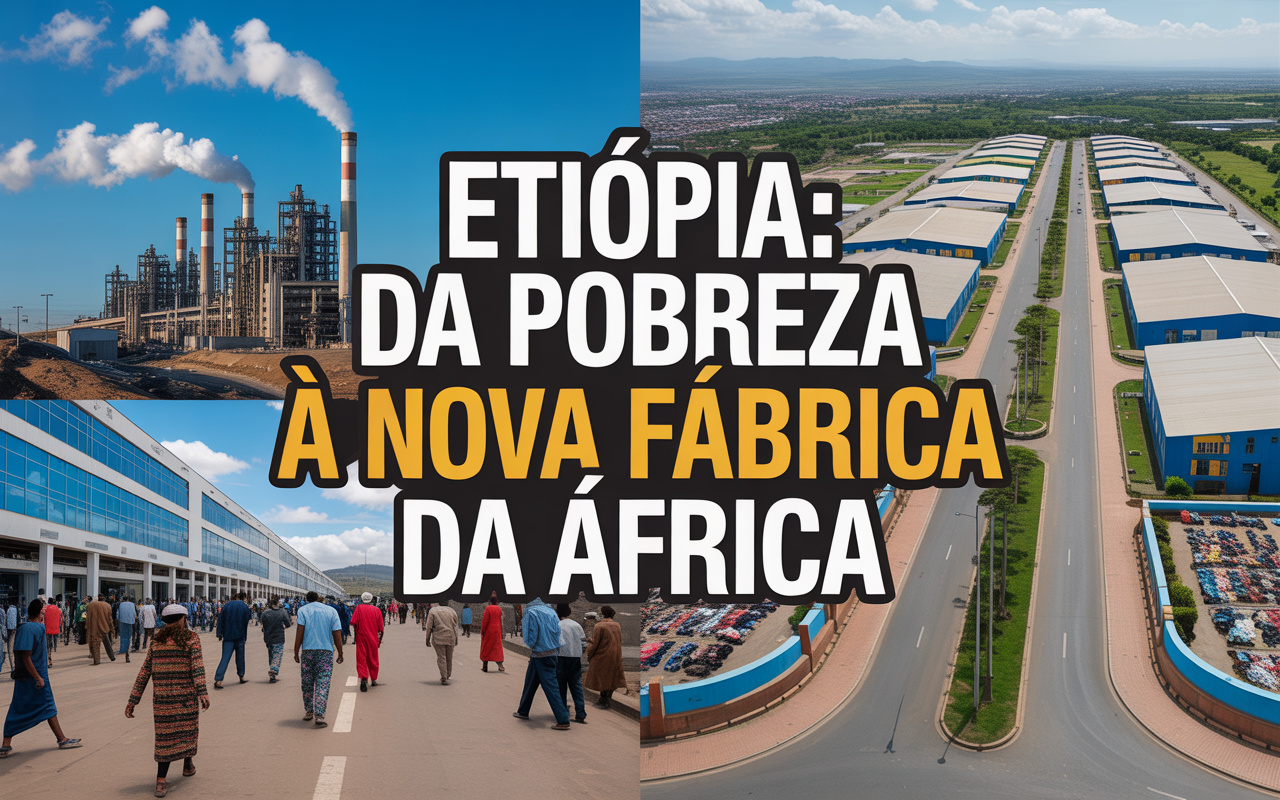


From The Promise Of “Africa’s Factory” To The Test Of Reality: How Ethiopia Built Industrial Parks, Attracted Global Brands And Faced Wars, External Shocks And Structural Limits That Challenged Its Manufacturing Leap.
The story of Ethiopia’s recent industrialization is often told as an improbable leap: a country for decades associated with hunger, low income, and climate vulnerability decides to invest in export manufacturing, plans industrial parks on a national scale, and attempts to replicate, in its own way, the formula that transformed parts of Asia into “factories of the world.” However, in the Ethiopian case, the plot is tougher, more technical, and more fragile than it appears in headlines. The ambition existed, the parks were built, the brands arrived. But the political, commercial, and social support for this model faced shocks that few countries can absorb without cracks.
To understand why Ethiopia was able to attract multinationals before the recent conflicts — and why part of that momentum lost strength — it is necessary to look at three layers simultaneously: poverty and economic transition, state industrial policy, and the “engine” of Hawassa as a showcase.
The Real Starting Point: Falling Poverty And Pressure For Jobs
Before discussing parks and factories, there is a structural fact that explains why Ethiopia sought industry so urgently: the need to lift millions out of poverty and create jobs en masse. Poverty reduction in the country, especially between 2000 and the mid-2010s, was recorded in assessments by the World Bank, which point to significant declines in poverty indicators over the period (notably between 2000 and 2011 and new declines until 2016, although with persistent inequalities).
-
French Brand Transforms 6 Million Brazilian PET Bottles into Sustainable Sneakers for Global Fashion Market

-
Abandoned Factory in Rio’s North Zone Becomes Urban Hazard with Standing Water and Debris

-
The U.S. Navy Conducts Submarine Tests in Idaho Lake to Detect Underwater Noises Hidden by the Ocean
-
British Factory Transitions from Mechanical Parts to Producing 420,000 Electric Power Units Annually, Supplying 70% of Ford’s Electric Cars Sold in Europe


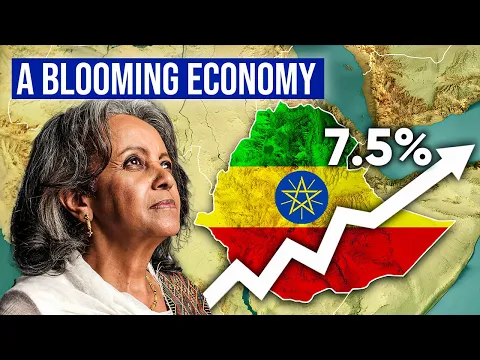

However, this progress came with a pressure: a large, young population demands constant job creation. In this context, the manufacturing industry appears as the obvious path to absorb labor and generate revenue from exports. And thus comes the plan: ready industrial parks, integrated infrastructure, and a focus on labor-intensive sectors such as textiles, apparel, and footwear.
The “Ethiopian Model”: State Industrialization With Parks Ready To Export
The strategy adopted by the government was strongly state-driven and based on planned industrial infrastructure: creating parks with energy, water, wastewater treatment, security, services, and a “one stop shop” for bureaucracy, and then offering this to foreign investors (and also to local investors, in smaller volume). The Industrial Parks Development Corporation (IPDC), created as a public company to drive this agenda, describes its mission precisely as enabling integrated infrastructure and attracting domestic and international investment to accelerate economic transformation.
This approach, in theory, reduces the main bottleneck faced by many poor countries that try to become industrial hubs: investors do not want to “discover” how to operate; they want to enter and produce. Ethiopia tried to offer this: operational parks, export focus, and a competitiveness narrative based on available labor, energy, and logistics oriented towards development corridors.
Hawassa As A Showcase: The “Manufacturing City” Of Textiles And Apparel
The most emblematic case of this bet is the Hawassa Industrial Park, in the south of the country. It was designed to be, literally, a symbol: an “eco-industrial” textile park, with wastewater treatment technology and a sustainability narrative that aligned with the environmental demands of large global buyers.
The public numbers of the park show why Hawassa became the centerpiece of this story:
- Total area cited of about 1.3 million m², with ~300 thousand m² of built area of industrial sheds in part of the institutional descriptions of the park.
- Operation with dozens of “sheds,” with official versions mentioning 52 sheds and the start of operations around 2016–2017 on a site of 140 hectares (in IPDC descriptions).
- A Zero Liquid Discharge (ZLD) system with a recycling rate of 90% of wastewater and treatment capacity of 11 million liters per day, cited in public descriptions about the park.
- Institutional expectation of reaching 60 thousand jobs at full capacity and US$ 1 billion/year in export revenue as a goal.
These numbers matter because, in countries that try to industrialize quickly, the “signal” is part of the investment: Hawassa was designed to prove that Ethiopia could operate modern export manufacturing with environmental standards and integrated services.
The Brands Arrive: Ethiopia Enters The Fast Fashion Radar
The arrival of large global buyers and suppliers into the Ethiopian ecosystem was real, and Hawassa became the most “media-friendly” address. Reports and analyses from that period document the movement of international brands to Ethiopia, attracted by costs, promises of compliance, and a structured production chain within the park.
An important point is that, in many cases, the park does not attract “the brand” directly, but suppliers that produce for brands. Even so, the reputational effect is huge: when names from global retail begin to appear associated with a country, this can pull in new investors, banks, funders, and long-term contracts.
The Hard Side Of The Factory: Low Wages, Turnover, And Labor Tension
However, industrialization through apparel has a well-known trap worldwide: it can create jobs quickly, but it can also operate with very low wages, high turnover, and intense social pressure.
Union organizations and specialized media reported labor tensions and demands for better conditions in Hawassa, including discussions about low wages and cost of living, as well as demands for union organization and benefits (housing and transportation often appear as bottlenecks).
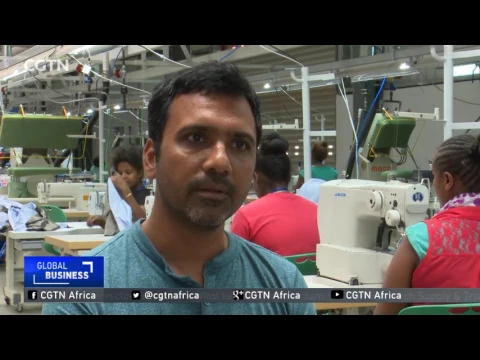
In parallel, articles and surveys on the Ethiopian sector raised allegations and criticisms about working conditions in supply chains that supply global brands, reinforcing a key point: for Ethiopia to become the “new factory,” it was not enough to build sheds; it was necessary to sustain a socially acceptable and productive model over time.
Still, there were also formal initiatives to improve training and career advancement. One example is the International Labour Organization (ILO) women’s leadership development program in the apparel sector, with published data on training and promotions since 2021, indicating efforts for qualification and internal progression in factories in the sector.
This combination — a modern park but labor challenges — is typical of accelerated industrialization in low-income countries. And it directly affects productivity, retention, and reliability before buyers.
The External Shock: Trade, Sanctions, And The Risk Of Depending On A “Shortcut”
Even when the industrial operation is running, the model may depend on trade advantages to compete globally. One example cited in local economic analyses is the role that preferential access to the U.S. market had for apparel and footwear exports — and the impact when that access was interrupted.
The suspension of Ethiopia’s trade benefits from the U.S. under the AGOA regime was widely reported in 2022, associated with concerns about human rights in the context of the conflict in the north of the country.
Ethiopian economic sources describe the effect of this on the export performance of industrial parks, with revenue drops and company exits, as well as job and revenue losses associated with the trade shock.
In other words: the park may be standing, the labor force may exist, but if the market channel is closed or if the country risk rises, the investor recalculates.
The Internal Shock: Recent Conflicts And The “Country Risk” That Changes Everything
In addition to the trade shock, there is the political-military shock: prolonged conflict alters risk perception, increases insurance costs, interrupts logistics, and reduces brands’ willingness to take reputational exposure.
The conflict in Tigray, which began in 2020 and ended with an agreement in 2022, was described by international coverage as an event of enormous human scale and regional impact. And, even after the agreement, recent news shows that tensions continue to worry, with effects on perceived stability.
For a chain like textiles and apparel — which relies on predictability, scheduling, and low logistical risk — instability is not a detail: it is decisive.
The Hawassa Test: Billion-Dollar Promises Vs. Real Results And Real Constraints
Hawassa was announced with ambitious targets (jobs and exports in the billion range).
But in practice, annual performance and the export trajectory depend on factors that do not always show up in titles: logistics cost, energy, exchange rate, productivity, delivery time, and contractual stability.
In 2024, for example, the Ethiopian state news agency published export revenue numbers over a six-month period in the park, indicating figures in the tens of millions of dollars during that time — a useful data point to compare long-term expectations with effective results over short windows.
And on the corporate side, there were symbolic movements. A local report recorded the direct production exit of a major company associated with the operation of Hawassa (maintaining, according to the same coverage, the intention to continue “sourcing” through third parties), at a time when the country was facing turbulence.
This does not erase the importance of the park — but shows how sensitive the model is to stability and profitability.
What Remains Standing, Despite Everything
Even with shocks, the industrial park strategy left concrete legacies:
- Ready And Replicable Infrastructure: Hawassa was designed as a prototype for other parks, with integrated services and standardized operational design.
- Dedicated Institutionality: The IPDC centralizes the model and communicates management and expansion goals for zones and parks under state administration.
- Training And Know-How Transfer: The park’s own management and sectoral initiatives recognize training and experience acquisition by local workers and managers, with formal programs and partnerships.
In other words: Ethiopian industrialization was not a “fantasy.” It happened. The real debate is: was it able to sustain the promised pace?





Reportagem longa, e não diz que financia o país… tenho certeza que não são os EUA nem seus subordinados europeus.
Maioria dos países culpam a COLONIZAÇÃO, pela pobreza! A Etiópia nunca foi colonizada !
Mas tem sido impedido de se desenvolver!
Por quem e como?
Só perseguida por Mussolini e etc…