Portuguese
  Spanish


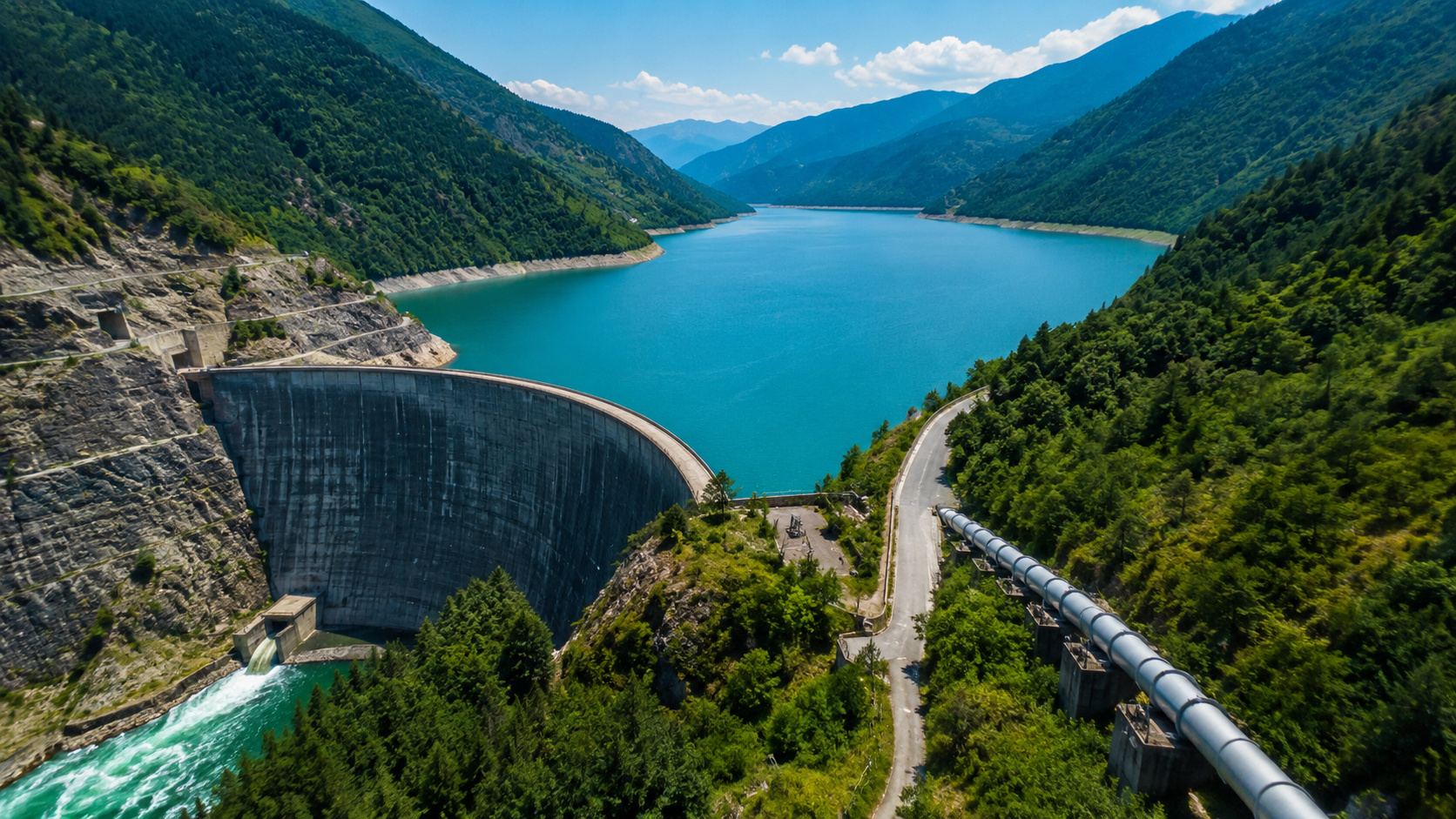

The Enguri Dam draws attention because it combines a giant arch structure, a 15 km pressure tunnel, and a hydroelectric plant linked to Abkhazia, in a region where engineering, energy, and territorial dispute meet in the Caucasus
The Enguri Dam in Georgia impresses not only by its height. The 271-meter structure sends water through a 15 km pressure tunnel to a plant associated with the hydroelectric system.
The project is located in the Caucasus and involves a rare point in large energy projects. The dammed water travels a long technical passage until it reaches a politically sensitive area, linked to Abkhazia.
The investigation was published by Britannica, a general reference digital encyclopedia. The source records the Enguri Dam as a large arch structure on the Enguri River, in northwestern Georgia, with an associated plant and high-pressure tunnel.
-
Historic Factory in Zaragoza Closes After Over 50 Years, Leaving Dozens Unemployed and Ending an Era in Spain’s Industrial History

-
Brazil to Convert 80 Public Properties into 11,000 Affordable Homes Across 44 Cities to Address Housing Shortage

-
Brazilian Company Develops Wall Panels from Recycled Refrigerator Foam with Comparable Thermal and Acoustic Performance

-
Brazil’s São Paulo Region Unveils Latin America’s Largest Timber Shopping Mall, Built in 7 Months, Capturing Carbon and Preventing 900 Tons of Emissions


How an arch dam holds water without relying solely on the weight of concrete
An arch dam has a curved shape because it needs to use the valley itself to its advantage. The water pushes against the wall, and this force is distributed to the sides, where the rocks are.
This makes the structure different from a common dam. It does not work just like a heavy wall. It uses the curve to spread the water pressure.


In the case of Enguri, the height of 271 meters makes this system even more impressive. The dam holds the reservoir and creates the necessary force to move the hydroelectric plant.
For the lay reader, the idea is simple. The mountain helps hold the water, while the dam controls the path that this water will follow.
Why the water needs to travel 15 km before reaching the hydroelectric plant
The water from the Enguri Dam does not go straight to the turbines. It travels through a 15 km pressure tunnel, which functions as an underground passage to carry the flow to the plant.
This tunnel is one of the most curious parts of the project. Those who only look at the dam wall do not see the hidden path that makes the water continue moving underground.
The logic of the hydroelectric plant depends on this displacement. The dam holds the water, the tunnel conducts the flow, and the plant transforms this force into electricity.
Therefore, Enguri cannot be understood as a work concentrated at a single point. The system spreads across the territory and depends on various parts working together.
What makes the Enguri Dam different from a common hydroelectric plant
Many hydroelectric plants attract attention due to the size of the reservoir or the power of generation. The Enguri Dam gains another significance because it mixes heavy engineering with a delicate territorial context.

The main structure is located in Georgia, while the associated plant involves the region of Abkhazia. This detail changes the interpretation of the work because the energy also depends on a complex political reality.
Britannica, a general reference digital encyclopedia, details that the complex includes the arch dam, water intake, and high-pressure tunnel of about 15 km. The same source situates the project on the Enguri River, in northwest Georgia.
Thus, the work is not limited to concrete, water, and turbine. It shows how an energy infrastructure can cross sensitive areas and continue to be essential for regional functioning.
Abkhazia places the hydroelectric plant at the center of territorial tension
Abkhazia is the point that transforms Enguri into a story larger than an engineering work. The plant associated with the system is linked to this politically divided territory.
This makes the operation of the hydroelectric plant more delicate. The water needs to follow its path, the plant needs to operate, and the system needs to maintain a technical logic even in a region marked by dispute.
For those who follow energy, the case shows something important. Large works do not depend only on machines. They also depend on territory, stability, and continuous operation.
The Enguri Dam stands out precisely by uniting these elements. It has impressive height, a long tunnel, and a plant linked to an area of great political sensitivity.
The pressure tunnel is the hidden part that explains the strength of the project
The most visible part of the work is the 271-meter dam. However, the pressure tunnel is the section that helps explain why this system is so unusual.
It conducts the water for 15 km to the plant. This path allows the flow to follow with enough force to move the turbines and generate energy.
In simple terms, the dam holds the water and the tunnel delivers this water to the point where it can be utilized. Without this route, the logic of the system would be different.
This detail also increases the visual impact of the story. There is a giant dam on the surface and a hidden technical route that leads water to a politically divided region.
Why Enguri draws attention outside Georgia
The Enguri dam draws attention because it brings together three elements that are difficult to find together. It is 271 meters high, uses a 15 km pressure tunnel, and connects to a plant in politically divided territory.
This combination makes the project interesting not only to engineers. It also attracts the attention of those who follow energy, infrastructure, and territorial disputes.
The case shows that a hydroelectric plant can be much more than a source of electricity. It can reveal how water, terrain, concrete, and politics intersect in the same system.
Enguri remains a rare example of a project where the technical part and the territorial part do not separate. The water follows the possible physical path, while the region carries its own political complexity.
The Enguri dam impresses more for the whole than for a single number. What weighs more in this case: the engineering of the 15 km tunnel or the challenge of operating a plant in politically divided territory?