






 Portuguese
  Spanish


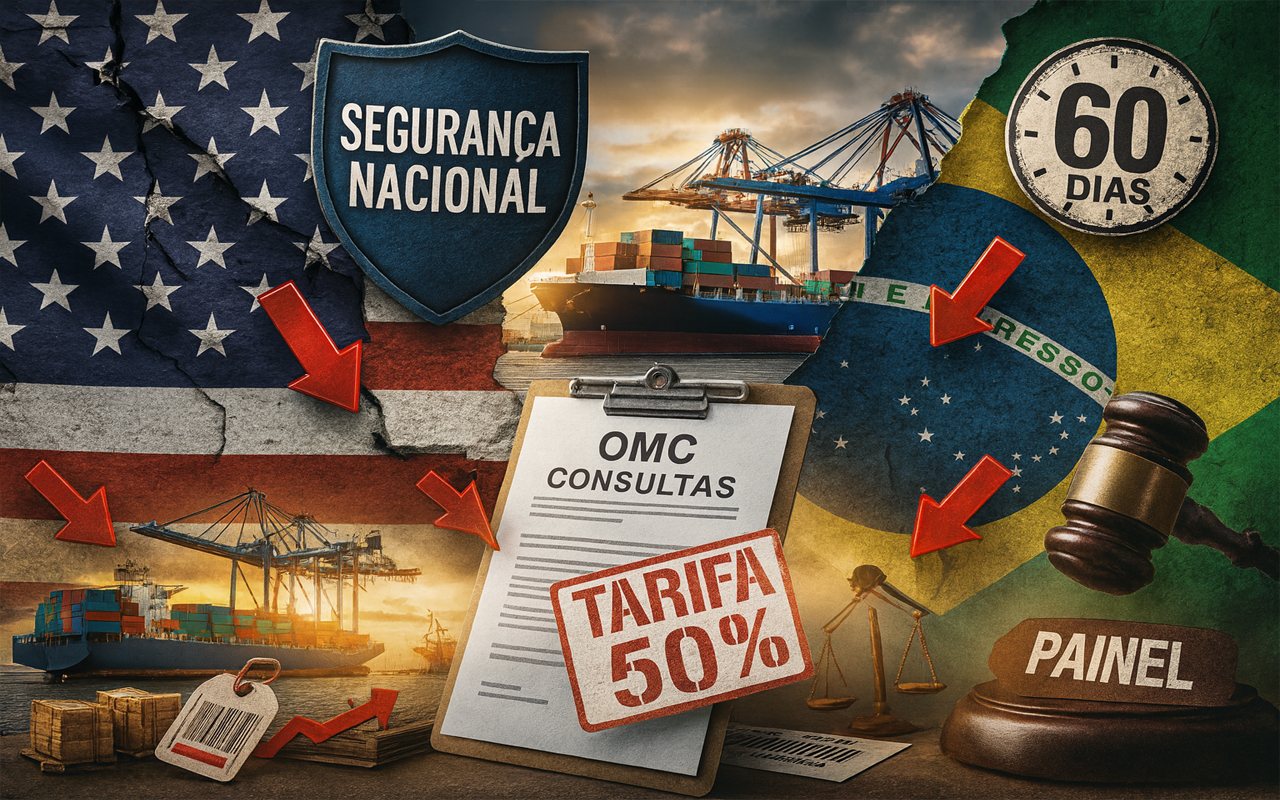


The United States Accepted Brazil’s Consultations At The WTO And, At The Same Time, Invoked “National Security” To Sustain The 50% Tariff. In The Short Term, Uncertainty And Pressure On Contracts, Logistics, And Prices Continue.
The United States Accepted Brazil’s Request To Open Consultations At The WTO Regarding The 50% Tariff Applied To Brazilian Imports. At The Same Time, Washington Invoked The “National Security” Exception To Sustain The Measure, An Argument That Usually Hinders Quick Solutions.
In Practice, Accepting The Brazilian Request Opens The Consultation Phase In The WTO Dispute Resolution System. It Is A Formal Step To Try To Reach An Understanding Between The Countries. Consultations Do Not Mean Suspension Of The Tariff, Trade Remains Subject To The 50% Charge While Parties Talk. According To Reuters And Inside U.S. Trade, The Acceptance Occurred On August 19, 2025, With The U.S. Already Registering With The WTO The Reasoning Based On “National Security”.
The Consultations Are The First Step In The WTO Procedure. They Usually Last Up To 60 Days, If There Is No Agreement, Brazil Can Request The Establishment Of A Panel (A Committee Of Experts That Judgments The Merits Of The Case). In Simple Terms, First, The Parties Try To Resolve Politically/Technically And If It Fails, The Process Becomes A Formal “Litigation”.
-
Major Company Shuts Down 70-Year-Old Factory in Brazil, Relocating Production and Impacting Over 100 Families

-
Toyota Shuts Down Brazilian Plant After Producing Over 1 Million Vehicles, Plans Special Destination for Final Corolla Produced Following $2.1 Billion Investment and Expansion.
-
Shoe Factories Close, Leaving 528 Workers Jobless in Sudden Turn of Events Affecting Hundreds of Families After Decades of Operation.
-
Chinese Automaker Plans Second Mega Factory in Brazil with $2 Billion Investment to Produce Electric and Hybrid Cars in Strategic Location.


What Does The Invocation Of “National Security” Mean?
The General Rule Of International Trade Prohibits Arbitrary Barriers, But There Is A National Security Exception (Provided For In The GATT) That The U.S. Triggered In This Case. In Practice, This Gives Washington Room To Argue That The Tariff Is Necessary For Strategic Reasons, Not Just Economic Ones.
This Argument Tends To Lengthen Negotiations, Because It Reduces The Space For Immediate Concessions And Pushes The Topic To Legal Debate In A Panel If No Agreement Is Reached In The Consultations. Specialized Reports Indicate That The American Documentation Submitted To The WTO Already Includes This Line Of Defense.
The Tariff Tightening Was Supported By Executive Orders Issued In Late July, Which Altered Reciprocal Tariffs And Resulted, In Practice, In A Total Charge Of 50% On Brazilian Imports Without Specific Exemptions.
Technical Notes From Law Firms Detail That An Additional 40% Was Added To The Already Existing Tariffs, And The White House Indicated That It Would Escalate The Charge If Retaliation Occurred. With The Tariff In Effect In Early August, Brazil Formalized The Request For Consultations — And On 08/19, The U.S. Agreed To Open This Phase At The WTO.
What May (Or May Not) Change In The Short Term
In The Short Term, Three Scenarios Are More Likely:
- Negotiated Adjustments In The Consultations — For Example, Exceptions, Restricted Scopes, Or Transitions (“Phasing”) For Sensitive Items. This Depends On The Political Will Of Both Sides.
- No Agreement, Request For A Panel — Brazil Can Request The Establishment Of A Panel After The Consultation Deadline; The Dispute Will Then Proceed With Longer Procedural Deadlines.
- Unilateral Decision By The U.S. — Washington Could Recalibrate The Measures For Internal Reasons, But In Light Of The Invocation Of National Security, This Is Not The Base Scenario.
In Any Case, The Tariff Does Not Automatically Fall: Without An Agreement Or Subsequent Formal Decision, The 50% Charge Remains. This Is The Key Point For Companies That Are Renewing Contracts, Reviewing Prices, And Rethinking Import/Export Routes.
Immediate Impacts For Brazil: Contracts, Logistics, And Prices
From A Business Perspective, The Most Visible Effect Is The Uncertainty: Importers And Exporters Are Reviewing Deadlines, Repricing Contracts, And Evaluating Inventories To Navigate The Coming Weeks. In Some Sectors, There Has Already Been Postponement Of Shipments And Renegotiation Of Volumes Given The New Relative Cost, An Effect That Tends To Spread When Tariffs Rise Abruptly.
In Retail, Brands That Rely On Imported Inputs Are Investigating Gradual Price Pass-Throughs To Consumers While Seeking Sourcing Alternatives.
For Brazil, The Immediate Consequence Is The Pursuit Of Destination Diversification And Risk Mitigation In Chains More Exposed To The U.S. For The United States, Maintaining The Tariff Could Mean Higher Costs For Importing Sectors And, Ultimately, Pressure On Consumer Prices For Affected Items, Depending On The Degree Of Substitution And Demand Elasticity.






É só ver os preços das carnes nos yanks, preços de 40 a 199 dólares… Dobrou o preço do kg lá, e a exportação brasileira das carnes está sendo comprada agora pelo México(2o maior comprador do Brasil) , assim como o café tá sendo comprado pela China. As lojas yanks estão sendo massacradas pelo próprio presidente deles. Eles já tiraram 700 produtos da taxação. Eles estão desesperados. É questão de tempo pra esse taxação virar piada