Portuguese
  Spanish


Historical Decision of 2025 Ends 1973 Supersonic Ban and Boosts High-Speed Technology in American Skies
On June 6, 2025, the United States took a decisive step to transform the future of aviation once again. Then-President Donald J. Trump signed a presidential decree that overturns one of the most enduring restrictions of American civil aviation: the ban on supersonic flights over the continental territory.
As a result, a policy imposed since 1973 is no longer valid, paving the way for civil aircraft to exceed the speed of sound in flights over land. The Federal Aviation Administration (FAA) has been tasked with presenting new rules revoking regulations 14 CFR 91.817, 91.819, and 91.821 within 180 days.
These regulations, for decades, limited supersonic operations in populated areas. At the same time, a new temporary noise-based certification standard will be published under regulation 14 CFR 91.818. This standard will align with environmental and safety requirements.
-
Brazil Welcomes Spanish Wamos Air and Nigerian Air Peace, Potentially Transforming International Routes and Increasing Competition

-
Offshore air transport soars in Brazil, surpasses 2.5 million passengers, and reveals how oil has transformed Rio’s airports into key pieces of national logistics.

-
Latin America becomes the “global champion” of aviation taxes, tickets may become more expensive in Brazil, and IATA’s warning exposes risk for flights, tourism, and passengers.
-
Brazil has lost 85 air routes since 2019 and is still flying less than before the pandemic, leaving passengers with fewer destinations, fewer frequencies, and a more limited air network.


Noise Rules Under Rapid Development
Based on the established timeline, the FAA will have up to 18 months to release an official noise limit proposal (NPRM). The proposal will cover supersonic takeoffs, landings, and cruise phases, as outlined in Part 36 of 14 CFR.
This proposal will take into account technical data, ground tests, and experimental flights conducted up to 2025. Additionally, it will include research on technological development and community reactions.
The final text must be completed and approved within 24 months of the decree’s signing. This way, the government ensures that the next civil jets can operate quietly, safely, and in compliance with densely populated urban areas.
This will enhance public acceptance of modern supersonic aviation and allow for the resurgence of American leadership in the sector.
Coordinated Research Among Federal Agencies
To accelerate this transition, the Office of Science and Technology Policy (OSTP) has been designated to lead an interagency cooperation. The departments of Defense, Commerce, and Transportation, along with NASA, are also involved.
The main objective is to identify technological gaps and conduct research at government facilities. This collaboration structure will enable real-time testing and studies on performance, noise, safety, and environmental impact.
Furthermore, the interagency cooperation will create reliable technical subsidies for future regulations. All collected data will be delivered to the FAA, which will be able to make evidence-based decisions.
International Cooperation and Bilateral Agreements
With a focus on global standardization, the Department of Transportation, through the FAA, will seek to align standards with the International Civil Aviation Organization (ICAO). Diplomatic dialogue will be conducted in partnership with the OSTP and the State Department.
The goal is to establish safety agreements with other nations. This strategy will allow American civil supersonic aircraft to be recognized internationally.
Additionally, it will expand markets, routes, and the economic viability of future projects. By ensuring operational safety and regulatory alignment, the U.S. aims to lead the next generation of global air mobility.
Economic Impacts and Immediate Technological Advancement
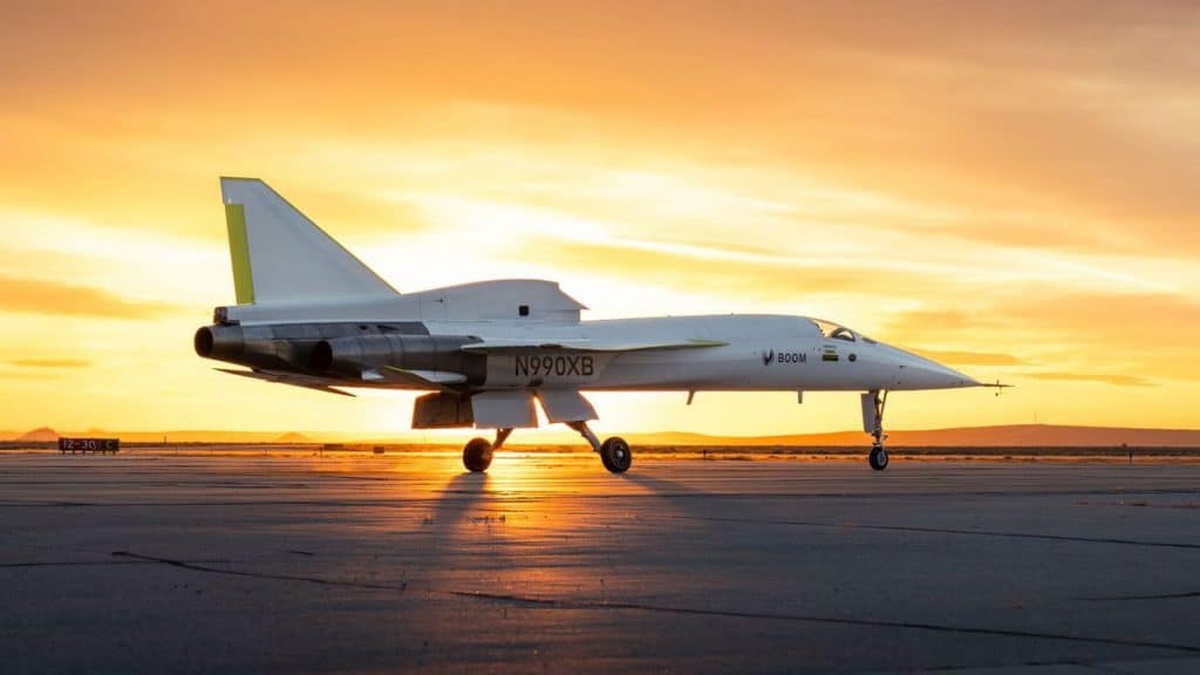
The new decree also significantly boosts investments in high-speed passenger and cargo aircraft. Consequently, more flexible rules, along with direct research support, allow companies like Boom Supersonic, for example, to prepare to accelerate their initiatives.
Meanwhile, projects like NASA’s X-59 QueSST are also advancing rapidly, especially with government backing, and therefore, with greater confidence in technical and commercial viability. Boom, for example, is developing aircraft with “Mach Cut” technology, capable of eliminating sonic booms on the ground.
This feature addresses the problem that led to the ban imposed in 1973. Blake Scholl, CEO of Boom and the main advocate for the legal change, stated, “The old ban stifled innovation for decades, but now we celebrate the return of silent supersonic flights.”
Additionally, the new legislation allows American civilians who own supersonic aircraft, such as private jets, to conduct flights above Mach 1 over national territory.
This deregulation reinforces the role of the U.S. as a technological leader. At the same time, it encourages sectors such as engineering, defense, and executive aviation to invest even more.