Portuguese
  Spanish


Scientists have found hidden within the plants themselves an immense DNA archive that has survived for more than four hundred million years, a kind of biological time capsule that has traversed practically the entire history of plant life on solid ground.
When we look at a plant, we see leaves, flowers, and stems, but we hardly imagine that inside there is a written record of hundreds of millions of years of history. That is exactly what scientists have revealed, the existence of a huge hidden archive of plant DNA preserved for more than 400 million years within the plants.
The discovery is impressive because it spans practically the entire history of plants on land. This ancient genetic material functions as a biological time capsule, storing information about how vegetation evolved, adapted, and conquered the planet over geological eras that changed the face of the entire Earth, from the first simple plants to today’s forests.
A hidden archive in plants
The idea that there is an archive of information stored within living beings is not new, but the time scale involved here is what is impressive. We are talking about DNA that carries marks of 400 million years of evolution, a period so vast that it is hard to even imagine. Each current plant carries within it genetic echoes of ancestors that lived in worlds completely different from ours.
-
Scientists Discover 125-Million-Year-Old “Pregnant Fossil” with Preserved Embryos and Microscopic Larvae Inside Mollusk in England

-
17-Year-Old Justin Bernstein Develops Bacteria to Produce Glass on Arctic Ice to Reflect Sunlight, Wins $50,000 U.S. Scholarship

-
The 19-Meter Rocket-Helicopter: A Private Industry Prototype That Challenged Space Race Logic

-
Brazilian Students Convert Seized Illegal TV Boxes into Linux-Powered Mini Computers for Schools and Social Projects Across São Paulo




I confess that I find it poetic to think that a common leaf in the backyard holds within it a diary written over hundreds of millions of years. This ancestral DNA is like a living library, where each chapter tells a stage of the long journey of plants through the history of life. Deciphering this archive is, in a way, reading the autobiography of the very vegetation that covers the planet.
Why this ancient DNA matters
Studying this genetic archive is not just a scientific curiosity; it has very concrete applications. Understanding how plants evolved and faced challenges over such a long time can help develop crops more resistant to droughts, pests, and climate changes. The past of plants holds valuable lessons for the future of agriculture in a warming world.
Deeply understanding the genetic history of vegetation also helps us understand how life adapted to huge crises in the past, such as major extinctions and climate transformations. The plants that survived these events carry in their DNA the strategies that worked. Accessing this time capsule is like consulting a survival manual written by nature itself over eras.
It is worth remembering the significant role that plants have played in the planet’s history to understand why this archive is so valuable. It was they who, over hundreds of millions of years, filled the atmosphere with oxygen, created soils, and paved the way for animals to live on land. Without this long plant conquest, we simply would not exist. Therefore, deciphering how plants evolved and overcame so many obstacles is not just understanding their history, but the history of the very possibility of life as we know it, including our own. This ancient DNA holds, at its core, part of the explanation of how the world became habitable.
The history of life written in code
What makes this discovery so fascinating is the idea that the entire history of life is, in some way, written in code within living beings. DNA is a chemical language that records changes generation after generation, and when scientists learn to read it, they can reconstruct events that happened long before any human existed to witness them.
This 400-million-year-old archive stored in plants is proof of how nature is a patient and silent storyteller. Without leaving texts or monuments, life has been noting its own trajectory in the molecules that pass from parents to children. Deciphering this time capsule is giving voice to a narrative that was there all along, invisible, within every green leaf.
What makes it even more remarkable is that reading this narrative only became possible very recently. The tools capable of sequencing and comparing DNA on a large scale are recent, and each year they become faster and cheaper, opening genetic archives that were previously completely inaccessible. It is as if humanity has just learned to read an ancient language in which nature has been writing all along. Discoveries like this hundreds-of-millions-of-years-old plant archive are just the beginning of what this new reading power promises to reveal, and it gives a certain thrill to imagine how many other hidden stories in living beings are still waiting to be told.
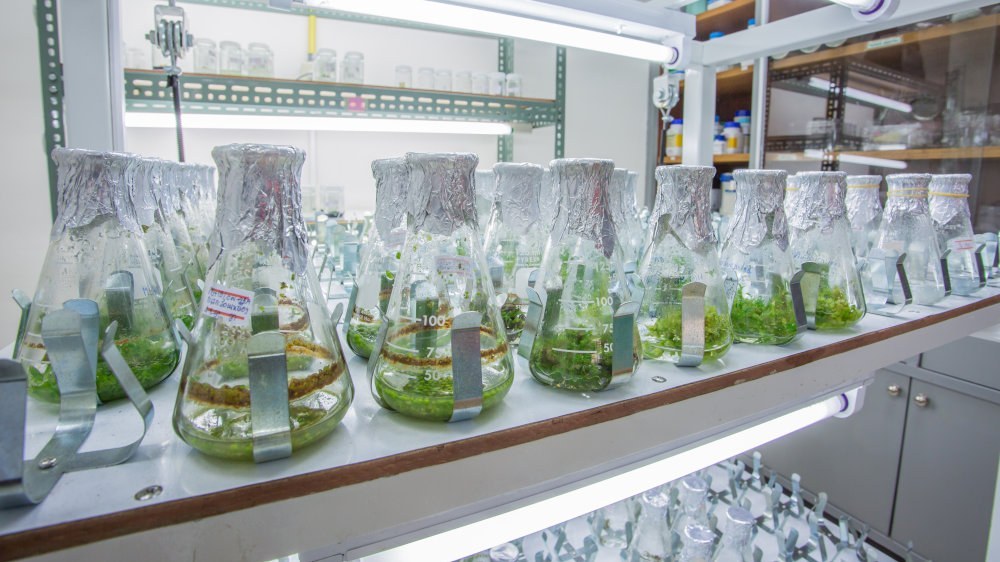
A living library within each leaf
I imagine the feeling of scientists when they realized they were facing such an ancient record, hidden in plain sight within the most common plants. It is the kind of discovery that changes the way we look at something mundane, turning a simple leaf into a window to 400 million years of life history on the planet.
This DNA archive stored in vegetation is a reminder that the greatest treasures are not always far away or hidden in exotic places; sometimes, they are right before our eyes, within the green that surrounds us every day. Learning to read this biological time capsule is opening one of nature’s greatest libraries, written patiently over eras that we can barely imagine.
Did you imagine that a simple leaf could hold a genetic archive of 400 million years?