Portuguese
  Spanish


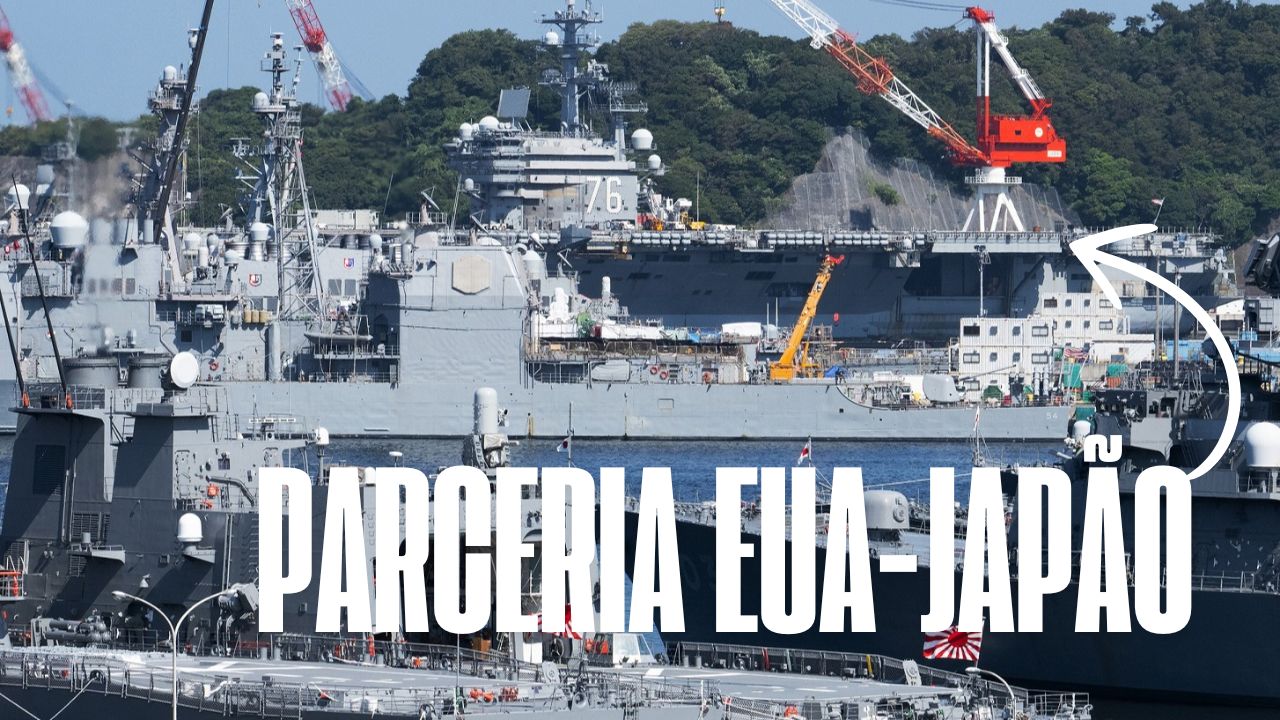

Accelerated Expansion of the Chinese Navy Concerns Washington, Which Now Sees the Japanese Shipbuilding Model as a Strategy to Balance Forces in the Indo-Pacific
The expansion of the Chinese navy has raised concerns in the global geopolitical landscape, especially for the United States, which is seeking ways to balance naval power in the Indo-Pacific. In response, Washington is considering adopting the Japanese shipbuilding model, which stands out for its efficiency and consistency in the production of submarines and military vessels. The US-Japan partnership in shipbuilding could redefine defense and containment strategies in the region.
The Japanese Shipbuilding Model
Unlike the United States, where the number of ships built varies according to the annual budget, Japan has maintained a steady production rate of submarines for decades, manufacturing one unit per year. This approach allows for cost reduction, labor optimization, and maintaining stability in the shipbuilding industry.
Since 2010, Japan has increased its submarine fleet from 16 to 22 units without changing the production pace. The secret lies in extending the service life of each vessel, which has increased from 16 to 22 years. Japanese shipyards, operated by companies such as Mitsubishi Heavy Industries and Kawasaki Heavy Industries, work on an alternating manufacturing system, ensuring continuous expertise and avoiding fluctuations in production.
-
North Korean Fiasco: Launch of the Largest Warship Ends in Sinking

-
While giant ships still burn heavy fuel and the maritime sector races against climate targets, Maersk and Vale are starting to bet on ethanol as a new route to reduce emissions at sea.

-
China begins construction of the world’s largest LNG ship, a 344-meter giant capable of supplying 4.7 million homes for a month, carrying 271,000 m³ of gas, and placing QatarEnergy in the largest naval order ever recorded in world history.
-
China is designing a container ship with a thorium nuclear reactor that will operate for 40 years without refueling, and the 25,000-container giant from Jiangnan Shipyard will cross oceans without emitting carbon in an industry that burns 300 million tons of fuel per year.


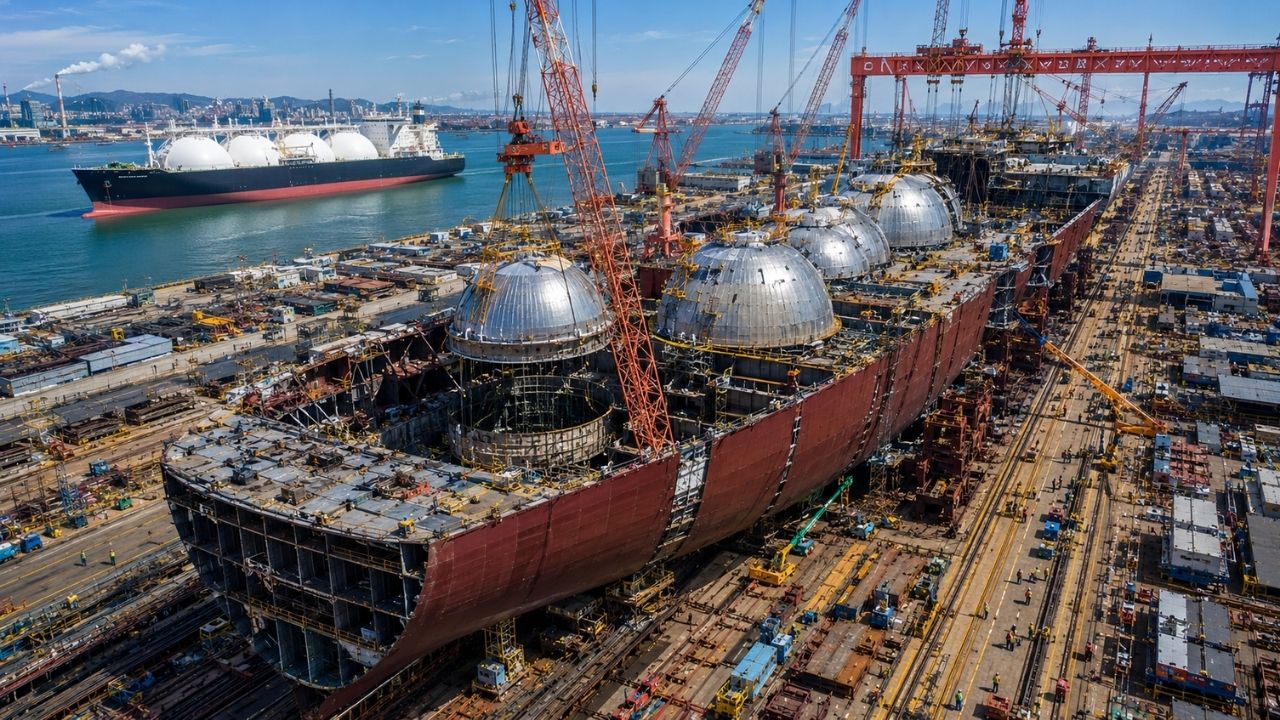

Challenges Faced by the US Navy
While Japan maintains its stable production capacity, the United States Navy faces operational and financial challenges. The total cost of the 46 ships currently under construction has tripled in just one year, jumping from US$ 3.4 billion to US$ 10.4 billion.
Other issues are also worrying the Pentagon:
- Construction delays: The average delivery time for an aircraft carrier has increased from 8 to 11 years, while attack submarines that used to take 6 years to finalize now take 9 years;
- Labor shortages: The lack of skilled workers in shipyards directly impacts the production of military vessels;
- Increased repair times: Ships that should return to service quickly are spending months in maintenance due to inadequate infrastructure.
Japan as a Key Piece in US Strategy
With a history of military cooperation since World War II, the US and Japan have strengthened their partnership in recent years. Washington has encouraged Tokyo to expand its military capabilities, not only to ensure the defense of the Japanese archipelago but also to act as a counterweight to China’s naval growth.
The US-Japan partnership in shipbuilding allows Japan to invest in modernizing its military forces, leveraging American technology and logistics. There are also discussions about including Japan in the AUKUS pact, an alliance between the US, the UK, and Australia, created to contain Chinese influence in the Indo-Pacific.