Portuguese
  Spanish


Forest waste, usually discarded, has been converted by RMIT University researchers into porous carbon capable of retaining pollutants, with potential for use in water purification, air filtration, industrial gas treatment, and carbon dioxide capture.
RMIT University researchers have transformed eucalyptus bark waste into a porous carbon material capable of assisting in water purification, air filtration, and carbon dioxide capture. The proposal converts a generally discarded forest byproduct into a functional environmental material, with potential use in treatment and filtration systems.
The work demonstrated that tree bark can be processed through a single-step activation method. The result is a highly porous carbon, formed by a network of microscopic pores that retain pollutants when water or air passes through the material.
Eucalyptus bark becomes porous carbon for filtration
Porous carbon materials are already used in filtration and gas treatment systems. However, these materials are often produced by complex, multi-step processes, while the new approach simplifies production and maintains high adsorption performance.
-
Iranian Engineers Develop Solar-Powered Mobile Water Purification System for Isolated Regions, Offering Sustainable Solution for Water-Scarce Communities

-
Pedal-Powered Washing Machine Made from Bicycle Parts Cleans Clothes in Three Minutes Without Electricity, Leaves Them 80% Dry.

-
Sixth-grader in Miami wins Lemelson Young Inventor Prize for creating water-absorbing concrete using discarded oyster shells and charcoal.
-
Brazilian Researchers Develop Portable, Painless, Radiation-Free Breast Cancer Tracker Using Microwaves, Costing Around $200 and Potentially Replacing $240,000 Mammograms
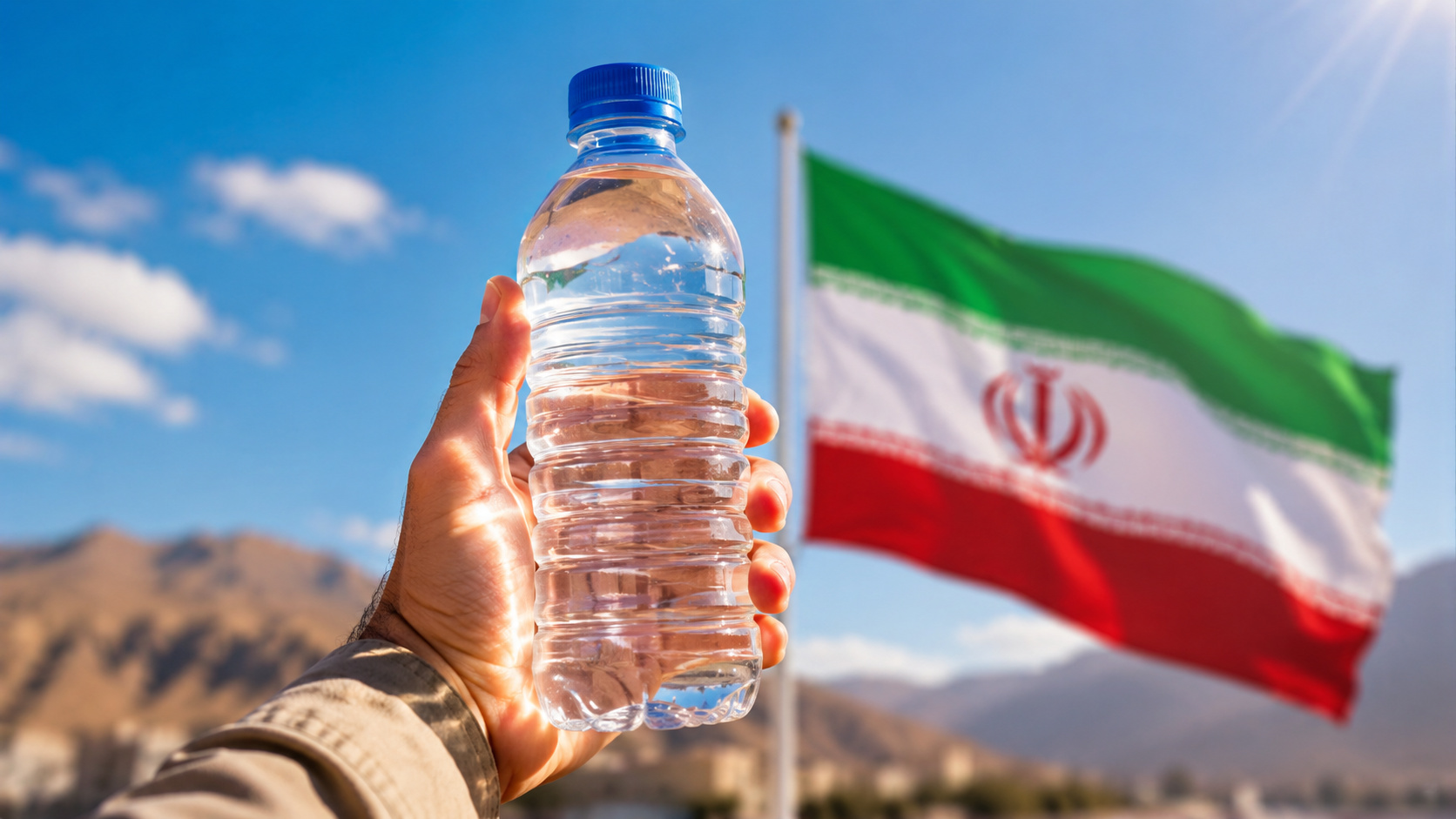


The material’s efficiency is linked to its porous structure. This structure determines its ability to capture contaminants in different applications, such as filtering polluted water, purifying air, and capturing gases in industrial and environmental settings.
Fine-tuning this pore network can improve performance according to the desired application. Eucalyptus bark, in this context, emerges as a practical alternative raw material, as performance depends less on the material’s origin and more on how it is processed.
Low-value waste gains environmental application
Doctoral researcher Pallavi Saini, who led much of the experimental work, stated that bark is often treated as low-value waste. With a simple process, it was possible to convert it into a highly porous material with strong adsorption performance.
The team’s assessment indicates that neglected biomasses can be transformed into useful materials. The single-step activation process reduced the need for energy, infrastructure, and additional processing phases compared to traditional approaches.
Plant-based carbon materials are being studied globally from agricultural and industrial waste. Eucalyptus bark stands out for its availability and performance, especially in Australia, where there is a broad base of related species.
Simple process reduces production steps
Dr. Deshetti Jampaiah stated that the strength of the approach lies in its simplicity. The conversion of a widely available waste material into functional carbon occurs without relying on complex steps, which increases its relevance for real-world environmental applications.
Australia has over 900 species of eucalyptus and related trees. This variety offers a broad and constant source of raw material, especially since the bark comes from existing forestry operations.
As the waste used does not compete with food production, the solution aligns with the goals of the circular economy. The proposal utilizes an available byproduct and seeks to transform it into a useful resource for water, air, and carbon capture.
Applications include water, air, and carbon capture
The material can be used in water purification systems. Possibilities include the treatment of contaminated groundwater and wastewater, as well as point-of-use filtration systems in remote areas.
Air and industrial gas filtration also appear among the applications indicated by the team. The same material can also play a role in systems aimed at carbon dioxide capture.
Before commercial implementation, further studies are still needed to evaluate durability, regeneration, and large-scale performance. The team also plans to collaborate with indigenous communities to identify the most suitable species for this application.
Distinguished Professor Suresh Bhargava stated that the work shows how eucalyptus bark can be transformed into materials capable of contributing to cleaner water, cleaner air, and carbon capture. The study was published in the journal Biomass and Bioenergy, consolidating eucalyptus as a source of a porous carbon filter with environmental application.