Portuguese
  Spanish


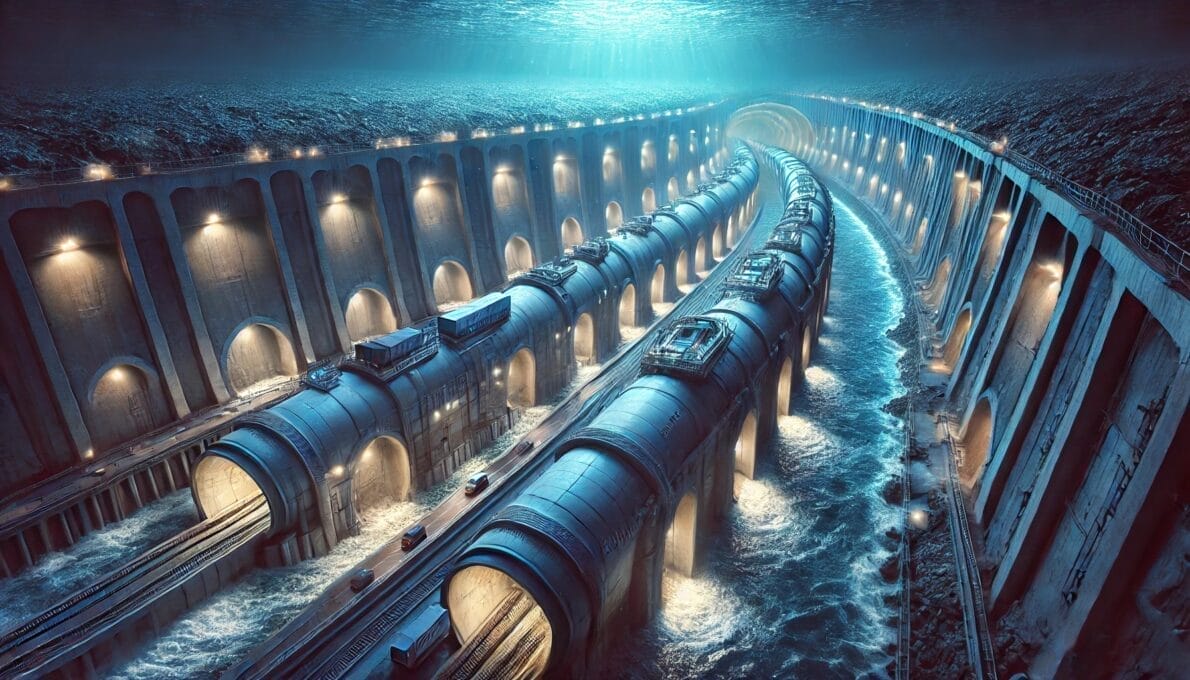

Eurotunnel, A Marvel Of Engineering: Discover The Largest Submarine Tunnel In The World, With Over 50 Km In Length, Built At A Cost Of Over 4.65 Billion Pounds.
The English Channel is a body of water that is part of the Atlantic and separates the island of Great Britain from northern France. Therefore, in 1987, then British Prime Minister Margaret Thatcher and French President François Mitterrand signed the agreement to build the so-called Eurotunnel, which would be a marvel of engineering, becoming the largest submarine tunnel in the world.
A Little Bit Of The History Of The Eurotunnel
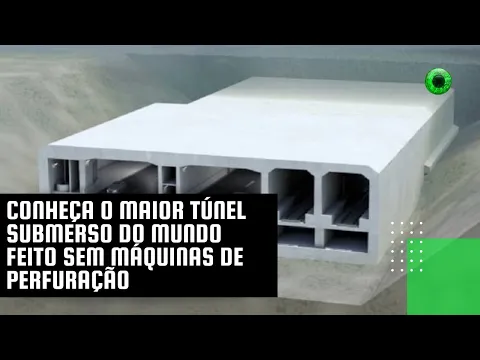

Plans for a direct connection between Great Britain and the continent emerged in the early 19th century; however, the Napoleonic Wars prevented the Eurotunnel from moving forward. Shortly after World War II, innovative projects competed for the chance to create a route that could shorten the journey and distance between the ends of the English Channel.
This culminated in the Eurotunnel project in May 1994, marking a significant engineering milestone. In December 1984, the Franco-British consortium Euro Route 1984 was founded. The project for the largest submarine tunnel in the world was based on a rail and road connection, following the “bridge-tunnel-bridge” principle proposed in 1960.
-
China Constructs Four 20 km Tunnels in World’s Deepest Canyon for Mega Power Plant to Outperform Three Gorges and Power All of Britain

-
China’s Engineered Bamboo: The “Material of the Future” Stronger Than Steel and a Sustainable Wood Alternative

-
Egypt’s “New Nile”: 170 km Artificial River Aims to Turn Desert into Farmland, but Water Supply Concerns Loom
-
Unable to secure a mortgage as a self-employed single mother, she designed her own floating home from a 20-meter boat and now lives “off-grid” with her two children and solar panels on an English canal.


The French company France Manche presented its project: a 50 km tunnel, of which 37 km are underwater. Built solely for railways, it featured two tunnels for traffic and a central tunnel for ventilation, a boarding platform for vehicles on specific platforms, and double-decker trains.
On May 6, 1994, 100 meters under the water, Queen Elizabeth II and François Mitterrand inaugurated the Eurotunnel, a marvel of engineering, maritime technology, and diplomacy since the time of Napoleon.
Eurotunnel Becomes The Largest Submarine Tunnel In The World
The English Channel is approximately 563 km (350 miles) long, and its widest point is 240 km (150 miles). Its narrowest point (from Dover) is only 33 km (20 miles), from Dover to Cap Gris Nez. The Eurotunnel became the largest submarine tunnel in the modern era.
It serves as an example of how advancements in engineering can expand horizons and contribute to the economic development of society. For context, 26% of goods sold between the United Kingdom and Continental Europe travel through the Eurotunnel, representing a value of €138 billion per year.
Before the construction of this engineering marvel, traveling from London to Paris took about six to seven hours, via train and ferry. With the Eurotunnel, the same journey can be made in two and a half hours – by train.
How Much Did The Largest Submarine Tunnel In The World Cost?
In six years of work for this engineering marvel, the investment reached £4.65 billion (R$ 67.6 billion at current exchange rates). The excavations, carried out with high-tech machines, employed 15,000 workers and took seven years to complete. In 1990, a symbolic act marked the progress of the works. In the middle of the tunnel, miners Graham Fagg and Phillippe Cozzette swapped their countries’ flags.
A bridge-tunnel can also be called a fixed link or fixed crossing. It is a permanent and uninterrupted connection across a body of water, by road or railway, that utilizes a combination of bridges, tunnels, and roadways.
To cross a body of water, constructing a tunnel is generally a more expensive solution than building a bridge. However, requirements may limit the use of high or draw bridges when crossing navigation channels, necessitating the use of a tunnel.