Portuguese
  Spanish


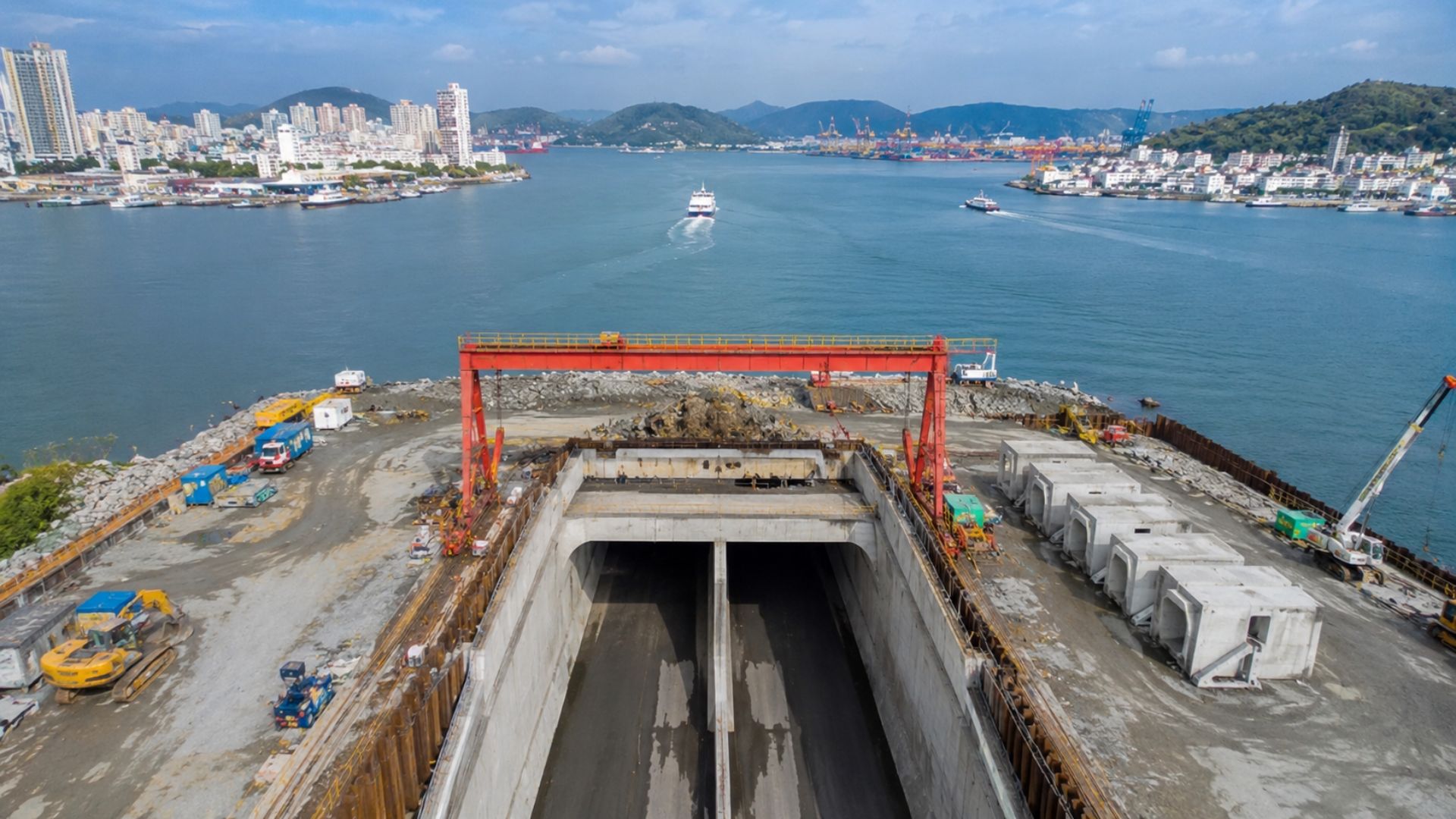


Billion-dollar project promises to transform mobility between Santos and Guarujá with Brazil’s first submerged crossing, including passage for vehicles, pedestrians, cyclists, and LRT in an unprecedented dry connection under the Santos Port channel.
The Port Authority of Santos has authorized the opening of a temporary and exclusive account to concentrate public funds allocated to the Santos-Guarujá Tunnel, an unprecedented project in the country that will create a dry connection of 1.5 km between the two cities, including 870 meters submerged under the port channel.
Treated for decades as one of the main demands of the Baixada Santista, the project plans to accommodate vehicles, pedestrians, cyclists, and LRT, as well as gradually reduce dependence on the ferry system that currently handles a significant portion of the crossing between Santos and Guarujá.
Exclusive account guarantees funds for the Santos-Guarujá tunnel
The opening of the account meets governance requirements pointed out by the Federal Court of Accounts, which requested stricter control mechanisms over the federal funds allocated to the project, especially after discussions about the financial management of the future dry connection.
-
Concrete-filled PVC homes could be cheaper than traditional masonry, UPF research finds; with ready modular panels, less waste, and faster construction, the Concrete-PVC system aims to cut costs and transform affordable housing in Brazil.

-
Brazilian House Built with 32.8 Tons of Construction Debris Offers Affordable Housing Solution
-
Americans Build Entire Homes in a Day Using Compact Sand Foundations and Pre-Made Wooden Trusses, Reducing Construction Costs

-
China’s Largest Floating LNG Plant, NGUYA, Sets Sail for Congo: 2.4 Million Tons Annually for Italy’s Eni


According to the APS, the measure ensures that the funds remain exclusively linked to the project, while the temporary account will be restricted to transactions directly related to the construction and operational structure of the tunnel.
“This initiative aims to ensure transparency and proper governance of the funds allocated to the construction of the dry connection,” said Anderson Pomini, president of the APS.
Furthermore, the leader stated that the public investment will remain protected for exclusive use in port infrastructure works, reinforcing the model of shared oversight among the bodies involved in the financial execution of the project.
With the account already active, the next step will be the creation of a joint accountability instrument between the Union and the Government of São Paulo, as determined by the control bodies responsible for monitoring the project.
What the first submerged tunnel in Brazil will be like
The immersed tunnel was designed to accommodate three lanes in each direction, as well as an exclusive space for the LRT and areas designated for pedestrians and cyclists, enhancing urban mobility integration between the two municipalities of the Baixada Santista.
At the same time, the new structure aims to reduce historical bottlenecks of the crossing and directly impact the logistics of the Port of Santos, as the permanent connection between the channel’s banks could reorganize urban and operational displacements in the port region.
After the approval of the concession process in 2025, the PPP contract was officially signed in 2026, consolidating one of the largest urban and port infrastructure initiatives planned for the São Paulo coast in the coming years.
Responsible for winning the concession auction, Mota-Engil will be in charge of executing and operating the system within the model established by the public authorities and the agencies responsible for the partnership.
Updated investment and project schedule
Although the title mentions R$ 4.2 billion, the project’s official website presents an updated value of R$ 6.8 billion in investments, consolidating the project as one of the largest mobility and infrastructure interventions currently planned in the state of São Paulo.
The public schedule records an investment of R$ 5.13 billion, divided between the Government of São Paulo and the Union, with an approximate participation of R$ 2.7 billion for each of the parties involved in the financing.
At this moment, the project is in the technical preparation phase, development of complementary studies, and operational preparation for the start of the interventions planned in the official schedule presented by the authorities responsible for the future submerged crossing.
According to the disclosed plan, initial works are expected to begin in 2027, including the mobilization of sites, preliminary dredging, and construction of the dry dock, a structure considered essential for the manufacturing of the modules used in the tunnel’s implementation.
Subsequently, the production of concrete modules is expected to occur in 2028, while the immersion and assembly stages are scheduled for 2029, preceding the final phase of operational systems and technical tests planned for the following year.
The commercial operation of the Santos-Guarujá Tunnel is scheduled for 2031, a period in which the dry connection is expected to function as a permanent alternative to the ferries and longer road routes currently used between the two cities.