Portuguese
  Spanish




Force Guides Regional Commands to Prevent Demonstrations Around Military Units in Brasília and Other Cities Amid the STF Process Against Ex-President and Generals Accused of Attempted Coup
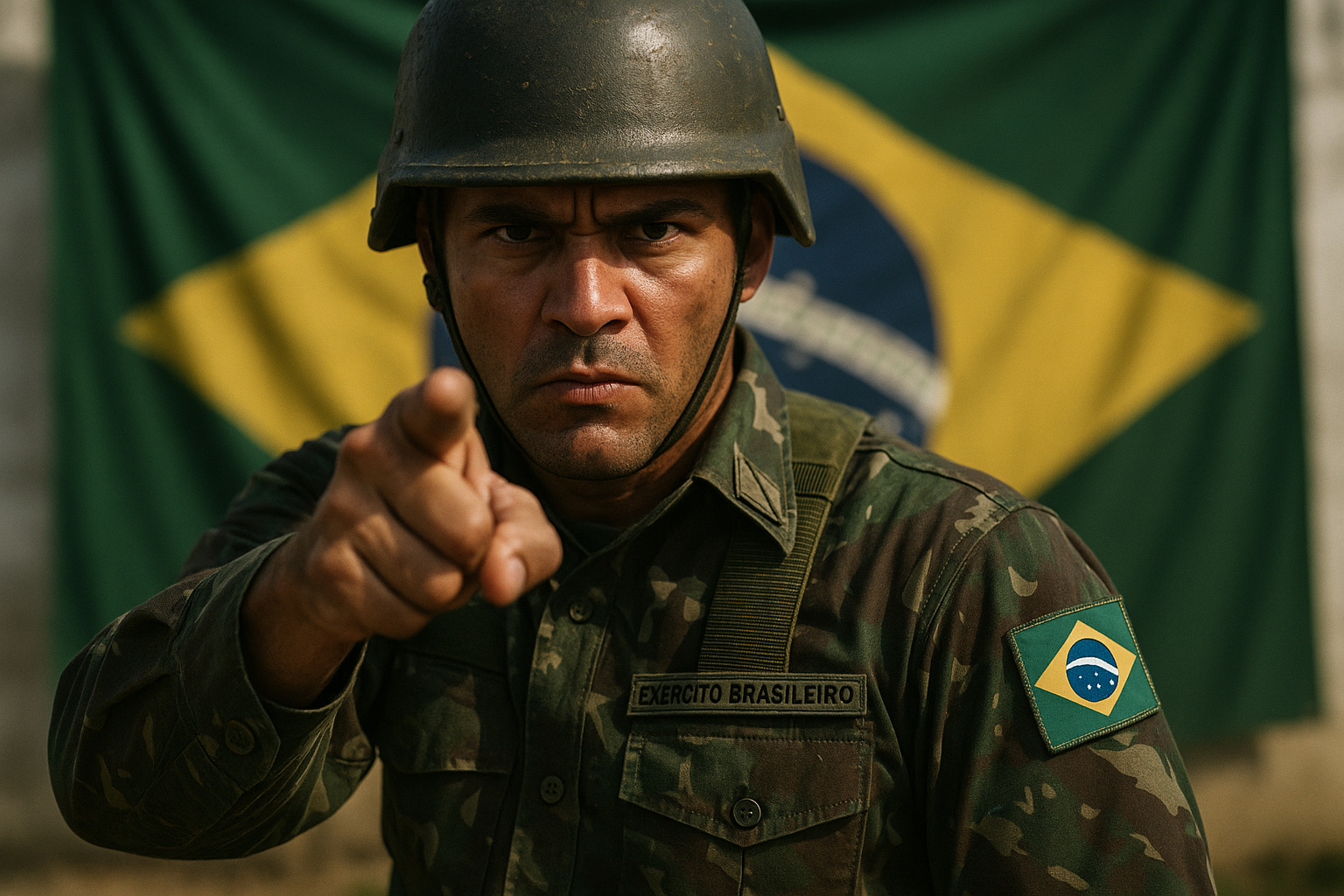
The Brazilian Army ordered “zero tolerance” against gatherings and demonstrations near barracks during the trial of the core of the coup plan that begins this Tuesday (2) at the Supreme Federal Court (STF). The measure also extends to the demonstrations scheduled for September 7, a date considered sensitive for the Armed Forces following the events of 2022 and 2023.
The determination was passed on to area commands throughout the country, with a focus on Brasília, where the attention of security authorities will be heightened. The Military Command of the Planalto (CMP) and the Public Security Secretariat of the Federal District hold ongoing meetings to coordinate prevention strategies.
According to information disclosed by CNN Brasil and other media outlets, the guidance seeks to prevent any association between the Armed Forces and acts of a political nature amid the trial, which directly involves high-ranking military.
-
U.S. Navy’s Ticonderoga-class Cruiser Becomes a 9,800-Ton Missile Fortress with Advanced Aegis System Capable of Tracking Hundreds of Targets

-
France’s Charles de Gaulle: The Sole Nuclear-Powered Aircraft Carrier Outside the US, Weighing 42,500 Tons and Equipped with Two Atomic Reactors

-
The military spaceplane that almost took the Cold War into orbit: Boeing X-20 Dyna-Soar was designed to re-enter above Mach 20, fly for up to 40 hours, land like a plane, and transform Titan rockets into a gateway to a new era of orbital warfare.
-
FAB bets on national drones and increases investments to strengthen the Brazilian aerospace industry



Enhanced Security in Brasília and Restrictions on Acts
In the federal capital, demonstrations are expected to concentrate in the TV Tower area, far from both barracks and the Plaza of the Three Powers, home to the main organs of the Executive, Legislative, and Judiciary. The planning aims to prevent protests from approaching military areas or government institutions.
Consulted officers state that there is no expectation of gatherings around military units, especially because the High Command of the Army rejected, throughout the investigations, adherence to the coup plan. This stance, although it has generated dissatisfaction among supporters of former President Jair Bolsonaro, contributed to reinforcing institutional separation.
The trial is considered delicate, as it directly involves three four-star generals, one admiral, and officers close to the former president, which raises internal concerns about the image of the Armed Forces.
Military Mentioned and Focus of the Trial
Among the defendants are Jair Bolsonaro, retired Army captain and former President of the Republic, Lieutenant Colonel Mauro Cid, the whistleblower of the scheme, as well as Generals Augusto Heleno, Paulo Sérgio Nogueira de Oliveira, and Walter Braga Netto, all of whom have held strategic ministries during the previous government. Also on the list is Admiral Almir Garnier, former commander of the Navy.
The first phase of the trial will be closely monitored by the High Command of the Army, which insists on defending the institution as a democratic pillar. The message conveyed in private is the same one repeated by the Defense Minister, José Múcio Monteiro: “separate the CPF from the CNPJ”, punishing individuals without compromising the image of the Armed Forces.
This positioning reflects an attempt to preserve the institution from political wear and tear, especially considering the national and international repercussions of the process.
History of Acts and Recent Episodes
After Bolsonaro’s defeat in the 2022 elections, thousands of supporters remained camped outside barracks, calling for military intervention. Authorities later acknowledged that it was a “mistake” to allow the permanence of these groups around the Army General Headquarters in Brasília.
On January 8, 2023, demonstrators from those camps participated in the invasion and vandalism of the Three Powers’ headquarters. The episode negatively marked the relationship between security forces, democratic institutions, and civil society.
Since then, September 7 and other dates of political mobilization have been monitored more rigorously, especially to prevent the repetition of similar acts.
Political Context and Preventive Measures
For the current commanders, maintaining distance from political demonstrations is essential to preserve the image of neutrality. Thus, the “zero tolerance” against gatherings near barracks becomes an institutional security protocol.
Authorities believe that the political environment of 2025, different from what was experienced until the beginning of 2023, allows for firmer control measures. The Army seeks to reinforce the message that it will not accept being used as a shield for partisan disputes.
The strategy also includes constant dialogue with state and federal security forces, as well as rapid response protocols to any attempt to invade military areas or public agencies.